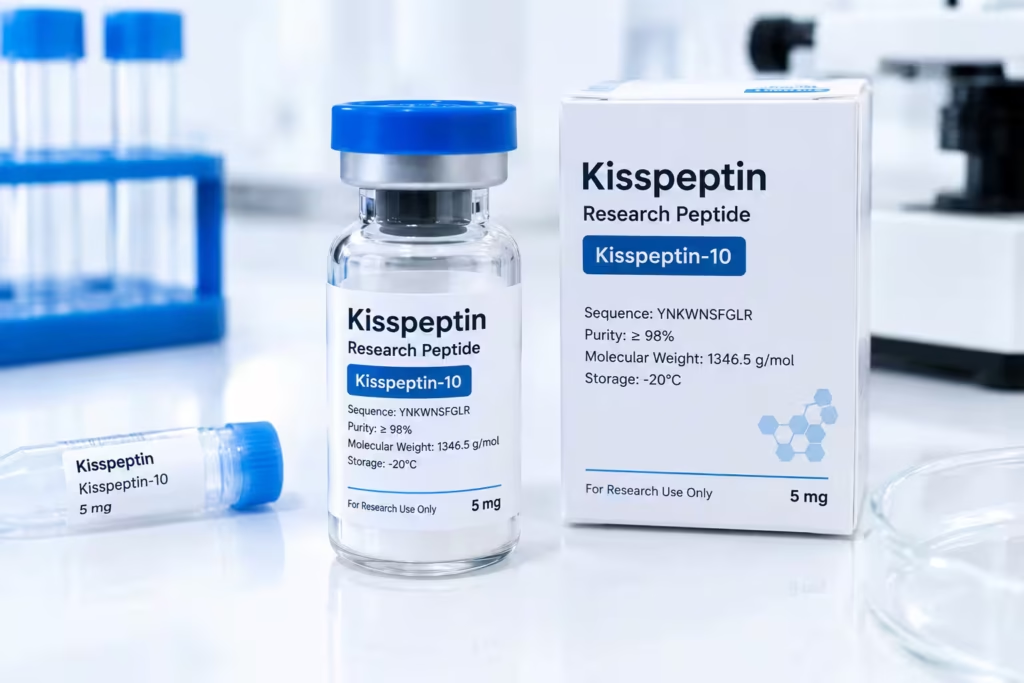
What Is Kisspeptin Peptide? Benefits, Functions, and What Research Says
what is kisspeptin peptide is a naturally occurring peptide in the human body that plays an important role in regulating reproductive hormones. It helps control the release of gonadotropin-releasing hormone (GnRH), which signals the pituitary gland to produce hormones involved in reproductive function. Kisspeptin

Interest in what is kisspeptin peptide has grown because researchers are investigating its potential applications in fertility, reproductive health, puberty, and hormone regulation. However, it is important to distinguish established biological functions from potential medical applications that are still being studied.
In this guide, we explain what is kisspeptin peptide, how it works, its potential benefits, the current state of research, and important safety considerations.
What Is Kisspeptin Peptide?
Kisspeptin is a naturally produced peptide that acts as a key regulator of the reproductive system. It is encoded by the KISS1 gene and works by activating a receptor known as KISS1R, also called GPR54. what is kisspeptin peptide?
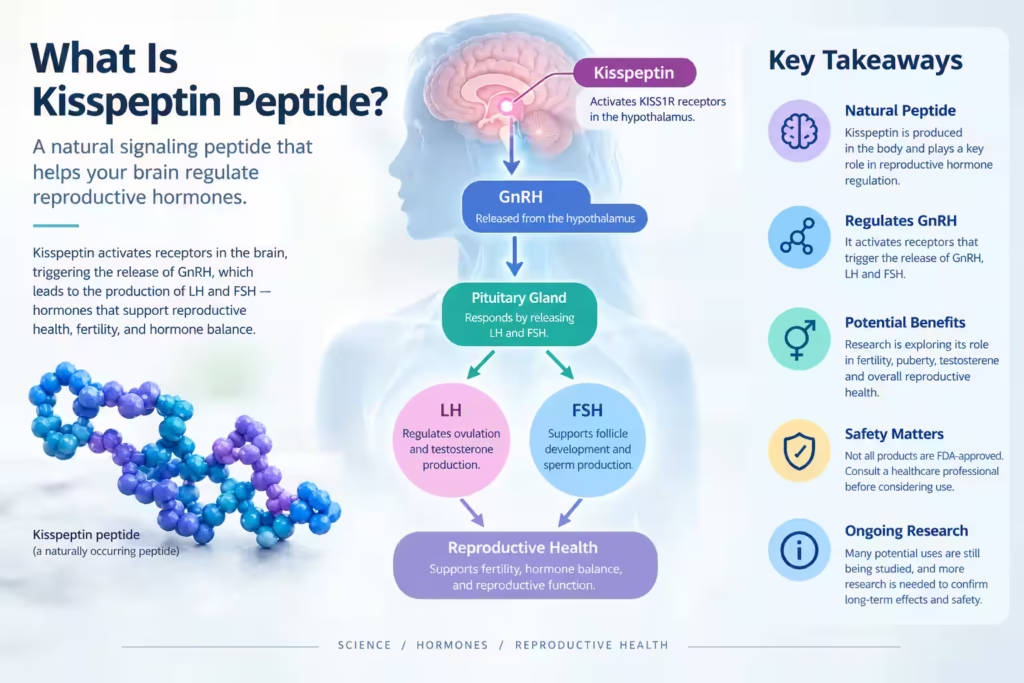
what is kisspeptin peptide? Kisspeptin-producing neurons are found in areas of the brain involved in controlling reproductive hormones. By stimulating these pathways, kisspeptin helps regulate the release of GnRH, a hormone that coordinates several important reproductive processes.
GnRH stimulates the pituitary gland to release two hormones:
- Luteinizing hormone (LH): Helps regulate ovulation in females and testosterone production in males.
- Follicle-stimulating hormone (FSH): Supports ovarian follicle development and sperm production.
Because what is kisspeptin peptide acts near the beginning of this hormonal signaling pathway, it is considered an important link between the brain and reproductive function. What Does Peptide Purity Mean in Laboratory Research?
what is kisspeptin peptide is sometimes discussed in peptide research and hormone-related wellness communities, but research interest does not automatically mean that a peptide is an established or approved treatment. what is kisspeptin peptide?
How Does Kisspeptin Work in the Body?
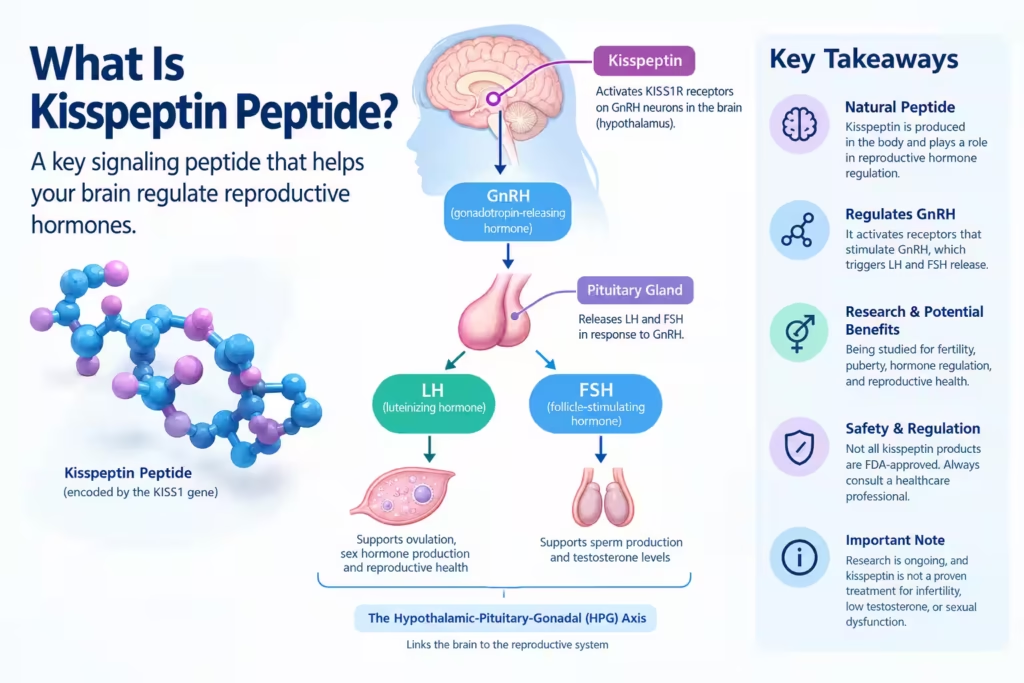
Kisspeptin helps coordinate communication between the brain and the reproductive system through a process known as the hypothalamic-pituitary-gonadal (HPG) axis.
The process generally works as follows:
- Kisspeptin activates KISS1R receptors on GnRH-producing neurons.
- GnRH is released in response to this signaling.
- The pituitary gland responds by releasing LH and FSH.
- LH and FSH influence reproductive processes, including sex hormone production and the development of reproductive cells.
This signaling system is essential for normal reproductive development and function. Changes in kisspeptin signaling may contribute to certain reproductive disorders, although the underlying causes and treatment options vary from person to person.
what is kisspeptin peptide effects also depend on the specific peptide form, dose, route of administration, timing, and individual physiology. Findings from one experimental setting cannot necessarily be applied to every kisspeptin product or person. what is kisspeptin peptide?
What Are the Potential Benefits of Kisspeptin Peptide?
Researchers are studying kisspeptin because of its central role in reproductive hormone regulation. The following areas are of scientific interest, but they should not be interpreted as guaranteed benefits from taking a kisspeptin product.
1. Reproductive Hormone Regulation
One of the best-established functions of kisspeptin is its role in regulating GnRH signaling and the downstream release of LH and FSH.
Researchers are examining how this pathway may help explain reproductive hormone disorders and whether targeted interventions could have a role in selected clinical settings.
Kisspeptin is not a general hormone-balancing solution, and its effects depend on a person’s underlying hormonal function.
2. Fertility Research
Kisspeptin is being investigated for potential applications in fertility medicine because it influences hormonal processes involved in ovulation and reproductive function.
Some clinical studies have explored kisspeptin in assisted reproductive treatment, including the triggering of egg maturation in carefully selected settings.
However, these findings do not establish that self-administered kisspeptin improves fertility or pregnancy outcomes. Anyone experiencing fertility difficulties should seek assessment from a qualified reproductive health specialist.
3. Puberty and Reproductive Development
Kisspeptin signaling plays an important role in the initiation and progression of puberty.
Research into this pathway has helped scientists understand how the brain coordinates reproductive maturation. Abnormal signaling may be associated with certain forms of delayed or disrupted reproductive development.
Medical applications for puberty-related conditions require specialist evaluation and should not be attempted through self-directed peptide use.
4. Testosterone and Other Sex Hormones
Because kisspeptin can influence LH release, researchers have investigated its relationship with testosterone production in males.
The biological pathway is well established, but the magnitude and duration of any hormonal response depend on the circumstances. An increase in a hormone measured during a study does not necessarily demonstrate lasting improvements in energy, muscle growth, sexual performance, or overall health.
Kisspeptin should not be considered a proven testosterone-enhancement treatment without appropriate clinical evidence.
5. Sexual and Reproductive Function Research
Scientists have also investigated possible connections between kisspeptin signaling, sexual behavior, and brain activity related to sexual processing.
Some early human studies have explored its effects on brain responses associated with sexual and emotional stimuli. These findings remain an active research area and do not establish kisspeptin as a proven treatment for low libido or sexual dysfunction.
What Is the Difference Between Kisspeptin-10 and Kisspeptin-54?
Kisspeptin exists in several peptide forms derived from the same precursor protein. Two commonly discussed forms are kisspeptin-10 and kisspeptin-54.
Kisspeptin-10 is a shorter peptide fragment that can activate the KISS1R receptor. It is frequently used in laboratory research because of its biological activity and relatively small structure.
Kisspeptin-54 is a longer form of kisspeptin that has also been studied for its effects on reproductive hormone signaling.
Both forms interact with the same receptor system, but they may differ in their persistence in the body, pharmacokinetics, and effects under particular experimental conditions.
They should not automatically be treated as interchangeable. Research findings involving one form may not directly apply to the other, and product identity and quality are important considerations in any scientific or clinical setting.
Is Kisspeptin Peptide FDA-Approved?
Approval depends on the specific product, formulation, intended use, and country.
In the United States, kisspeptin research does not mean that every kisspeptin peptide sold online is an FDA-approved medication. Consumers should verify the regulatory status of a specific product rather than relying on a seller’s marketing claims.
Products advertised for laboratory research may not have been evaluated for human use, safety, effectiveness, or manufacturing quality as medicines. A label stating “research use only” should not be interpreted as evidence that a product is safe to inject or otherwise use in people.
For the most accurate information, consult the FDA and a qualified healthcare professional before considering any investigational peptide.
What Are the Potential Side Effects of Kisspeptin?
The safety profile of kisspeptin depends on the formulation, amount administered, route of administration, treatment duration, and individual health factors. Human research is still limited for many potential uses, so the complete range of risks may not be known.
Potential concerns include:
- Changes in reproductive hormone levels.
- Unintended effects on the menstrual cycle or reproductive function.
- Reactions associated with the administration method, including injection-site problems when applicable.
- Uncertain effects from repeated or prolonged exposure.
- Risks related to contamination, incorrect labeling, or inconsistent quality in unregulated products.
The effects of altering reproductive hormone signaling may be especially important for people with existing endocrine conditions or those receiving fertility treatment.
Do not assume that a naturally occurring peptide is automatically safe when administered as a drug. Speak with a qualified healthcare professional about potential risks, interactions, and appropriate alternatives.