BPC-157 vs GHK-Cu is a comparison attracting increasing attention in peptide research, particularly in discussions surrounding tissue repair, wound healing, inflammation, and regenerative biology.
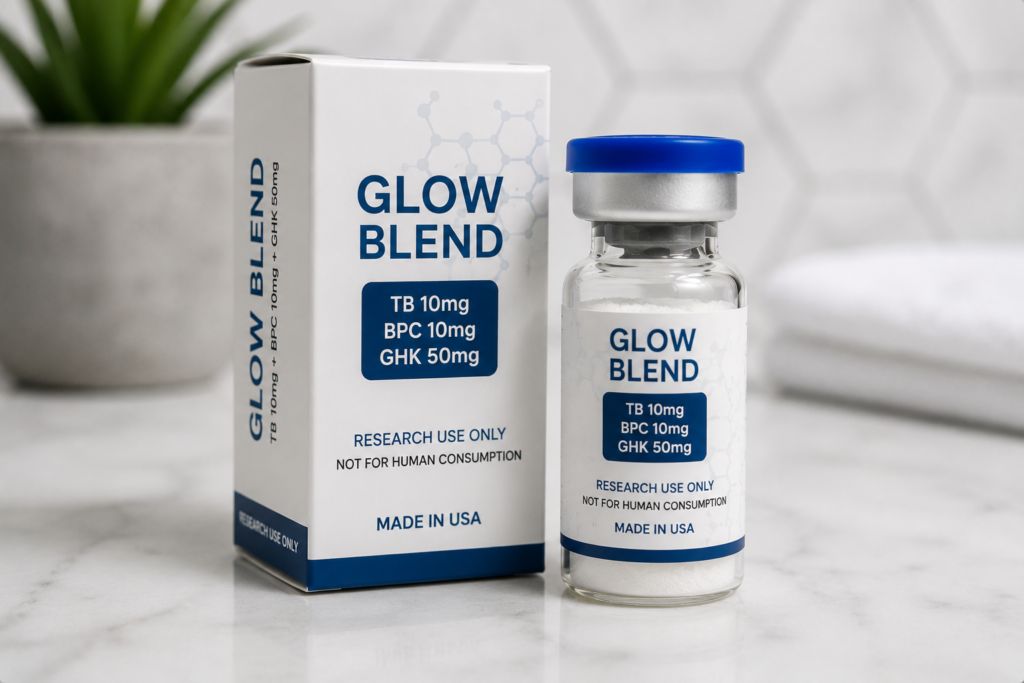
Although both peptides have been investigated for potentially beneficial effects on tissue recovery, they are fundamentally different molecules with different biological backgrounds and research histories. BPC-157 vs GHK-Cu Glow Blend (TB 10mg + BPC 10mg + GHK 50mg)
BPC-157 is a synthetic 15-amino-acid peptide that has been studied extensively in animal and laboratory models involving tissue injury, gastrointestinal damage, inflammation, vascular signaling, and musculoskeletal repair. Despite extensive preclinical research, human evidence remains limited and its clinical development is still at an early stage.
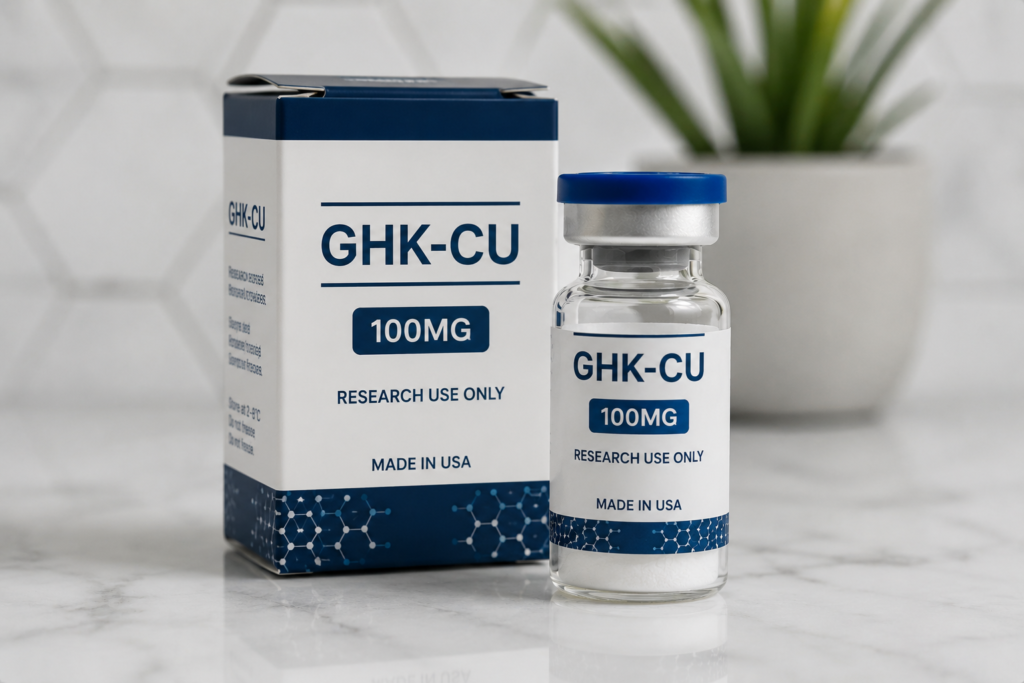
GHK-Cu, by contrast, is the copper complex of GHK (glycyl-L-histidyl-L-lysine), a naturally occurring tripeptide found in human tissues and circulation. Research has particularly focused on skin remodeling, extracellular-matrix biology, wound healing, inflammation, and tissue regeneration. BPC-157 vs GHK-Cu GHK-CU 100mg
The important question is therefore not simply which peptide is “better.” From a scientific perspective, the more useful comparison is:
How do BPC-157 and GHK-Cu differ in molecular biology, research evidence, potential applications, and translational development?
Glow Blend (TB 10mg + BPC 10mg + GHK 50mg)
What Is BPC-157?
BPC-157, commonly referred to as Body Protection Compound-157, is a 15-amino-acid peptide investigated primarily in preclinical research.
Studies have reported biological effects involving several systems, including:
Tissue repair
Tendon and ligament injury
Muscle injury
Gastrointestinal injury
Angiogenesis
Inflammatory signaling
Vascular function
Wound healing
A major feature of BPC-157 research is the breadth of experimental models in which biological activity has been reported.
However, breadth of preclinical evidence does not necessarily translate into demonstrated clinical efficacy. BPC-157 vs GHK-Cu BPC-157 Capsules vs Injectable BPC-157
A recent review published in 2026 concluded that BPC-157 remains pharmaceutically underdeveloped, with no approved formulation, no validated clinical dosing regimen, and substantial gaps in human pharmacokinetic and pharmacodynamic data.
A separate review focused on musculoskeletal applications similarly concluded that BPC-157 has extensive preclinical support but very limited human evidence. BPC-157 vs GHK-Cu BPC-157 research
What Is GHK-Cu?
GHK-Cu is the copper-bound form of glycyl-L-histidyl-L-lysine (GHK).
GHK is a naturally occurring tripeptide that has been studied for decades. It has a high affinity for copper ions, forming the complex known as GHK-Cu. Research has associated GHK-Cu with tissue remodeling, wound repair, antioxidant activity, inflammatory signaling, and extracellular-matrix processes.
Compared with BPC-157, GHK-Cu research has a particularly strong focus on:
Skin biology
Collagen and extracellular-matrix remodeling
Wound healing
Dermal repair
Inflammation
Angiogenesis
Tissue regeneration
GHK-Cu has also been incorporated into topical cosmetic and skincare formulations, making its real-world history different from that of BPC-157.
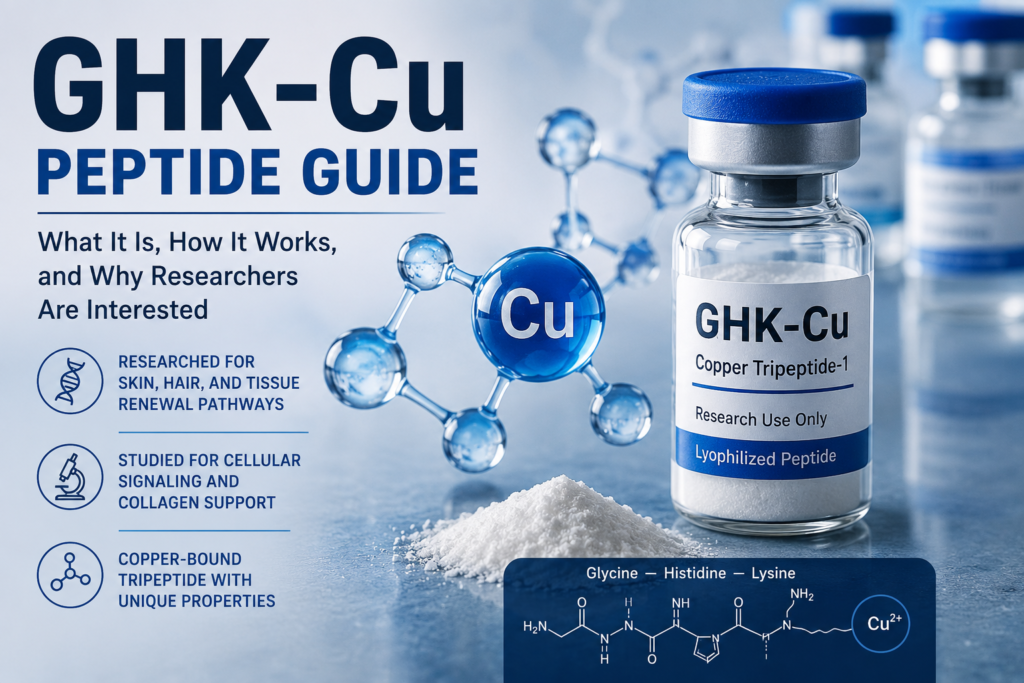
However, researchers should distinguish between evidence for topical GHK-Cu formulations and claims concerning systemic or injectable administration. Evidence for one route cannot automatically be extrapolated to another. BPC-157 vs GHK-Cu GHK-Cu Peptide Guide
GHK-CU 100mg
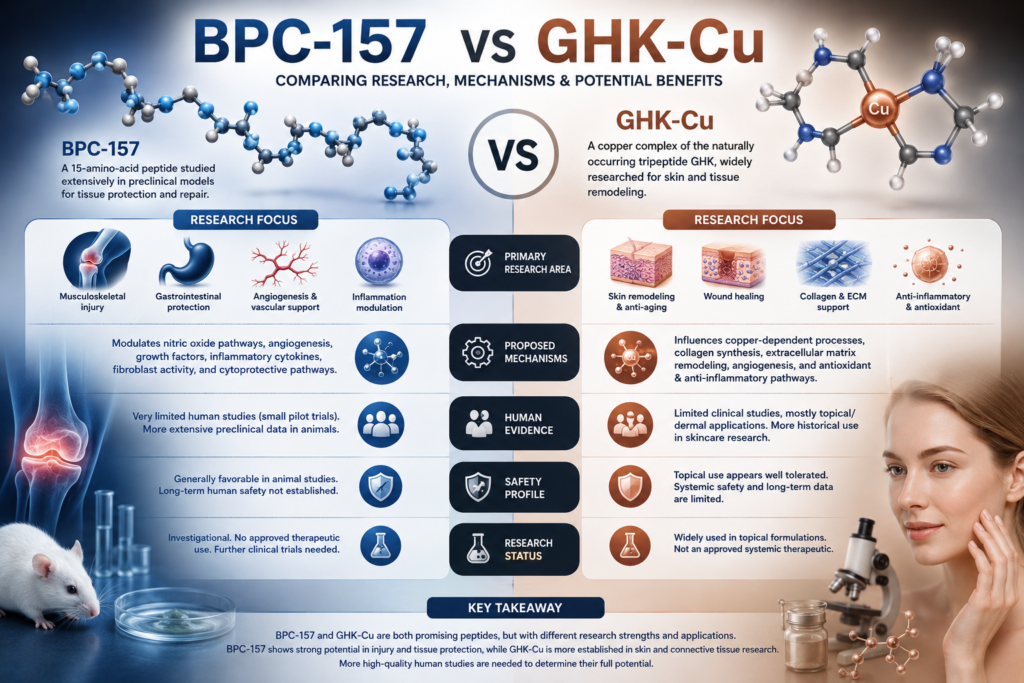
BPC-157 vs GHK-Cu: Key Differences
Feature
BPC-157
GHK-Cu
Peptide type
15-amino-acid peptide
Copper complex of a 3-amino-acid peptide
Biological origin
Investigational/synthetic peptide
GHK is naturally occurring
Major research focus
Tissue protection, injury models, gastrointestinal and musculoskeletal research
Skin remodeling, wound healing, extracellular matrix and tissue regeneration
Research maturity
Predominantly preclinical
Longer history of biological and dermatological research
Human evidence
Very limited
Limited, with more historical topical/dermal research
Copper biology, matrix remodeling, collagen-related processes and inflammation
Clinical status
Investigational
Not an established systemic therapeutic
Major evidence limitation
Lack of rigorous human trials
Limited large-scale clinical evidence, particularly for systemic applications
The table demonstrates why direct claims that one peptide universally outperforms the other are difficult to justify scientifically. BPC-157 vs GHK-Cu Selank
BPC-157 vs GHK-Cu for Tissue Repair
Both peptides have been investigated in relation to tissue repair, but the experimental literature approaches tissue regeneration from somewhat different perspectives.
BPC-157 and tissue repair
BPC-157 has generated substantial interest in musculoskeletal research.
Experimental studies have investigated tendon, ligament, muscle, bone, and muscle-to-tendon or tendon-to-bone injury models. Proposed effects include modulation of angiogenesis, fibroblast activity, inflammatory signaling, and vascular responses.
The appeal of BPC-157 in this field is therefore largely based on its broad protective and regenerative effects observed in experimental models.
The major limitation is translation.
A biological response observed in a rodent injury model does not demonstrate that the same intervention will accelerate recovery in a human patient.
GHK-Cu and tissue repair
GHK-Cu research has historically focused more strongly on skin and connective-tissue biology.
Research on GHK and GHK-Cu has also investigated cellular responses associated with skin repair and remodeling.
This gives GHK-Cu a relatively distinct research identity: rather than being primarily associated with experimental musculoskeletal injury, it has a long history in dermatological and tissue-remodeling research. BPC-157 vs GHK-Cu BPC-157 — Certificate of Analysis
BPC-157 vs GHK-Cu for Wound Healing
Wound healing is an area where the research interests of the two peptides overlap.
BPC-157
Preclinical BPC-157 studies have reported protective and regenerative effects in several tissue-injury models.
A preclinical safety study involving mice, rats, rabbits, and dogs reported no serious toxicity attributable to BPC-157 under the experimental conditions examined. However, animal safety findings cannot establish long-term safety in humans.
BPC-157 research therefore provides a rationale for further investigation of wound repair but does not yet establish a clinically validated wound-healing treatment.
GHK-Cu
GHK-Cu has a longer history of research related to dermal repair.
This research has contributed to the incorporation of copper peptides into topical skincare products.
Importantly, however, evidence supporting topical GHK-Cu should not be interpreted as proof that injectable GHK-Cu has the same effects or safety profile.
BPC-157 vs GHK-Cu: Mechanisms of Action
The mechanisms proposed for BPC-157 and GHK-Cu are another important distinction.
Proposed BPC-157 mechanisms
BPC-157 research has investigated several interconnected pathways, including:
Nitric oxide signaling
Angiogenesis
Vascular function
Growth-factor signaling
Inflammatory pathways
Fibroblast activity
Tissue-protective responses
The peptide is therefore often described as having pleiotropic biological effects.
However, the exact primary molecular targets responsible for these effects remain incompletely characterized.
A major challenge for BPC-157 development is connecting experimental pharmacology to reproducible human pharmacokinetics and pharmacodynamics. A 2026 review specifically identified this translational disconnect as an important development barrier.
Proposed GHK-Cu mechanisms
GHK-Cu has a different biological foundation.
GHK naturally binds copper, and the resulting complex has been investigated for effects on:
Extracellular-matrix remodeling
Collagen-related processes
Wound healing
Inflammation
Oxidative stress
Angiogenesis
Cellular signaling
Research reviews describe GHK-Cu as a multifunctional tissue-remodeling molecule rather than simply a conventional growth factor.
Because GHK-Cu interacts with copper biology, its mechanism cannot be reduced to a single pathway.
Which Has More Research: BPC-157 or GHK-Cu?
The answer depends on what is meant by “more research.”
BPC-157
BPC-157 has accumulated a substantial volume of preclinical research, particularly in animal models of tissue injury and disease.
Recent reviews emphasize that its preclinical literature is considerably larger than its human evidence base.
GHK-Cu
GHK and GHK-Cu have a much longer history of research into tissue remodeling, skin biology, wound repair, and aging-related processes.
A review of GHK-Cu notes that research into its tissue-remodeling and wound-healing properties has extended across several decades, although large-scale human clinical studies remain limited.
Therefore, it would be misleading to rank the two solely by the number of published papers.
The more meaningful distinction is research maturity by indication and route of administration.
Human Evidence: BPC-157 vs GHK-Cu
This is perhaps the most important section for interpreting the literature.
BPC-157 human evidence
Human BPC-157 research remains sparse.
A recent review identified only a small number of human pilot studies, including research involving knee pain, interstitial cystitis, and intravenous safety/pharmacokinetics. The review emphasized that larger and better-controlled clinical trials are still needed.
A 2026 review further reported that available clinical evidence involves fewer than 30 subjects across three uncontrolled pilot studies and that standardized pharmaceutical preparations have not yet been established.
This makes strong clinical claims premature.
GHK-Cu human evidence
GHK-Cu has more historical interaction with human skin research, particularly in topical formulations.
However, the overall clinical evidence is still much smaller than the volume of preclinical research.
A narrative review of peptide therapies for soft-tissue regeneration noted that despite decades of research into GHK-Cu, there are relatively few large-scale clinical studies evaluating its effects in humans.
Consequently, neither peptide currently has the type of large, replicated clinical evidence that would justify broad therapeutic claims across multiple medical conditions.
BPC-157 vs GHK-Cu for Skin
If the research question specifically concerns skin biology, GHK-Cu has a clearer research history.
GHK-Cu has been studied in relation to:
Collagen and extracellular-matrix remodeling
Skin repair
Wound healing
Inflammation
Oxidative stress
Dermal regeneration
The literature has also supported its use in topical cosmetic formulations.
BPC-157, meanwhile, is more frequently investigated in the context of generalized tissue injury, gastrointestinal protection, and musculoskeletal repair.
Therefore, from a literature-positioning perspective:
GHK-Cu has the stronger historical association with skin and dermal research, while BPC-157 has attracted greater attention in experimental injury and musculoskeletal research.
That distinction does not mean either peptide has been conclusively proven clinically superior.
BPC-157 vs GHK-Cu for Muscle, Tendon, and Ligament Research
For musculoskeletal research, BPC-157 is the more prominent of the two.
Studies have examined BPC-157 in models of tendon, ligament, muscle, and related connective-tissue injuries. Recent reviews describe encouraging preclinical findings but emphasize the lack of high-quality human evidence.
GHK-Cu has also been investigated in connective-tissue and tissue-remodeling contexts, but its research profile is more strongly associated with skin and extracellular-matrix biology.
For this reason, researchers comparing the two for musculoskeletal applications should avoid assuming that evidence from GHK-Cu’s dermatological literature translates directly to tendon or ligament repair. BPC-157 vs GHK-Cu
Safety Considerations
Safety is an important differentiator—and an area where both peptides require caution.
BPC-157 safety
Preclinical studies have reported favorable tolerability under specific experimental conditions.
However, the absence of significant toxicity in animal experiments does not establish long-term human safety.
Key unanswered questions include:
Human pharmacokinetics
Repeated-dose toxicity
Immunogenicity
Drug interactions
Reproductive effects
Long-term systemic exposure
Product purity and formulation consistency
GHK-Cu safety
Topical GHK-Cu has a different safety context from injectable or systemic administration.
A review of soft-tissue peptide therapies notes regulatory concerns surrounding compounded injectable GHK-Cu, including potential immune reactions and impurities associated with compounding.
Consequently, the route of administration is critical when interpreting GHK-Cu safety data. BPC-157 vs GHK-Cu
Topical evidence should not automatically be extrapolated to injectable administration.