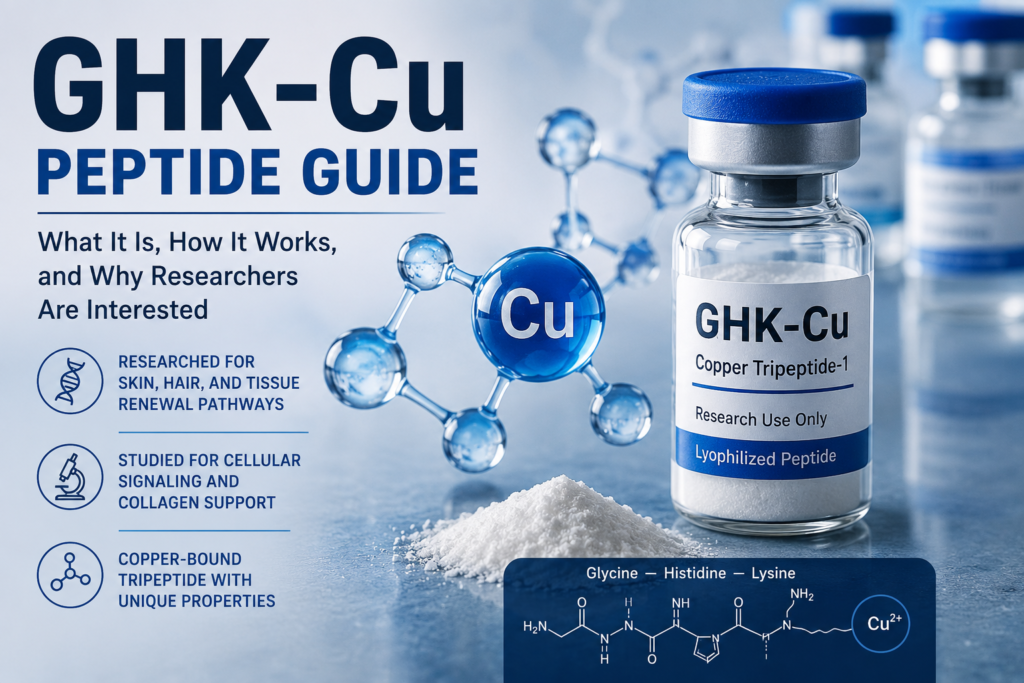
GHK-Cu Peptide Guide
GHK-Cu Peptide Guide
GHK-Cu peptide has become one of the most recognized compounds in peptide research due to its long history of scientific investigation and its unique ability to bind with copper ions. Researchers have explored GHK-Cu in studies involving skin biology, tissue repair, hair follicle biology, and cellular signaling, making it a popular topic within peptide science. GHK-Cu Peptide Guide HOME
GHK-Cu Peptide Guide, If you’re looking to understand what GHK-Cu is, how it works, and what to consider when purchasing research-grade peptides, this guide covers the essentials. SHOP
Disclaimer: This article is provided for educational and research information only. GHK-Cu products sold as research materials are not approved for diagnosing, treating, curing, or preventing disease and are not intended for human consumption unless specifically approved by applicable regulatory authorities.
What Is GHK-Cu?
GHK-Cu, also known as Copper Tripeptide-1, is a naturally occurring tripeptide composed of three amino acids:
- Glycine
- Histidine
- Lysine
When these amino acids bind with a copper (Cu²⁺) ion, they form the copper peptide known as GHK-Cu.
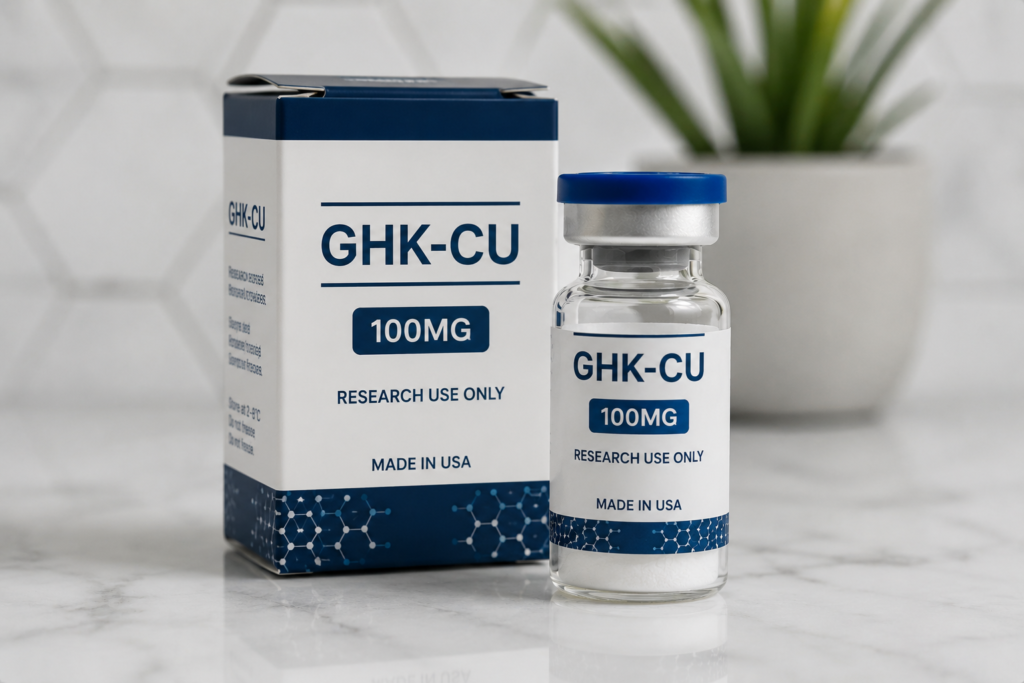
Scientists first identified GHK-Cu in human plasma, and it has since been detected in saliva and urine. Because of its interaction with copper—a trace element involved in numerous biological processes—GHK-Cu has been investigated across a wide range of laboratory studies.GHK-CU 100mg
How Does GHK-Cu Work?
Copper plays an important role in many enzyme systems throughout the body. GHK-Cu functions as a carrier peptide capable of binding copper ions, allowing researchers to investigate how this complex may influence cellular signaling and biological pathways. GHK-Cu Peptide Guide
Laboratory research has examined GHK-Cu’s potential involvement in:
- Cellular communication
- Tissue remodeling
- Extracellular matrix regulation
- Collagen-related pathways
- Oxidative stress responses
- Gene expression
These areas remain active subjects of scientific investigation.
Why Is GHK-Cu Popular in Research?
GHK-Cu has been studied for decades because it appears in multiple areas of biological research.
Scientists commonly investigate GHK-Cu in relation to:
Skin Biology Research
Researchers have explored how GHK-Cu interacts with cellular processes associated with skin structure and extracellular matrix biology.
Areas of investigation include:
- Collagen-related pathways
- Elastin-associated proteins
- Skin remodeling mechanisms
- Cellular signaling
Hair Follicle Research
GHK-Cu is frequently examined in laboratory studies involving hair follicle biology and scalp tissue.
Research topics include:
- Hair follicle activity
- Cellular signaling pathways
- Tissue microenvironment
- Growth factor interactions
Tissue Remodeling Research
Scientists continue studying GHK-Cu because of its possible involvement in:
- Cellular repair mechanisms
- Connective tissue biology
- Extracellular matrix regulation
- Fibroblast activity
Anti-Aging Research
One of the most active areas of investigation focuses on age-related cellular changes.
Research has explored GHK-Cu in connection with:
- Skin elasticity pathways
- Collagen-associated proteins
- Oxidative stress markers
- Cellular maintenance
These studies contribute to a growing body of research but do not establish clinical benefits. GHK-Cu Peptide Guide
Common Forms of GHK-Cu
Research suppliers typically offer GHK-Cu in several formats.
Lyophilized Powder
Freeze-dried powder intended for laboratory research.
Advantages include:
- Longer shelf life
- Greater stability before reconstitution
- Convenient storage
Cosmetic Research Ingredients
GHK-Cu is also incorporated into cosmetic research formulations used to study topical delivery systems and ingredient performance.
How Should Research-Grade GHK-Cu Be Stored?
Proper storage helps preserve product integrity.
General recommendations include:
- Store unopened vials according to the supplier’s instructions.
- Protect from excessive heat, moisture, and direct sunlight.
- If a product requires reconstitution for laboratory use, follow the manufacturer’s storage guidance.
- Avoid repeated freeze-thaw cycles unless specifically recommended.
Always refer to the documentation supplied with your product. GHK-Cu Peptide Guide
What to Look for When Buying Research-Grade GHK-Cu
Selecting a reputable supplier is essential for research quality.
Consider the following:
High Purity
Look for products accompanied by purity information and quality documentation.
Certificate of Analysis (COA)
A trustworthy supplier should provide a Certificate of Analysis showing relevant testing information for each batch.
Laboratory Testing
Choose suppliers that emphasize analytical testing and quality-control procedures.
Secure Packaging
Quality packaging helps maintain product integrity during storage and shipping.peptides.com
Transparent Product Information
Reliable suppliers clearly provide:
- Product concentration
- Batch information
- Storage recommendations
- Research-use designation
- Quality documentation