
How to Store GHK-Cu Peptides
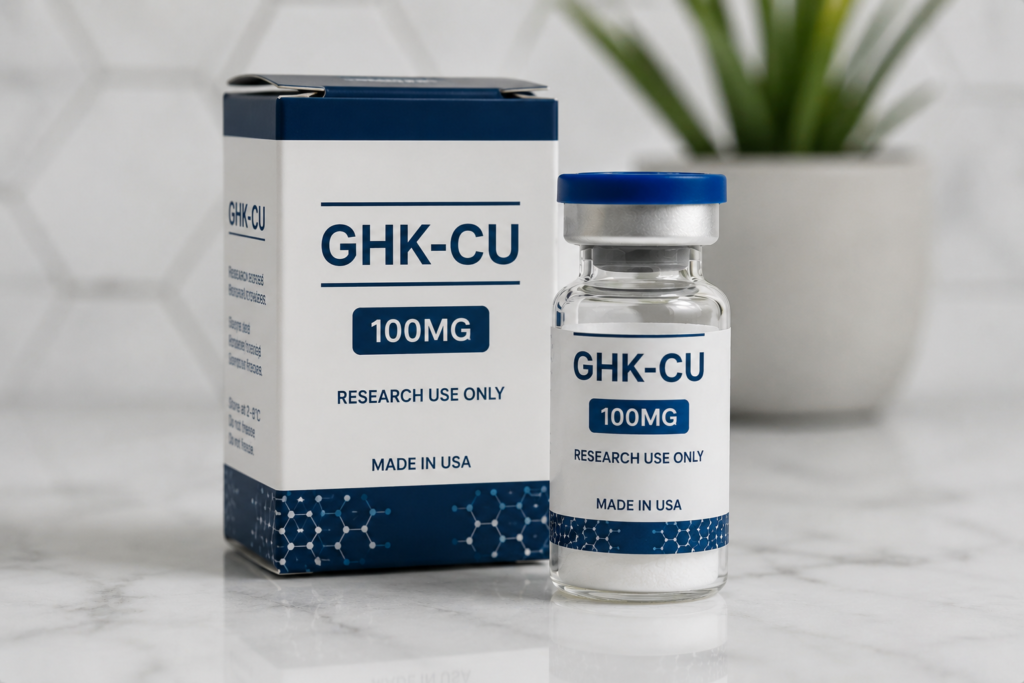
How to Store GHK-Cu Peptides, Proper storage is one of the most important factors in preserving the quality of research-grade peptides. Whether you’re purchasing GHK-Cu for laboratory research or building a peptide inventory, following the manufacturer’s storage recommendations can help protect product integrity during transportation, storage, and handling. GHK-CU 100mg
In this guide, you’ll learn How to Store GHK-Cu Peptides, the differences between lyophilized and reconstituted products, and what to consider when buying high-quality research-grade GHK-Cu.How to Store GHK-Cu Peptides GHK-Cu Peptide Guide
Disclaimer: This article is intended for educational and research purposes only. Research-grade peptides are not approved for human consumption and should only be handled according to the supplier’s instructions and applicable laboratory practices. How to Store GHK-Cu Peptides SHOP
Why Proper Storage Matters
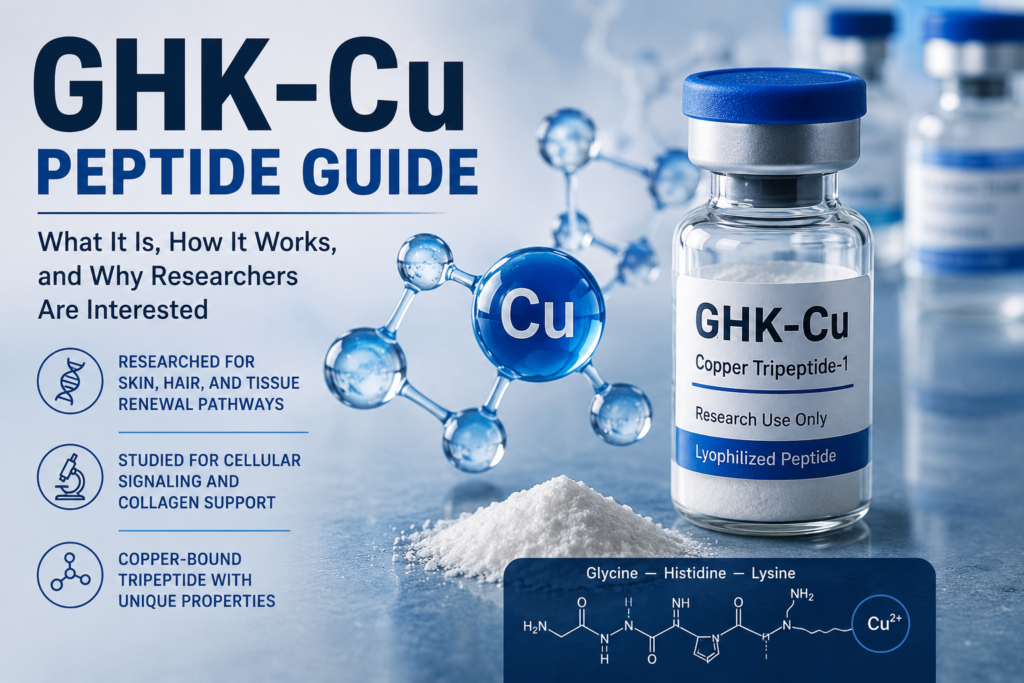
GHK-Cu (Copper Tripeptide-1) is a peptide commonly supplied as a lyophilized (freeze-dried) powder. Like many research materials, peptide quality can be affected by environmental conditions such as heat, moisture, and repeated temperature fluctuations.
Correct storage may help:
- Protect product stability
- Reduce unnecessary exposure to moisture
- Maintain research consistency
- Preserve product quality before laboratory use
Always follow the storage instructions supplied by the manufacturer, as recommendations may vary by formulation and packaging. How to Store GHK-Cu Peptides thymosin alpha-1
How to Store GHK-Cu Peptides Properly
The best way on How to Store GHK-Cu Peptides depends on whether the product is supplied as a dry powder, mixed solution, or finished cosmetic product. Always begin by checking the product label and any accompanying storage documentation.
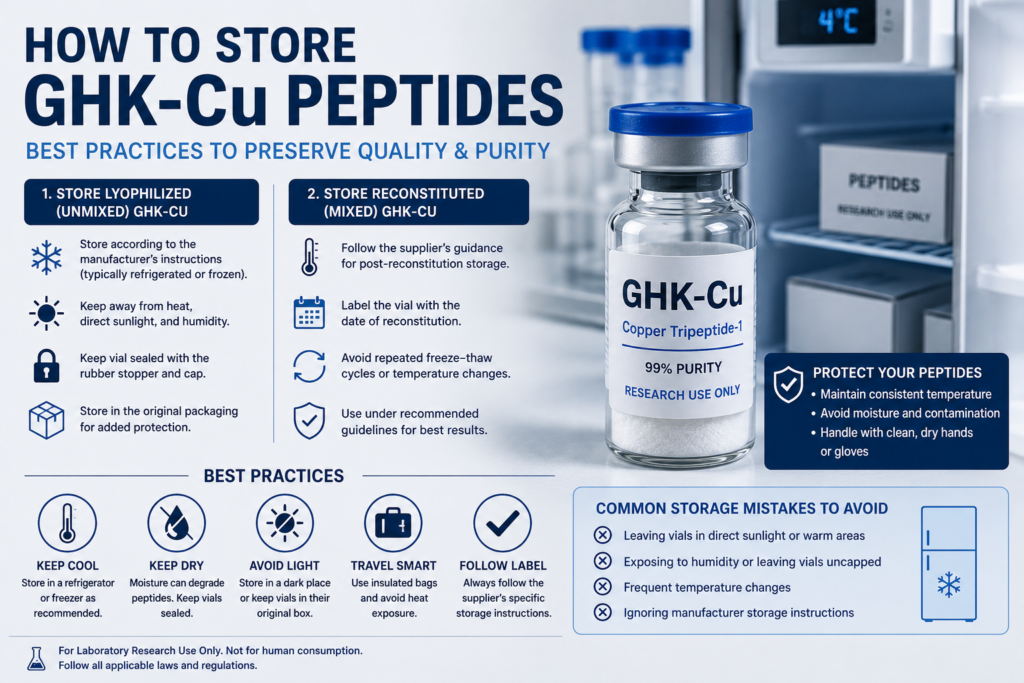
1. Store GHK-Cu Powder in a Cool, Dry Place
Lyophilized GHK-Cu powder contains relatively little moisture, but it should still be protected from unsuitable storage conditions.
For products supplied in powder form:
- Follow the temperature range specified by the manufacturer.
- Keep the container tightly sealed when not in use.
- Protect the product from moisture and excessive humidity.
- Avoid leaving the container in direct sunlight or near heat sources.
- Store it in its original packaging whenever possible.
How to Store GHK-Cu Peptides, Some peptide products require refrigerated or frozen storage, while others have different specified conditions. Do not assume that all GHK-Cu powders have identical storage requirements.
Important: Allow for any condensation risk when moving a refrigerated or frozen container into a warmer environment. Follow the manufacturer’s instructions for handling and opening the container.
2. Follow Specific Instructions for Reconstituted GHK-Cu
Reconstituted GHK-Cu is a preparation in which a dry product has been mixed with a liquid. Its stability can differ significantly from that of the original powder.
Once a peptide is in solution, factors such as temperature, pH, the solvent used, and exposure to light may affect its stability. The presence of water can also introduce additional microbiological concerns, depending on the formulation and how it was prepared.
If your product has been reconstituted:
- Check the manufacturer’s instructions for the required storage temperature.
- Follow the stated beyond-use date or recommended period of use.
- Avoid unnecessary exposure to heat and direct light.
- Keep the container closed and handle it only as directed.
- Do not assume that refrigeration guarantees sterility or prevents all forms of degradation.
Do not establish a storage duration based solely on general advice about peptides. The appropriate timeframe depends on the particular formulation and available stability data. How to Store GHK-Cu Peptides thymosin alpha-1
3. Store GHK-Cu Serums and Skincare Products According to the Label
GHK-Cu is also used in cosmetic formulations, including facial serums and creams. These products may contain preservatives, stabilizers, solvents, and other active ingredients that influence their storage requirements.
For finished skincare products:
- Store them at the temperature stated on the packaging.
- Keep them away from direct sunlight and excessive heat.
- Close the lid or cap securely after each use.
- Avoid introducing water or other substances into the container.
- Observe the expiration date and any period-after-opening symbol.
How to Store GHK-Cu Peptides, Refrigeration is not automatically necessary for every copper peptide serum. Some products are designed to remain stable at room temperature, while others may have specific storage recommendations. L-carnitine
How to Store Lyophilized GHK-Cu Peptides
Lyophilized GHK-Cu is generally more stable than reconstituted peptide solutions, making it the preferred format for long-term storage before laboratory preparation.
Best practices include:
- Keep the vial tightly sealed until needed.
- Store according to the supplier’s recommended temperature.
- Protect the product from direct sunlight.
- Avoid excessive humidity.
- Keep the vial in its original packaging whenever possible.
How to Store GHK-Cu Peptides, Minimizing unnecessary handling can also help reduce exposure to environmental contaminants. cagrisema
How to Store Reconstituted GHK-Cu
If a laboratory protocol requires reconstitution, storage requirements typically differ from those of the dry powder.
General considerations include:
- Follow the supplier’s recommendations after reconstitution.
- Store only under the conditions specified for the prepared solution.
- Avoid repeated warming and cooling cycles unless recommended.
- Label the preparation with the reconstitution date as part of good laboratory practice.
How to Store GHK-Cu Peptides, Do not assume that storage guidance for one peptide applies to another, as formulations may differ.
Protect GHK-Cu from Heat and Moisture
Environmental exposure can affect many research materials.
To help maintain product quality:
- Avoid leaving vials in hot vehicles.
- Do not expose products to prolonged direct sunlight.
- Protect packaging from excess humidity.
- Keep storage areas clean and dry.
How to Store GHK-Cu Peptides, Consistent storage conditions are generally preferable to frequent temperature changes. tirzepatide
Avoid Repeated Temperature Fluctuations
One commonly recommended practice for many laboratory materials is minimizing repeated changes in storage temperature.
Examples include:
- Limiting unnecessary removal from storage.
- Returning products promptly after use, when appropriate.
- Following supplier guidance regarding refrigeration or freezing.
Should GHK-Cu Be Frozen?
Storage recommendations vary by manufacturer and formulation.
Some suppliers provide refrigeration guidance, while others may recommend freezing for specific products or storage durations. Always rely on the instructions supplied with the specific batch you purchase rather than generalized advice. How to Store GHK-Cu Peptides
Traveling with Research Peptides
If transporting research-grade GHK-Cu:
- Keep products securely packaged.
- Avoid prolonged exposure to heat.
- Protect from direct sunlight.
- Follow any shipping or handling instructions provided by the supplier.
Choosing a supplier that uses appropriate protective packaging can help maintain product quality during transit.

Signs of a High-Quality GHK-Cu Supplier
Proper storage begins with buying from a supplier that prioritizes quality.
Look for vendors that provide:
Certificate of Analysis (COA)
A COA offers information about product testing and quality control for a specific batch.
High-Purity Research Products
Choose suppliers that clearly identify purity specifications and intended research use.
Secure Packaging
Well-designed packaging helps protect peptides during shipping and storage.
Transparent Storage Instructions
Reliable suppliers provide clear guidance for storing unopened and prepared products.
Batch Information
Batch numbers improve traceability and quality assurance. How to Store GHK-Cu Peptides
Common Storage Mistakes to Avoid
Proper storage involves more than choosing a refrigerator or cupboard. Avoid these common mistakes to help protect product quality.
Storing Every Formulation the Same Way
Dry powders, prepared solutions, and finished cosmetic products have different compositions and stability requirements. Use the instructions for the exact product you have.
Leaving the Container Open
Leaving a container open unnecessarily may expose its contents to moisture, environmental contaminants, or other unfavorable conditions. Close it promptly according to the product’s handling instructions.
Exposing the Product to Heat
Locations such as sunny windowsills, hot vehicles, and areas near heating equipment can experience temperature fluctuations. Choose a location that meets the manufacturer’s storage requirements.
Ignoring Expiration and Opening Dates
Record the relevant date when a product is opened or prepared, if instructed. Follow the stated expiration or beyond-use date rather than extending it based on appearance.
Assuming Refrigeration Makes a Product Sterile
Cold storage does not reliably eliminate microorganisms or reverse contamination. Storage temperature and microbiological safety are separate considerations.
Avoid these common errors:
- Leaving products in direct sunlight.
- Exposing vials to excessive heat.
- Allowing moisture to enter opened containers.
- Ignoring manufacturer storage instructions.
- Frequently changing storage temperatures without necessity.
- Storing products in unsuitable environments.
Frequently Asked Questions About How to Store GHK-Cu Peptides
1. What is the best way to store GHK-Cu peptides?
The best storage method depends on the formulation. Keep the product in its original, properly closed container, protect it from unsuitable heat, moisture, and light, and follow the manufacturer’s specified temperature range.
2. Does GHK-Cu powder need to be refrigerated?
Not every GHK-Cu powder has the same requirements. Some products may require refrigeration or frozen storage, while others may have different conditions. Check the manufacturer’s instructions before choosing a storage location.
3. Should GHK-Cu serum be kept in the refrigerator?
Only if the manufacturer recommends or requires refrigeration. Many finished skincare products are formulated for storage under specified room-temperature conditions, and refrigeration is not automatically beneficial for every serum.
4. Can GHK-Cu be stored at room temperature?
Some GHK-Cu products may be stored at room temperature if their labels permit it. Others require controlled or colder storage. Confirm the appropriate conditions for the specific product.
5. Can GHK-Cu peptides go bad?
Yes. Depending on the formulation and storage conditions, a GHK-Cu product may undergo chemical or physical changes over time. Contamination can also be a concern for products containing water. Follow the applicable expiration date and storage instructions.
6. Does GHK-Cu change color over time?
Some GHK-Cu formulations naturally have a blue color because they contain copper. An unexpected change from the product’s original appearance may warrant further investigation, but color alone cannot establish whether a product is safe, potent, or stable.
7. Can I freeze GHK-Cu to make it last longer?
Do not freeze GHK-Cu unless the product’s instructions permit or recommend it. Freezing is not suitable for every formulation, and repeated freeze-thaw cycles may affect some products.
8. What should I do if my GHK-Cu product was stored incorrectly?
Check how long the product was exposed to the incorrect conditions and compare that information with the manufacturer’s stability guidance. Contact the manufacturer or dispensing professional if the product may have exceeded its specified storage limits. Do not assume that returning it to the recommended temperature restores its original quality.