
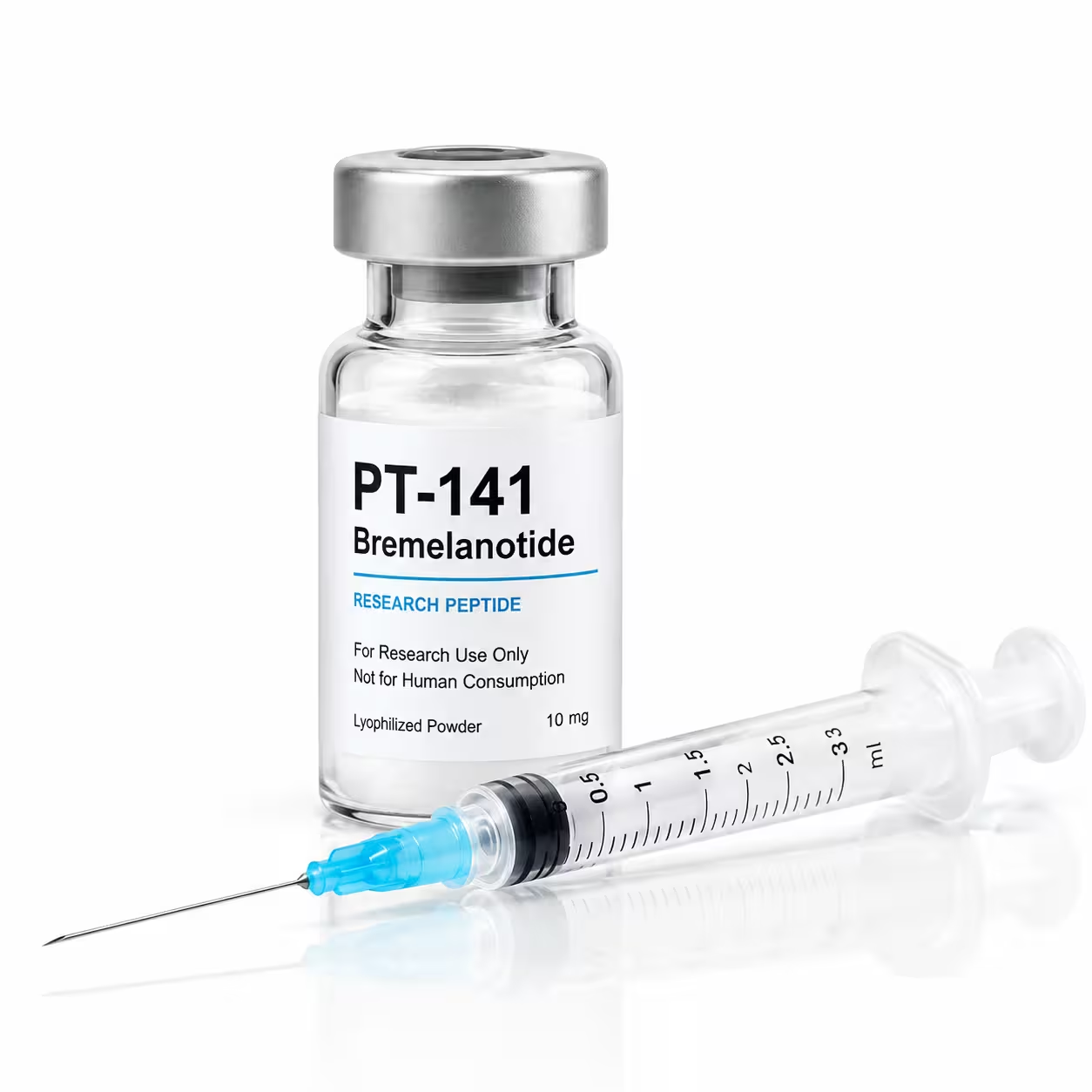
PT-141 Bremelanotide: What It Is, How It Works, Uses, and Safety
pt-141 bremelanotide, also known as bremelanotide, is a synthetic peptide that has been studied for its effects on sexual desire and arousal. Unlike medications that primarily affect blood flow, bremelanotide acts on melanocortin receptors in the central nervous system. nad+
Because pt-141 bremelanotide is frequently discussed in peptide research and sexual-health contexts, understanding what bremelanotide is, how it works, its potential applications, and its safety considerations is important before evaluating any product labeled as pt-141 bremelanotide. aod-9604 peptide
What Is PT-141 Bremelanotide?
pt-141 bremelanotide is the commonly used research name for bremelanotide, a synthetic cyclic peptide derived from melanocortin-related compounds.
pt-141 bremelanotide is associated with activation of melanocortin receptors, particularly MC3R and MC4R. These receptors are involved in several physiological processes, including sexual motivation and behavioral responses.
pt-141 bremelanotide has attracted interest because its mechanism differs from that of phosphodiesterase type 5 (PDE5) inhibitors. Rather than primarily producing an effect through vascular mechanisms, bremelanotide has a central nervous system mechanism associated with sexual desire and arousal.
How Does pt-141 bremelanotide Work?
pt-141 bremelanotide works through the melanocortin receptor system.
Research indicates that activation of melanocortin receptors can influence neural pathways associated with sexual motivation and arousal. This is different from medications such as sildenafil, which work primarily by increasing blood flow through inhibition of PDE5.
The distinction is important because sexual function involves multiple physiological and psychological factors. Desire, arousal, vascular response, hormonal signaling, and neurological pathways can all contribute to sexual function.
pt-141 bremelanotide and Melanocortin Receptors
pt-141 bremelanotide has activity at melanocortin receptors, with effects involving receptors in the central nervous system. Researchers have investigated these pathways because of their relationship to sexual behavior and motivation.
The melanocortin system is also involved in other physiological processes, meaning that compounds affecting these receptors can produce effects beyond sexual function.
PT-141 vs. Other Sexual-Health Compounds
PT-141 is often compared with conventional medications used for erectile dysfunction. However, the mechanisms are different.
| Compound/Class | General mechanism | Primary research or clinical context |
|---|---|---|
| PT-141 / bremelanotide | Melanocortin receptor agonism | Sexual desire/arousal |
| Sildenafil | PDE5 inhibition | Erectile dysfunction |
| Tadalafil | PDE5 inhibition | Erectile dysfunction |
| Melanotan-related peptides | Melanocortin receptor activity | Primarily studied for pigmentation and related effects |
This means PT-141 should not simply be viewed as another version of a PDE5 inhibitor. Its mechanism involves different biological pathways.
What Is Bremelanotide Used For?
Bremelanotide has been investigated for sexual dysfunction and was developed as a treatment for acquired, generalized hypoactive sexual desire disorder (HSDD) in premenopausal women.
In the United States, bremelanotide is available as the prescription medication Vyleesi for that specific indication.
Importantly, this does not mean that every product marketed online as “PT-141” is an approved medication. Products sold as research peptides may have different manufacturing standards, labeling, regulatory status, and intended use.
PT-141 for Research
PT-141 is also discussed in peptide research because the melanocortin receptor system provides an interesting model for studying sexual motivation and behavior.
Research involving bremelanotide has examined subjects including:
- Sexual desire and motivation
- Central melanocortin signaling
- Sexual arousal pathways
- Melanocortin receptor activity
- Interactions between neurological and physiological aspects of sexual function
Researchers continue to investigate how melanocortin pathways influence sexual behavior and other biological processes.
PT-141 Benefits: What Does Research Suggest?
Searches for “PT-141 benefits” often produce broad claims online. It is important to distinguish established clinical information from claims associated with unapproved or research-use peptide products.
The strongest established clinical context for bremelanotide concerns its prescription use for a specific form of acquired, generalized HSDD in premenopausal women.
Research into melanocortin pathways has also contributed to scientific understanding of sexual motivation and arousal.
However, evidence for using non-prescription PT-141 products for other purposes should not be assumed simply because bremelanotide has been studied clinically.
PT-141 Side Effects and Safety
Bremelanotide can cause adverse effects. The most commonly reported adverse reaction associated with prescription bremelanotide is nausea.
Other reported effects include:
- Flushing
- Injection-site reactions
- Headache
- Vomiting
- Temporary increases in blood pressure
- Temporary decreases in heart rate
- Skin darkening or hyperpigmentation
Because bremelanotide affects melanocortin receptors and can influence cardiovascular parameters, safety considerations are important.
Prescription bremelanotide also has contraindications and precautions. Anyone considering its use should discuss personal medical circumstances and potential interactions with a qualified healthcare professional.
Does PT-141 Increase Blood Pressure?
Bremelanotide can temporarily increase blood pressure and reduce heart rate. This is one reason cardiovascular history can be relevant when evaluating whether prescription bremelanotide is appropriate.
People with cardiovascular conditions or uncontrolled hypertension should not assume that PT-141 is appropriate for them.
Medical advice is particularly important when considering compounds that can affect blood pressure or interact with other medications.
PT-141 and Women
Bremelanotide has an established prescription indication related to acquired, generalized HSDD in premenopausal women.
Its development followed research into the role of melanocortin receptors in sexual desire and arousal.
It is important to distinguish the approved prescription medication from products marketed online as “PT-141 peptide” or “research PT-141.” The latter may not have undergone the same regulatory review or quality controls as an approved prescription drug.
PT-141 and Men
Bremelanotide has also been studied in men, including research investigating sexual arousal and erectile responses.
However, research findings do not automatically establish an approved medical indication for every population or condition.
Anyone considering bremelanotide for sexual-health concerns should discuss the underlying issue with a healthcare professional rather than relying solely on online peptide claims.
How Is PT-141 Administered?
Prescription bremelanotide is administered by subcutaneous injection using the approved product’s delivery system.
Because online products labeled “PT-141” may differ substantially in concentration, formulation, sterility, and labeling, consumers should not assume that instructions for an approved prescription product apply to an unapproved research product.
For prescription bremelanotide, administration should follow the official prescribing information and instructions provided by a healthcare professional.
PT-141 Storage and Handling
Peptide products can be sensitive to environmental conditions, including temperature and handling.
Storage requirements can vary depending on the specific formulation and product. For an approved prescription medication, users should follow the manufacturer’s storage instructions rather than relying on generalized peptide-storage recommendations found online.
For products labeled for research use, the manufacturer’s documentation should be reviewed carefully.
PT-141 Research Peptide vs. Prescription Bremelanotide
One of the most important distinctions when researching PT-141 is the difference between bremelanotide as an approved prescription medication and products marketed as research peptides.
A prescription medication has undergone regulatory review for specific uses and manufacturing requirements. A research-use product may not have been evaluated or approved for human use.
Reviews
There are no reviews yet.