
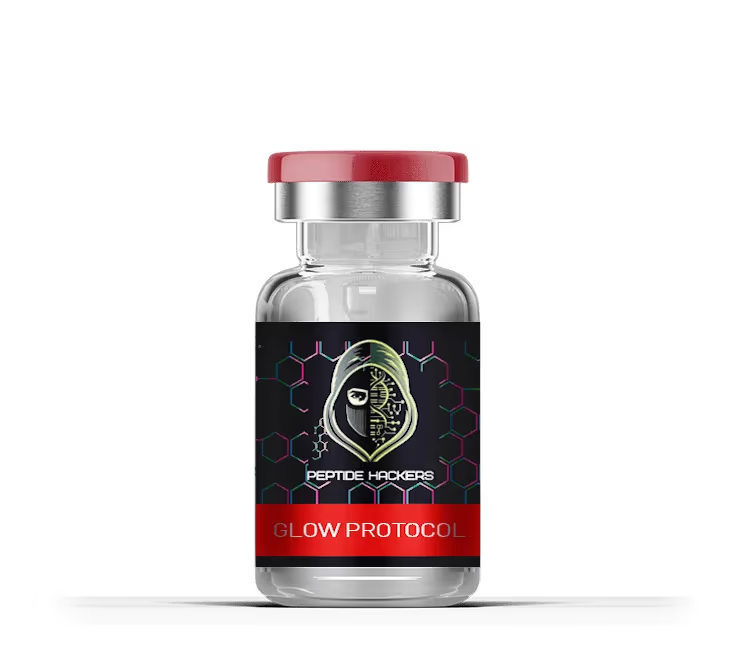
Glow Peptide: What It Is, Ingredients, Benefits, Research & Safety
Glow peptide is a name commonly used for a three-peptide research blend containing GHK-Cu, BPC-157, and TB-500. Unlike a single peptide such as GHK-Cu, Glow is a combination of separate compounds formulated together. GHK-CU 100mg
The exact formulation can vary between suppliers, so the name “Glow peptide” does not refer to one standardized pharmaceutical product. Commercial research products commonly use a formulation containing GHK-Cu, BPC-157, and TB-500, with some products offered in different ratios or quantities. bpc 157 peptide
The combination has become particularly popular in online peptide research discussions because the three components are associated with different areas of laboratory research, including extracellular-matrix activity, tissue biology, cell migration, and skin-related pathways. Tesofensine Peptide
However, an important distinction is necessary: the Glow combination itself has not been established as an FDA-approved treatment, and published controlled human trials of the three-peptide combination are lacking. Evidence about Glow therefore has to be separated from evidence about its individual ingredients. what does ghk cu do
What Is in Glow Peptide?
Most Glow peptide products contain three primary ingredients:
1. GHK-Cu
GHK-Cu, also known as copper tripeptide, is a copper-containing peptide that has been investigated extensively in skin and connective-tissue research.
Research involving GHK-Cu has examined processes associated with extracellular-matrix remodeling, collagen, wound-related biology, and skin structure.
GHK-Cu is generally considered the component of the Glow blend most closely associated with cosmetic and skin research.
2. BPC-157
BPC-157 is a synthetic pentadecapeptide that has attracted considerable interest in experimental research.
Much of the research surrounding BPC-157 involves laboratory and animal models investigating tissue, vascular, gastrointestinal, and inflammatory pathways.
Importantly, promising findings in animal models do not establish that BPC-157 is an effective or safe treatment for humans.
3. TB-500
TB-500 is a synthetic peptide associated with thymosin-beta-4 research and is investigated in connection with cellular movement, tissue biology, and related processes.
Like BPC-157, much of the evidence surrounding TB-500 remains preclinical. It should therefore not be confused with an FDA-approved therapeutic medication. Glow Blend (TB 10mg + BPC 10mg + GHK 50mg)
How Does Glow Peptide Work?
The basic concept behind the Glow blend is that its three components are investigated through different biological pathways.
GHK-Cu is primarily associated with skin and extracellular-matrix research. BPC-157 has been investigated in experimental models involving tissue and vascular processes, while TB-500 is associated with research into cell migration and cytoskeletal activity.
This is the theoretical reason these compounds are sometimes combined.
However, it is important not to overstate the evidence.
Research on three individual peptides does not automatically prove that combining them produces a particular clinical benefit.
There is currently no strong clinical evidence demonstrating that Glow as a complete three-peptide formulation provides specific therapeutic benefits in humans. What Does Ipamorelin Do?
What Are the Potential Benefits of Glow Peptide?
Online discussions frequently associate Glow peptide with:
- Skin appearance and skin quality
- Collagen-related research
- Tissue repair research
- Connective-tissue research
- Cellular signaling
- Recovery-related research
- Hair and skin research
However, these claims need to be interpreted carefully.
The strongest way to describe Glow is as a research blend whose individual components have been investigated in different experimental settings.
For example, GHK-Cu has a body of research involving skin and extracellular-matrix biology, while BPC-157 and TB-500 have generated substantial interest through preclinical research. That does not mean the complete Glow blend has been clinically proven to produce the same outcomes. cjc-1295+ ipamorelin
Glow Peptide and Skin Research
The “Glow” name is partly connected to the interest surrounding GHK-Cu and its relationship with skin biology.
GHK-Cu has been investigated for its effects on processes involved in extracellular-matrix remodeling and collagen-related activity. This has made copper peptides particularly interesting in cosmetic and dermatological research.
When Glow is discussed in the context of skin, it is therefore important to distinguish between:
GHK-Cu research — research specifically involving the copper peptide.
and
Glow blend claims — claims made about the combination of GHK-Cu, BPC-157, and TB-500.
The latter has a much weaker evidence base because the combination itself has not undergone the same level of controlled clinical investigation.
Is Glow Peptide FDA Approved?
No. Glow peptide is not an FDA-approved drug.
Glow is a research blend rather than a standardized FDA-approved pharmaceutical product. FDA has also raised safety and regulatory concerns regarding certain compounded peptide substances, including BPC-157.
Consumers should therefore be cautious when encountering websites that describe Glow peptide as an established treatment for injuries, aging, skin conditions, or other medical conditions.
A website selling a product does not mean that the product has been evaluated and approved by the FDA for human treatment.
Is Glow Peptide Safe?
The safety profile of the complete Glow combination has not been adequately established through controlled human clinical trials.
There are several reasons for caution:
Limited human evidence
The three ingredients have different research histories, but evidence for the combination itself is limited.
Product variability
Because Glow is a commercial blend rather than a standardized pharmaceutical molecule, formulations can differ between suppliers.
Manufacturing quality
Research peptide products can vary in purity, identity, concentration, storage conditions, and manufacturing quality.
Unknown long-term effects
Long-term human safety data for the complete Glow combination are not established.
For these reasons, Glow peptide should not be assumed to be safe simply because individual ingredients have appeared in scientific research.
Why Glow Peptide Formulations Can Differ
One important consideration when researching Glow peptide products is that there is no universal Glow formulation.
For example, some commercially available research products describe a 70 mg blend containing 50 mg GHK-Cu, 10 mg BPC-157, and 10 mg TB-500, while other products use different amounts or delivery formats.
That means consumers should always examine the actual product documentation rather than assuming every product labeled “Glow” contains identical ingredients. cjc-1295+ ipamorelin
What Should You Look for in a Glow Peptide Product?
If you are researching Glow peptide products for legitimate laboratory research, product documentation is more important than marketing claims.
Look for:
Certificate of Analysis
A batch-specific Certificate of Analysis (COA) can provide information about analytical testing.
Identity testing
The documentation should identify what compounds were actually detected.
Purity testing
Analytical testing may provide information about the purity of the tested material.
Lot or batch number
A traceable batch number can help connect the product with its analytical documentation.
Manufacturer information
Transparent supplier and manufacturer information can make it easier to evaluate the provenance of a research material.
Storage information
Research peptides may require specific storage and handling conditions.
Clear intended use
Products labeled for research should not be marketed as approved human medicines. what is ace 031 peptide
Glow Peptide vs. Individual Peptides
One reason researchers may be interested in a blend is convenience.
Instead of investigating GHK-Cu, BPC-157, and TB-500 separately, a combined formulation allows researchers to investigate multiple compounds within a single experimental material.
However, a blend also introduces additional variables.
If an experimental result occurs, determining which component caused the effect can be more difficult than studying each compound independently.
This is one reason controlled research commonly evaluates individual compounds before investigating combinations. ACE-031
Glow Peptide Research vs. Medical Treatment
It is important to understand the difference between research use and medical treatment.
A research peptide may be used by qualified researchers to investigate molecular pathways, cellular behavior, biochemical activity, or other scientific questions.
That does not establish that the material is appropriate for self-administration or treatment of a medical condition.
Research findings should also not be interpreted as proof that Glow can:
- Heal injuries
- Reverse aging
- Cure disease
- Build muscle
- Treat chronic pain
- Regrow hair
- Replace conventional medical treatment
Such claims require appropriate clinical evidence. Semax
Reviews
There are no reviews yet.