
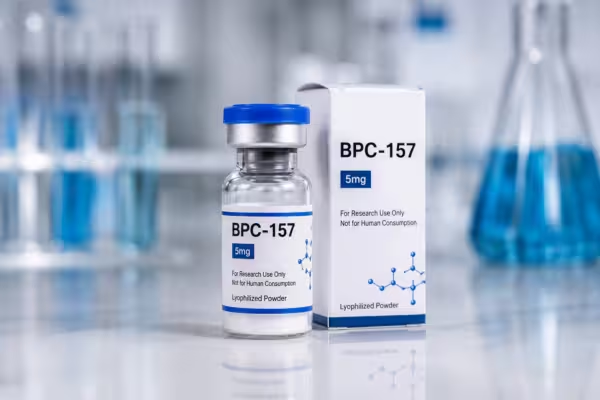
BPC-157 Peptide: What It Is, Research, Potential Benefits & Safety
BPC-157 peptide is a synthetic peptide that has attracted significant interest in preclinical research, particularly in studies involving tissue repair, gastrointestinal function, inflammation, and cellular processes. It is frequently discussed online in connection with recovery, exercise, and soft-tissue research. BPC-157 peptide research
Despite its growing popularity, it is important to distinguish BPC-157 Peptide laboratory research findings from proven human medical benefits. Much of the research surrounding BPC-157 Peptide has been conducted in laboratory and animal models, and considerably more human research is needed to establish its safety, effectiveness, appropriate applications, and long-term effects. BPC-157 vs GHK-Cu
This informational guide explains what BPC-157 Peptide is, why it is being researched, potential areas of scientific interest, safety considerations, and frequently asked questions. what is BPC-157?
What Is BPC-157 Peptide?
BPC-157 Peptide is a synthetic peptide consisting of 15 amino acids. The name is commonly associated with “Body Protection Compound,” and the peptide has been investigated for a variety of biological effects.
Researchers have explored BPC-157 in experimental models involving:
- Tissue and wound repair
- Gastrointestinal function
- Inflammation
- Blood-vessel formation
- Cellular signaling
- Muscle and connective-tissue research
- Nervous-system processes
BPC-157 Peptide is not the same as a conventional dietary supplement, protein, or human growth hormone. It is a research peptide, and its regulatory status and availability can vary by jurisdiction. BPC-157 research
How Does BPC-157 Peptide Work?
The precise biological mechanisms of BPC-157 are still being investigated. Preclinical research suggests that the peptide may interact with several biological pathways involved in tissue responses, vascular processes, inflammation, and cellular signaling.
Researchers have investigated possible relationships between BPC-157 and processes such as:
- Angiogenesis, or the formation of new blood vessels
- Nitric oxide signaling
- Cellular migration
- Tissue remodeling
- Inflammatory responses
- Gastrointestinal protection
However, the fact that a compound affects a particular biological pathway does not establish that it will produce a clinically meaningful benefit in humans. BPC-157 Capsules vs Injectable BPC-157
BPC-157 Potential Benefits: What Is Being Researched?
BPC-157 is commonly marketed online with claims involving recovery, healing, muscle development, and other health benefits. Scientific research should be used to distinguish these claims from established evidence. Glow Blend (TB 10mg + BPC 10mg + GHK 50mg)
Tissue Repair Research
One of the major areas of interest surrounding BPC-157 is tissue repair. Preclinical studies have investigated the peptide in experimental models involving different types of tissue injury.
Research has explored potential effects involving connective tissue, muscle, ligaments, tendons, and other tissues.
However, promising animal or laboratory findings cannot automatically be translated into proven human treatments.
Gastrointestinal Research
BPC-157 has also been studied in experimental models involving the gastrointestinal system.
Researchers have investigated potential effects related to intestinal injury, inflammation, and gastrointestinal tissue protection. These findings have contributed to interest in BPC-157 as a subject for further gastrointestinal research. cjc-1295+ ipamorelin
Inflammation Research
Inflammatory responses are involved in many forms of tissue injury and disease. Experimental studies have examined whether BPC-157 can influence inflammatory pathways and tissue responses.
The significance of these findings for human health remains uncertain because robust clinical evidence is limited.
Muscle and Connective-Tissue Research
BPC-157 has become particularly popular in fitness and sports communities because of research involving muscle and connective tissues.
Preclinical studies have investigated its relationship with processes involved in tissue recovery. However, there is currently insufficient clinical evidence to conclude that BPC-157 is an established treatment for sports injuries or that it reliably improves athletic recovery. Tesamorelin + Ipamorelin
BPC-157 and Recovery
Searches for “BPC-157 for recovery” are common because of the peptide’s reputation in fitness and bodybuilding communities.
The interest is largely connected to preclinical research examining tissue responses following experimental injury. However, recovery is a complex process involving blood supply, inflammation, nutrition, mechanical loading, sleep, and numerous other biological factors.
Therefore, BPC-157 should not be presented as a proven shortcut for recovery or as a replacement for appropriate medical treatment and rehabilitation. tesamorelin peptide
Is BPC-157 FDA Approved?
BPC-157 should not be represented as an FDA-approved treatment for injuries, inflammation, gastrointestinal disorders, muscle recovery, or other medical conditions.
Regulatory status can differ between countries, and products sold online may not have undergone the rigorous evaluation required for approved medicines.
Consumers should also be aware that research-peptide products can vary in:
- Purity
- Identity
- Concentration
- Sterility
- Contamination
- Manufacturing quality
- Storage stability
A product label alone does not guarantee that a peptide contains the stated compound or concentration.
BPC-157 Safety
The safety profile of BPC-157 in humans has not been adequately established. This is one of the most important considerations when evaluating information about the peptide.
Potential risks are difficult to characterize because high-quality, long-term human safety data are limited.
Additional concerns may arise with products obtained from unregulated sources, particularly when manufacturing standards, sterility, or product identity cannot be independently verified.
Anyone considering an unapproved peptide should discuss the risks with a qualified healthcare professional rather than relying on online testimonials or vendor claims.
BPC-157 Peptide vs. Supplements
BPC-157 is fundamentally different from conventional nutritional supplements.
A dietary supplement typically contains ingredients such as vitamins, minerals, amino acids, or other nutritional substances. BPC-157 is a synthetic peptide being investigated for biological activity.
This distinction matters because “natural,” “research,” or “peptide” does not automatically mean safe or clinically proven.
BPC-157 Peptide Research vs. Marketing Claims
The popularity of BPC-157 Peptide has grown much faster than the amount of high-quality human evidence available for many of the claims associated with it.
Online descriptions may refer to BPC-157 as a:
- Healing peptide
- Recovery peptide
- Tissue-repair peptide
- Gut-health peptide
- Sports-recovery peptide
- Anti-inflammatory peptide
These descriptions often reflect areas of research or marketing terminology rather than established medical indications.
When evaluating BPC-157 information, it is useful to ask whether a claim is supported by human clinical trials, animal research, laboratory research, or anecdotal reports. These levels of evidence should not be treated as equivalent.
Who Should Be Especially Cautious?
People with significant medical conditions should seek professional medical advice before considering any experimental compound.
Extra caution is particularly appropriate for individuals who:
- Are pregnant or breastfeeding
- Have significant chronic medical conditions
- Are taking prescription medications
- Have unexplained injuries or persistent symptoms
- Are undergoing treatment for cancer or another serious disease
- Are considering replacing an established treatment with an experimental peptide
Persistent pain, unexplained gastrointestinal symptoms, or serious injuries should be medically evaluated rather than self-treated with experimental peptides. tesamorelin peptide
Reviews
There are no reviews yet.