
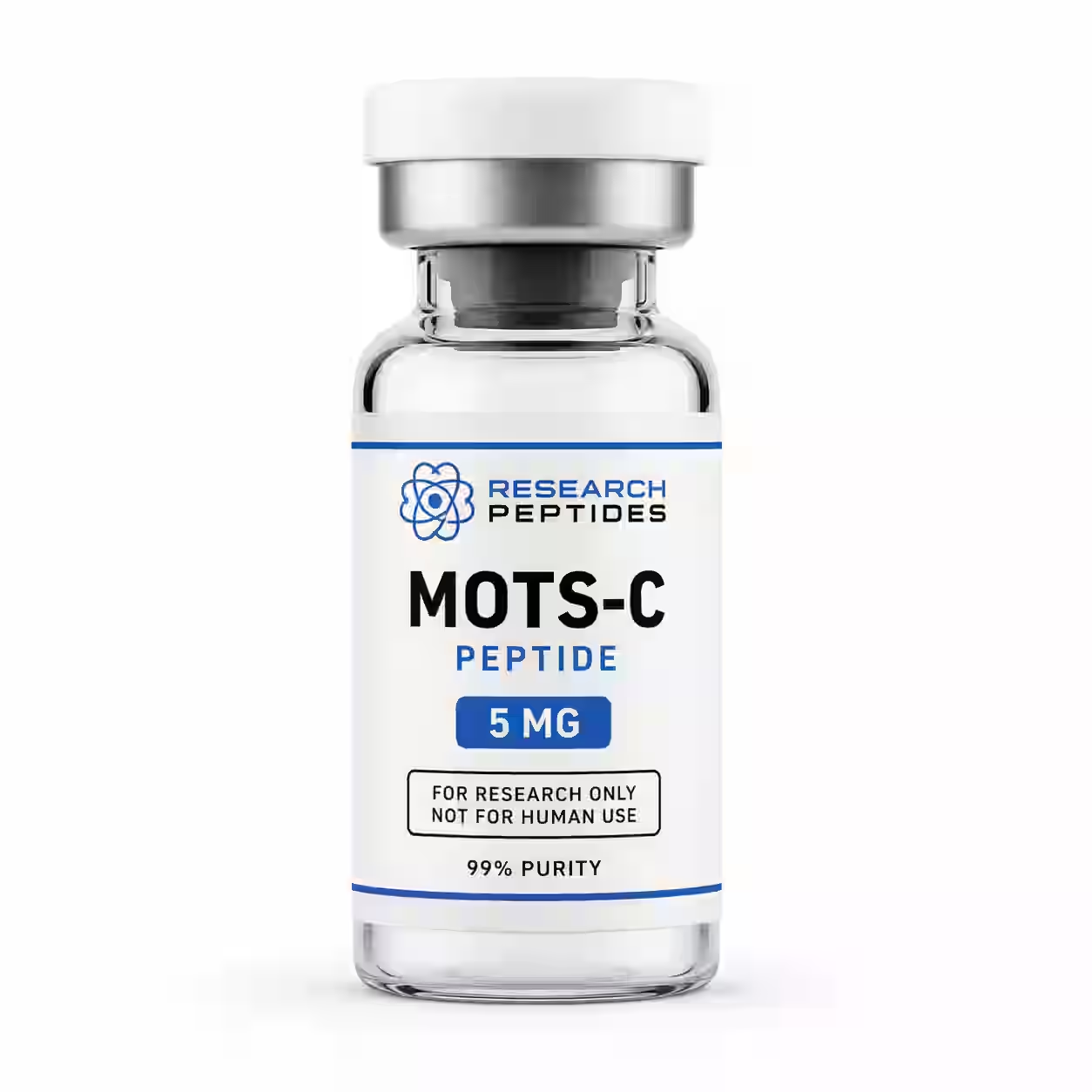
MOTS-c Peptide: What It Is, How It Works, Benefits & Research
MOTS-c peptide is a mitochondria-derived peptide that has attracted scientific interest for its potential role in cellular energy metabolism, glucose regulation, exercise-related pathways, and metabolic health. As a relatively new research compound, MOTS-c is primarily studied in laboratory and preclinical settings, and many questions remain about its mechanisms, safety, and potential therapeutic applications. kpv peptide
This guide explains what MOTS-c peptide is, how researchers believe it may work, its potential benefits, and what is currently known about MOTS-c research. ghkcu+reta blend
What Is MOTS-c Peptide?
MOTS-c, short for Mitochondrial Open Reading Frame of the 12S rRNA-c, is a small peptide encoded within mitochondrial DNA. It consists of 16 amino acids and is considered one of several mitochondrial-derived peptides being investigated for their biological effects. reta peptide
Unlike many peptides that are produced from nuclear DNA, MOTS-c originates from the mitochondrial genome. Research suggests that it may act as a signaling molecule involved in communication between mitochondria and the rest of the cell.
MOTS-c has become particularly interesting to researchers studying:
- Cellular energy metabolism
- Glucose utilization
- Insulin signaling
- Metabolic stress
- Mitochondrial function
- Exercise-associated signaling
- Age-related metabolic changes
How Does mots-c peptide Work?
Research indicates that mots-c peptide may influence metabolic pathways that help cells respond to changes in energy availability and metabolic stress.
One area of interest is the AMP-activated protein kinase (AMPK) pathway, which plays an important role in cellular energy balance. Experimental research suggests MOTS-c can interact with metabolic signaling pathways associated with glucose and energy utilization.
MOTS-c has also been studied in connection with oxidative stress, mitochondrial activity, and cellular adaptation to metabolic challenges.
Importantly, much of the current evidence comes from cellular, animal, and early-stage research. These findings should not be interpreted as proof that MOTS-c produces the same effects in humans. Dihexa Peptide
Potential MOTS-c Peptide Benefits
Because MOTS-c research is still developing, its potential benefits should be described as areas of scientific investigation rather than established medical benefits. Semax + Selank Blend
1. Metabolic Research
MOTS-c is being investigated for its potential involvement in glucose and energy metabolism. Researchers are particularly interested in how the peptide may influence the way cells respond to metabolic stress.
2. Glucose Regulation
Preclinical studies have examined MOTS-c in relation to glucose utilization and insulin-related signaling. This has made the peptide a subject of interest in metabolic research.
3. Mitochondrial Function
Since MOTS-c is derived from mitochondria, researchers are studying whether it contributes to communication between mitochondria and cellular metabolic systems.
4. Exercise and Energy Metabolism
MOTS-c has attracted attention because its levels and activity appear to be associated with exercise-related metabolic signaling in experimental research. Scientists are investigating whether it may participate in the body’s adaptation to physical activity.
5. Healthy Aging Research
Mitochondrial function and metabolic regulation are important areas of aging research. MOTS-c is therefore being studied as a potential mitochondrial signaling molecule associated with age-related metabolic processes. Glow Blend (TB 10mg + BPC 10mg + GHK 50mg)
mots-c peptide and Exercise Research
One of the most interesting areas of MOTS-c research involves physical activity.
Exercise produces significant changes in cellular energy requirements. Researchers have investigated whether mitochondrial-derived peptides such as MOTS-c participate in the signaling processes that help cells adapt to these changes.
Experimental findings have led scientists to investigate MOTS-c in relation to:
- Energy metabolism
- Glucose utilization
- Cellular stress responses
- Metabolic adaptation
- Exercise-associated signaling
However, research involving MOTS-c and athletic performance remains preliminary. There is currently insufficient evidence to establish MOTS-c as a proven performance-enhancing compound. Bpc-157 + TB-500
MOTS-c Peptide vs. Other Mitochondrial-Derived Peptides
MOTS-c belongs to a broader group called mitochondrial-derived peptides (MDPs). These peptides are being investigated because mitochondria may produce signaling molecules that influence cellular processes beyond energy production.
MOTS-c is distinct from other peptides because of its specific mitochondrial origin and its association with metabolic signaling pathways. TB-500
Its research profile makes it particularly interesting for scientists studying the relationship between:
Mitochondria → cellular signaling → metabolism → metabolic adaptation
Is MOTS-c FDA Approved?
MOTS-c is not an FDA-approved medication for the treatment, prevention, or diagnosis of disease.
Most MOTS-c research remains at the laboratory and preclinical stage. Consequently, there is not enough clinical evidence to establish appropriate medical uses, long-term safety, or standardized treatment protocols for humans.
Products marketed as MOTS-c for research should not be represented as approved treatments for weight loss, diabetes, aging, athletic performance, or other medical conditions. hexarelin peptide
mots-c peptide Safety and Research Considerations
Human safety data for MOTS-c remain limited. This is an important consideration because promising laboratory findings do not automatically establish that a peptide is safe or effective in people.
Researchers evaluating MOTS-c should consider:
- The limited amount of long-term human data
- Product purity and identity
- Potential biological effects that have not yet been fully characterized
- Differences between animal studies and human physiology
- The absence of established clinical dosing standards
For these reasons, MOTS-c should be approached as a research compound rather than an established therapeutic.
MOTS-c Peptide Research Applications
MOTS-c can be of interest to researchers investigating mitochondrial biology, metabolic signaling, and cellular adaptation.
Potential research areas include:
Metabolic research: Understanding how mitochondrial-derived signaling molecules interact with glucose and energy metabolism.
Mitochondrial research: Studying communication between mitochondria and other cellular systems.
Exercise physiology: Investigating how mitochondrial peptides respond to physical activity and changes in energy demand.
Aging research: Exploring connections between mitochondrial signaling and age-associated metabolic changes.
Cellular stress research: Examining how cells respond to metabolic and oxidative challenges. foxo4-dri peptide




Reviews
There are no reviews yet.