
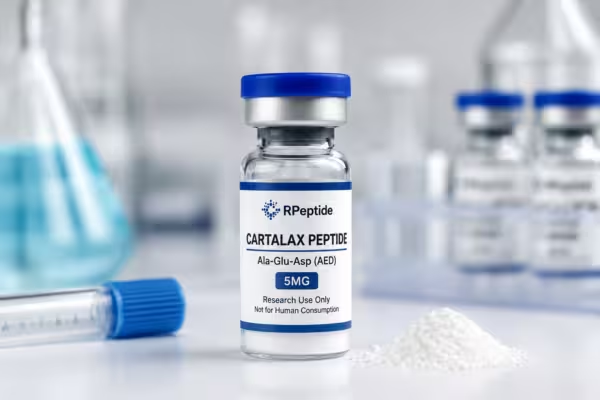
Cartalax Peptide – Research Overview, Uses, Benefits & Evidence
Cartalax peptide is a short synthetic peptide associated with the Khavinson family of peptide bioregulators and investigated primarily in research involving cartilage, connective tissue, cellular signaling, and tissue-related biology. The compound is commonly identified in research and commercial literature as Ala-Glu-Asp (AED), although published and commercial sources have not always been consistent about the exact identity and naming of Cartalax. kpv peptide
Current evidence for cartalax peptide remains limited. Available research is predominantly preclinical, including laboratory cell studies, and there is insufficient evidence to establish clinical benefits or safety in humans. Cartalax should therefore be considered a research compound rather than an established medical treatment. thymosin alpha-1
For laboratory research use only. Not for human or veterinary use.
What Is Cartalax Peptide?
cartalax peptide is generally described as a synthetic short-chain peptide associated with the Khavinson peptide-bioregulator research program. The most commonly reported identity is Ala-Glu-Asp (AED), a tripeptide consisting of the amino acids alanine, glutamic acid, and aspartic acid. L-carnitine
The peptide has been investigated in connection with cartilage and connective-tissue research. Researchers studying Cartalax have explored questions involving gene expression, protein synthesis, cellular aging, and markers associated with cartilage-related cell differentiation.
It is important to distinguish these laboratory research findings from claims that Cartalax can repair cartilage, treat osteoarthritis, reduce joint pain, or produce other therapeutic effects in people. Those clinical claims have not been established by adequate human trials. igf-1 lr3
Cartalax Peptide Research
Interest in Cartalax comes largely from research into very short peptides and their potential biological signaling properties.
Laboratory studies involving AED have examined cellular responses associated with cartilage-related biology. One study reported changes in markers including SOX9, aggrecan, type II collagen, and COMP in aging human mesenchymal stem cells exposed to AED in cell culture.
These findings are useful for generating research hypotheses, but cell-culture results cannot by themselves establish that the same effects occur in humans.
What Researchers Are Studying
cartalax peptide-related research has investigated areas including:
- Cartilage-associated cellular biology
- Mesenchymal stem-cell models
- Gene-expression changes
- Protein synthesis
- Cellular aging
- Connective-tissue research
- Chondrogenic markers
- Peptide signaling mechanisms
- Bone and cartilage biology
The existing literature should be interpreted as exploratory and preclinical rather than as evidence of an established therapeutic effect. Cardiogen Peptide
Cartalax Peptide Benefits: What Does the Research Show?
Searches for Cartalax peptide benefits often produce claims involving cartilage regeneration, joint health, mobility, and tissue repair. However, these claims require careful interpretation. testagen peptide
Laboratory research has reported changes in biological markers associated with cartilage-related cells. Such findings may help scientists investigate whether short peptides influence cellular pathways involved in tissue biology.
However, there is currently not enough high-quality human evidence to conclude that Cartalax:
- Repairs damaged cartilage in humans
- Treats osteoarthritis
- Relieves joint pain
- Improves mobility
- Reverses age-related tissue degeneration
- Prevents joint disease
- Produces clinically meaningful cartilage regeneration
A responsible research-oriented product description should therefore focus on the experimental properties being investigated, rather than presenting unverified therapeutic outcomes as established facts. aod 9604 dosage
How Does Cartalax Peptide Work?
The proposed mechanism of Cartalax is related to the broader hypothesis surrounding short peptide bioregulators developed through the Khavinson research program.
Research in this field has proposed that short peptides may influence gene expression and cellular processes. Cartalax has consequently been investigated in experimental models involving cartilage-associated cells and connective-tissue biology.
However, the precise molecular mechanism of Cartalax has not been sufficiently established through independent research.
Some sources describe sequence-specific interactions with DNA or chromatin as part of the proposed mechanism, but these mechanisms should be considered hypotheses rather than clinically validated modes of action. ghkcu+reta blend
Cartalax and Cartilage Research
Cartilage is a specialized connective tissue with limited natural regenerative capacity. Consequently, researchers continue to investigate molecular signals that may influence chondrocytes, mesenchymal stem cells, extracellular matrix production, and related biological pathways.
Cartalax has attracted interest because laboratory research has examined AED in models involving cartilage-associated cellular markers. These studies may help researchers investigate whether short peptides can influence processes involved in cartilage-related cell biology.
Importantly, changing cartilage-related markers in a laboratory model is not the same as demonstrating cartilage regeneration in a patient. Reta + Mots-c
Further research would be necessary to establish reproducible biological effects, pharmacokinetics, safety, optimal experimental conditions, and ultimately whether any findings translate into clinically meaningful outcomes.
Cartalax Peptide and Mesenchymal Stem Cells
Mesenchymal stem cells are frequently studied in regenerative medicine because they can differentiate into several connective-tissue lineages.
Research involving AED has examined aging human mesenchymal stem cells and reported changes in cartilage-associated markers. The findings have contributed to interest in Cartalax as a research compound for investigating cellular aging and chondrogenic biology.
For researchers, these experiments can provide useful information about how cells respond to specific peptide sequences under controlled laboratory conditions. Semax + Selank Blend
They should not, however, be interpreted as evidence that Cartalax produces the same effects when administered to humans.
Cartalax Peptide and Cellular Aging Research
Another area of interest is cellular aging.
The broader Khavinson peptide research program proposes that short peptides may influence cellular processes associated with aging and tissue-specific regulation. Cartalax has been studied within this research framework, including laboratory models involving aging cells.
These studies are scientifically interesting but remain insufficient to establish Cartalax as an anti-aging treatment or longevity intervention.
Is Cartalax FDA Approved?
No. Cartalax is not FDA-approved as a drug or treatment.
There is also no established regulatory approval supporting Cartalax as a treatment for cartilage disorders, osteoarthritis, aging, or other medical conditions. Current evidence does not provide the clinical data normally required to establish therapeutic efficacy and safety.
Accordingly, Cartalax should be presented and handled as a research-use compound, not as an approved pharmaceutical.
Is There Human Research on Cartalax?
The human evidence is extremely limited and difficult to interpret.
Some secondary sources describe human-related research within the broader Russian peptide-bioregulator literature, while other evidence reviews find no adequately controlled, Cartalax-specific human clinical trials. Importantly, there is no robust randomized clinical evidence demonstrating that Cartalax safely treats a medical condition.
This distinction matters when evaluating online claims about Cartalax peptide benefits.
Cartalax Peptide Safety
A formal human safety profile for Cartalax has not been established.
There is insufficient clinical evidence to determine long-term safety, adverse-event frequency, pharmacokinetics, drug interactions, or appropriate human administration parameters.
For this reason, information found online regarding human dosing or administration should not be interpreted as medically validated guidance.
Research laboratories should follow the supplier’s certificate of analysis, product documentation, institutional procedures, and applicable laboratory safety requirements.
Cartalax Peptide Research Uses
Cartalax may be of interest to qualified researchers investigating:
Cartilage Biology
Studies can examine how short peptide sequences interact with cartilage-associated cellular pathways.
Stem-Cell Research
AED has been investigated in human mesenchymal stem-cell culture models, including models of cellular aging.
Gene-Expression Research
Researchers can investigate changes in gene-expression patterns and related cellular processes.
Connective-Tissue Research
Cartalax belongs to a broader research framework focused on tissue-associated peptide regulation.
Cellular Aging
Experimental models can be used to investigate relationships between peptide signaling and cellular aging.
Cartalax Peptide vs. Other Research Peptides
Cartalax belongs to a broader family of short peptide bioregulators associated with the Khavinson research program. Other compounds in this research area include peptides such as Epitalon, Thymalin, and other tissue-associated peptides.
Cartalax is generally differentiated by its association with cartilage and connective-tissue research rather than being treated as interchangeable with other peptides.
Researchers should evaluate each compound based on its independently documented sequence, analytical characterization, experimental evidence, and intended research application.
Cartalax Peptide Research Quality
When purchasing or evaluating a research peptide, chemical identity and analytical documentation are particularly important.
This is especially relevant for Cartalax because different secondary and commercial sources have reported inconsistent descriptions of its identity and sequence. Some sources identify it as the tripeptide Ala-Glu-Asp, while other commercial literature has used different descriptions.
Researchers should therefore verify:
- Exact amino acid sequence
- Molecular weight
- Purity
- Batch or lot information
- Certificate of analysis
- Analytical testing method
- Supplier documentation
- Storage requirements
A current, lot-specific certificate of analysis is preferable to relying solely on a generic online product description.
Reviews
There are no reviews yet.