IGF-1 LR3 Before and After: What to Know About Expected Results
If you are searching for IGF-1 LR3 before and after information, it is important to understand what the available evidence actually shows. IGF-1 LR3, also called Long R3 IGF-1, is a modified form of insulin-like growth factor-1 that is primarily discussed in laboratory research. igf-1 lr3
Online, you may encounter dramatic before-and-after photos or claims about changes in muscle size, body composition, recovery, or physical performance. However, these images and claims should be interpreted cautiously. There is not enough high-quality clinical evidence to establish predictable before-and-after results from IGF-1 LR3 in humans. kpv peptide
This guide explains what IGF-1 LR3 is, what researchers investigate, why igf-1 lr3 before and after comparisons can be misleading, and what factors can influence observed results. igf-1 lr3 before and after IGF-1 DES
What Is IGF-1 LR3?
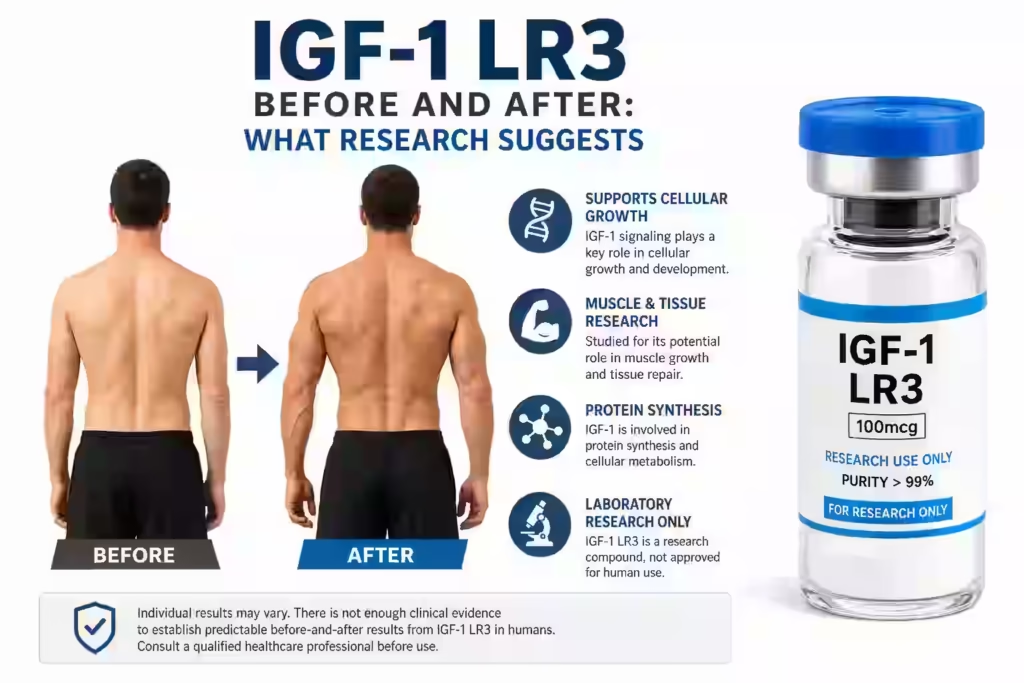
IGF-1 LR3 is a modified analog of insulin-like growth factor-1 (IGF-1). Native IGF-1 is a naturally occurring peptide hormone involved in growth, development, metabolism, and cellular signaling.
The “LR3” designation refers to structural modifications made to the IGF-1 molecule. These modifications change some of its biological characteristics and make Long R3 IGF-1 useful in experimental research involving IGF-1 signaling. Reta + Mots-c
IGF-1 LR3 is generally encountered as a research compound rather than an established human performance or physique treatment. Semax + Selank Blend
IGF-1 LR3 Before and After: Are There Documented Human Results?
One of the biggest problems with searching for “IGF-1 LR3 before and after” is that much of the information available online comes from anecdotal reports rather than controlled clinical studies.
A photograph showing a person before and after using a compound cannot establish that the compound caused the observed change.
Changes in appearance can result from many factors, including:
- Training experience
- Diet and calorie intake
- Body-fat percentage
- Muscle glycogen
- Hydration
- Lighting and camera angle
- Flexing and posing
- Training volume
- Sleep and recovery
- Other supplements or compounds
- The amount of time between photographs
Consequently, igf-1 lr3 before and after an online transformation should not be treated as a reliable prediction of what another person will experience. Bpc-157 + TB-500
What Do Researchers Study About IGF-1 LR3?
IGF-1 LR3 is primarily interesting because of its relationship with the IGF-1 signaling pathway.
Research involving IGF-1 and related analogs can investigate biological processes such as:
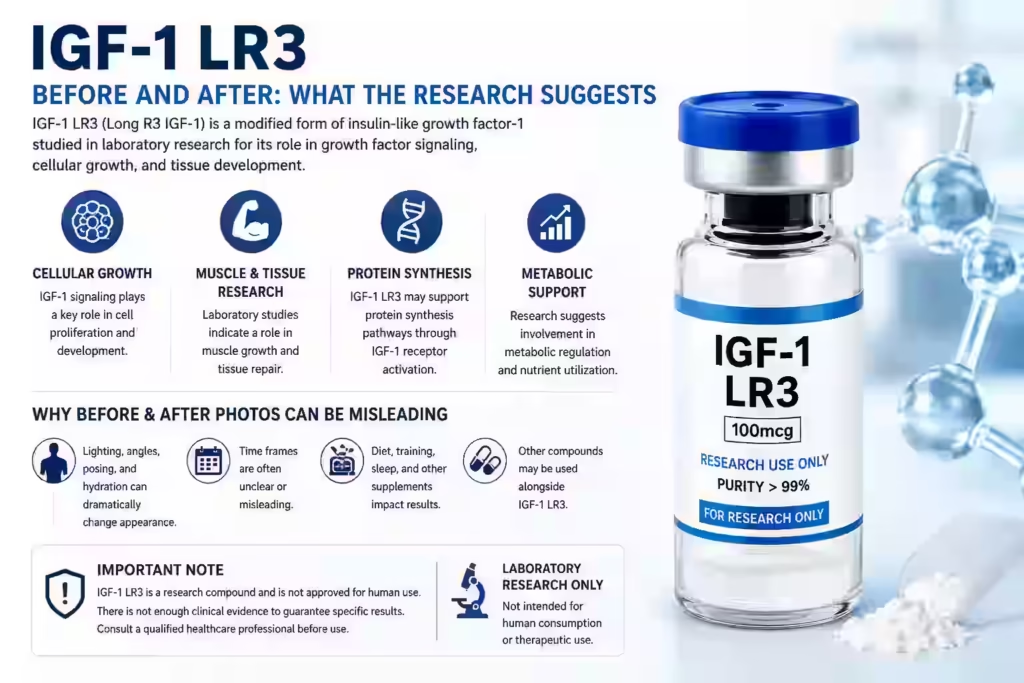
Cellular Growth
IGF-1 signaling is involved in cellular growth and development. Researchers can use experimental models to investigate how IGF-1 receptor activation affects cells.
Protein Synthesis
The IGF-1 signaling pathway interacts with pathways associated with protein synthesis and cellular metabolism. This makes it relevant to laboratory research involving muscle and other tissues.
Cell Survival
IGF-1 signaling is also associated with cellular survival mechanisms. Researchers can study these pathways to better understand growth-factor biology.
Metabolic Signaling
IGF-1 interacts with several pathways involved in glucose and energy metabolism, making it relevant to metabolic research.
These laboratory findings do not necessarily demonstrate that igf-1 lr3 before and after produces a particular physical transformation in humans. hexarelin peptide
Why IGF-1 LR3 Before-and-After Photos Can Be Misleading
Before-and-after images appear convincing because they provide an immediate visual comparison. However, photographs have significant limitations as scientific evidence.
Lighting Can Change Appearance
Different lighting can dramatically affect muscle definition and apparent body composition.
Body Position Matters
Standing relaxed in one photograph and flexing in another can create a substantial visual difference without representing an equivalent change in muscle tissue.
Hydration Changes Can Affect Appearance
Water and glycogen levels can influence muscle fullness and overall appearance over relatively short periods.
Time Frames May Be Unclear
A transformation labeled simply “before and after” does not necessarily explain whether the photographs were taken weeks, months, or years apart.
Other Variables May Be Involved
A person may simultaneously change their diet, training program, sleep schedule, supplements, or other compounds. Without controlled conditions, attributing the entire transformation to IGF-1 LR3 is not scientifically justified. humanin peptide
Does IGF-1 LR3 Build Muscle?
IGF-1 is biologically involved in pathways associated with muscle development and protein metabolism, which is one reason IGF-1-related compounds receive attention in research.
However, this does not establish IGF-1 LR3 as a proven muscle-building treatment for humans.
Laboratory findings, animal research, mechanistic evidence, and anecdotal reports should be distinguished from controlled human clinical evidence.
Therefore, claims that igf-1 lr3 before and after will reliably produce a specific increase in muscle mass or strength should be viewed skeptically. TB-500
How Long Before Changes Could Be Seen?
There is no scientifically established human timeline for predictable IGF-1 LR3 before-and-after results.
Online discussions may provide specific time frames, but these generally represent individual experiences or experimental claims rather than a validated clinical schedule.
Physical changes attributed to any compound can also depend on numerous variables, making a universal timeline inappropriate.
What Should You Compare in a Before-and-After Study?
For legitimate scientific research, researchers use controlled measurements rather than relying exclusively on photographs.
Depending on the research question, measurements might include:
- Body composition
- Muscle cross-sectional area
- Body weight
- Biochemical markers
- Receptor signaling
- Protein expression
- Metabolic measurements
- Functional outcomes
Standardized measurement methods provide considerably more useful information than informal transformation photographs. cagrisema
IGF-1 LR3 vs. Natural IGF-1
IGF-1 LR3 should not be considered identical to naturally occurring IGF-1.
| Characteristic | Natural IGF-1 | IGF-1 LR3 |
|---|---|---|
| Naturally produced in humans | Yes | No |
| Relationship | Endogenous growth factor | Modified IGF-1 analog |
| Primary role in research | Study of normal IGF-1 biology | Study of modified IGF-1 activity |
| Structure | Native IGF-1 | Structurally modified |
| Human therapeutic status | Context-dependent | Not established as a general human therapy |
Is IGF-1 LR3 Safe?
The safety of using IGF-1 LR3 outside controlled research has not been adequately established.
Because IGF-1 signaling is involved in growth and metabolic processes, manipulating this pathway can have biological consequences. It is therefore inappropriate to assume that a compound is safe simply because it is described online as a peptide or because users report positive results.
Potential biological concerns surrounding excessive IGF-1 activity can include effects involving glucose regulation, growth signaling, and cellular proliferation.
Anyone considering an igf-1 lr3 before and after-related compound for personal use should discuss the risks with a qualified healthcare professional. Mod GRF 1-29
Does IGF-1 LR3 Have a Recommended Human Dose?
There is no established, medically approved dosing protocol that can be recommended for using IGF-1 LR3 for physique enhancement or other self-directed purposes.
Online dosage schedules should not be mistaken for clinically validated instructions. Research protocols vary according to the experimental model, formulation, objectives, and laboratory conditions. Cardiogen Peptide
What About IGF-1 LR3 Before and After Bodybuilding Results?
Bodybuilding communities are a major source of online igf-1 lr3 before and after discussions. These discussions frequently focus on muscle growth, recovery, fullness, or body composition.
However, anecdotal bodybuilding reports have major limitations. A transformation cannot establish causation, and individuals often use multiple interventions simultaneously.
For that reason, bodybuilding photographs should be regarded as anecdotal information rather than clinical evidence. Cerebrolysin