
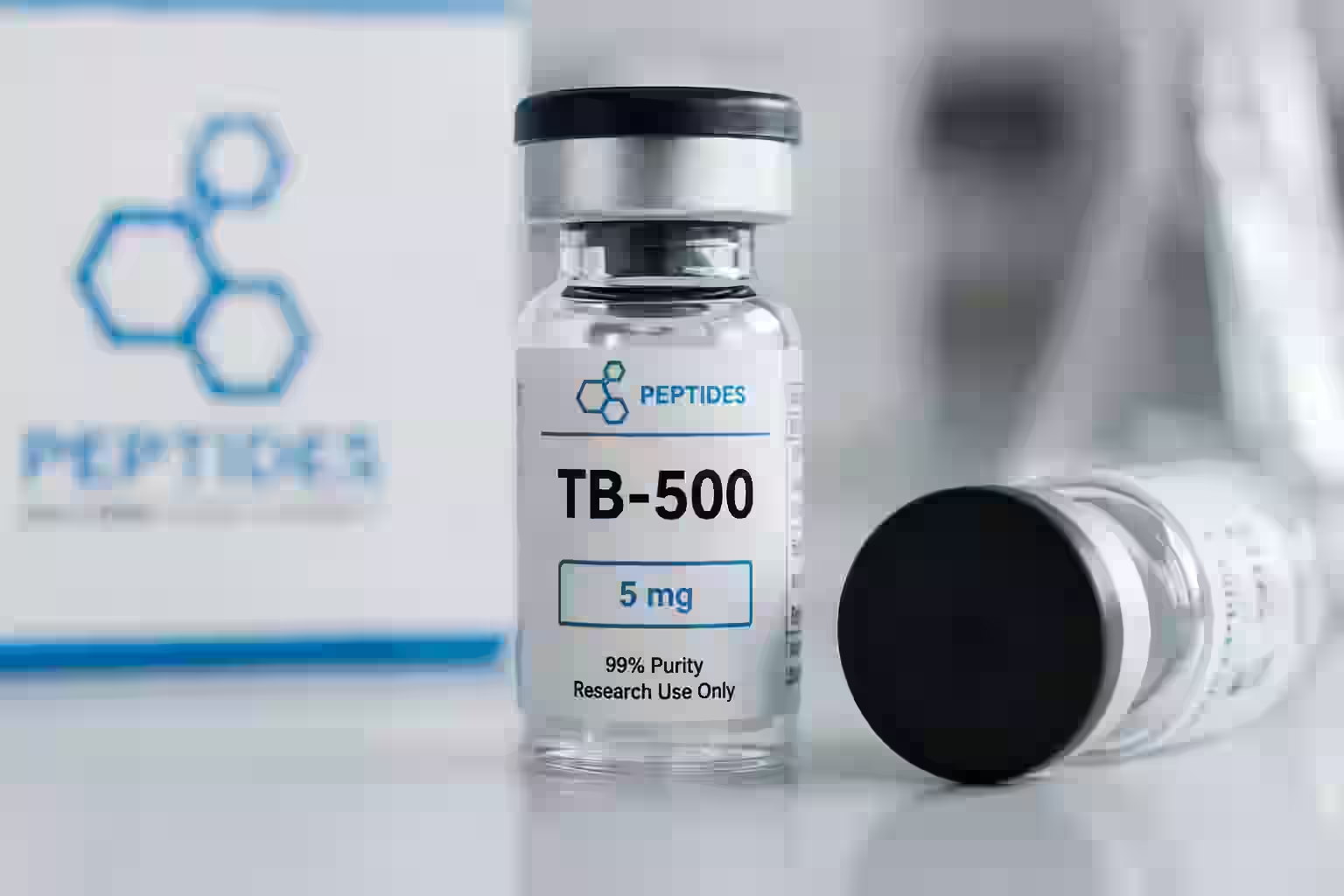
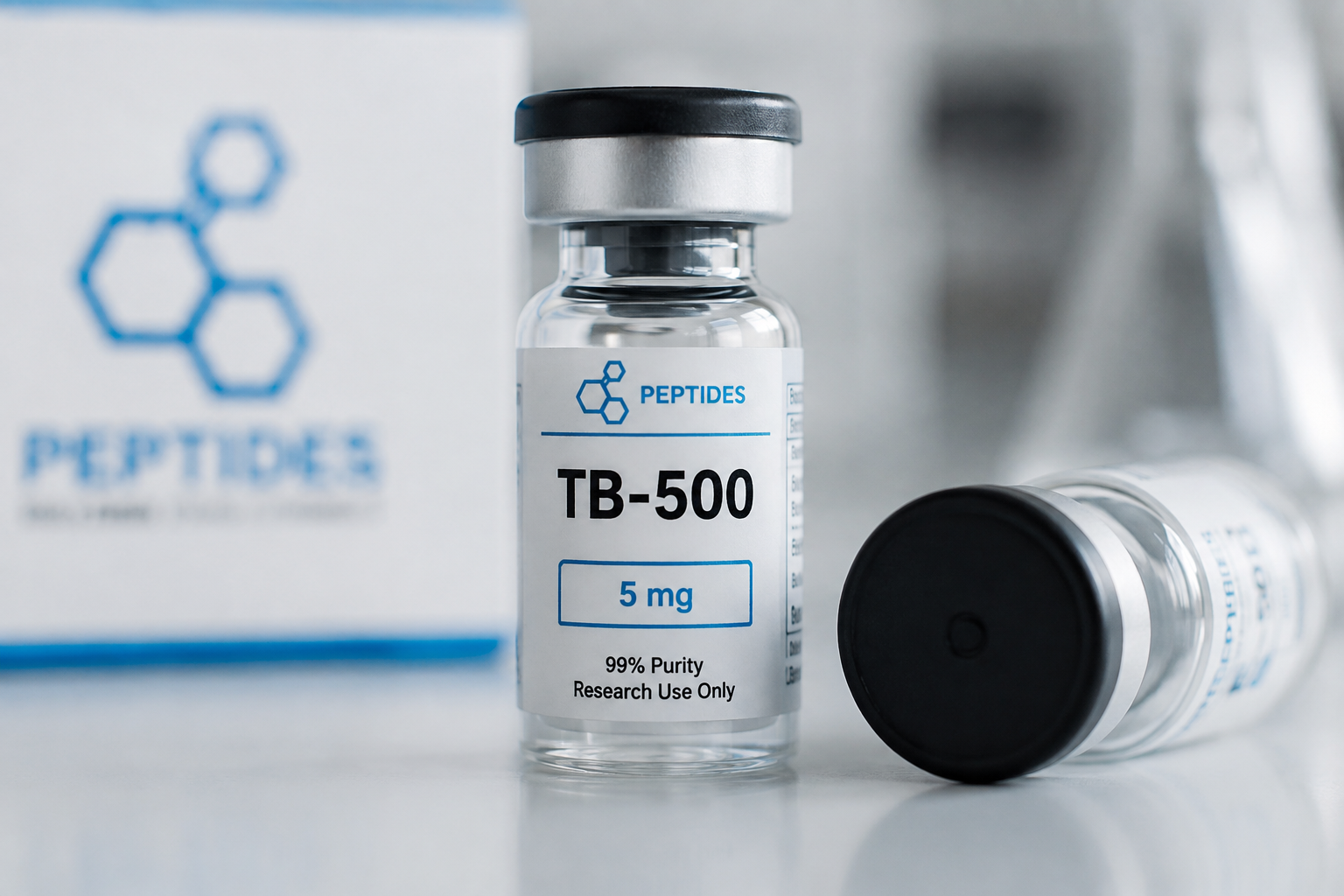
TB-500 Peptide: What It Is, Research, Benefits, Uses & Safety
TB-500 is a synthetic peptide that has attracted significant interest in peptide research because of its relationship to thymosin beta-4, a naturally occurring peptide involved in cellular processes such as cell migration, tissue remodeling, and angiogenesis. Glow Peptide
Researchers and consumers often search for TB-500 because of its connection to tissue-repair research and regenerative biology. However, it is important to distinguish research findings involving TB-500 from research involving full-length thymosin beta-4. TB-500 is generally described as a synthetic fragment rather than the complete thymosin beta-4 molecule. Glow Blend (TB 10mg + BPC 10mg + GHK 50mg)
This page provides an informational overview of TB-500 peptide, including what it is, how it differs from thymosin beta-4, potential research applications, and current safety and regulatory considerations. tesamorelin peptide
What Is TB-500?
TB-500 is commonly identified as the N-acetylated seven-amino-acid peptide Ac-LKKTETQ, corresponding to a fragment of human thymosin beta-4. Scientific literature has identified this sequence in products marketed as TB-500. Tesamorelin + Ipamorelin
Thymosin beta-4 itself is a naturally occurring 43-amino-acid peptide that plays a role in several cellular processes. Research has associated thymosin beta-4 with actin regulation, cell migration, blood-vessel formation, cell survival, and tissue remodeling. tesamorelin vs ipamorelin
Because TB-500 is a fragment rather than full-length thymosin beta-4, research involving the two should not automatically be treated as interchangeable.
TB peptide at a Glance
| Feature | TB-peptide |
|---|---|
| Common name | TB-500 |
| Related peptide | Thymosin beta-4 |
| Structure commonly reported | N-acetyl-LKKTETQ |
| Peptide type | Synthetic peptide fragment |
| Research areas | Cell migration, tissue remodeling, angiogenesis |
| Status | Research compound; not an FDA-approved therapeutic |
| Common research interest | Regenerative and tissue-repair biology |
How Does TB peptides Relate to Thymosin Beta-4?
One of the most important things to understand when researching TB peptide is the distinction between TB peptide and thymosin beta-4. what does glow peptide do
Thymosin beta-4 is a naturally occurring 43-amino-acid peptide. TB peptide is generally described as a synthetic fragment corresponding to part of the thymosin beta-4 sequence.
Research on full-length thymosin beta-4 has explored a wide range of biological activities, including cell migration, angiogenesis, extracellular-matrix regulation, and tissue repair. However, evidence from those studies cannot automatically establish that TB peptide produces the same effects in humans. ace 031 peptide dosage
This distinction is particularly important when evaluating online claims about TB peptide.
TB peptide Research and Potential Benefits
TB peptide is often discussed in connection with several areas of biological research. Most importantly, the strength of evidence varies substantially depending on whether researchers are studying TB peptide itself, thymosin beta-4, or another related compound.
1. Cell Migration Research
Cell migration is an important part of normal tissue remodeling and repair.
Thymosin beta-4 has been investigated for its role in cellular movement and actin-related processes. Because TB-500 is derived from a region of thymosin beta-4 associated with these mechanisms, it has attracted interest in regenerative-peptide research.
2. Tissue Repair Research
Research involving thymosin beta-4 has investigated processes associated with tissue repair and wound healing.
Preclinical studies have reported effects on dermal healing, while clinical investigations have also explored full-length thymosin beta-4 in wound-related settings.
However, these findings should not be interpreted as proof that commercially marketed TB peptide has been clinically established as a wound-healing treatment.
3. Angiogenesis Research
Angiogenesis, or the formation of new blood vessels, is another area of interest surrounding thymosin beta-4 research.
Studies have investigated the relationship between thymosin beta-4 and blood-vessel formation in laboratory and animal models.
Researchers continue to investigate how these mechanisms might translate into therapeutic applications.
4. Cellular Remodeling
Thymosin beta-4 is strongly associated with actin regulation, which is important for cellular structure and movement.
Research has therefore examined thymosin beta-4 and related peptides in the context of cell migration, tissue remodeling, and cellular signaling.
TB-500 and Wound-Healing Research
Wound healing is one of the most frequently discussed applications associated with TB peptide.
The interest comes largely from research involving thymosin beta-4, where investigators have studied effects on dermal repair, cell migration, inflammation, and blood-vessel formation. Some animal studies have reported accelerated dermal healing with thymosin beta-4. N15 Beta-Amyloid (1-40)
However, the evidence should be interpreted carefully.
In its 2026 review of TB peptidesrelated substances, the FDA noted that it did not identify published nonclinical in-vivo studies specifically assessing TB peps effects on wounds. The agency also highlighted the lack of human exposure data for drug products containing TB peps. BPC-157 vs GHK-Cu
Therefore, research on thymosin beta-4 should not be presented as established clinical evidence for TB-500.
TB-500 Safety and Research Limitations
Safety is an important consideration when researching TB-500.
The FDA’s recent review of TB-500-related substances identified significant gaps in available safety information. In particular, the agency noted concerns about potential immunogenicity, including risks associated with peptide aggregation and peptide-related impurities.
The FDA also reported that it had not identified human exposure data for drug products containing TB-500.
This means that the long-term safety profile of TB peptide in humans has not been adequately established.
For this reason, TB peptide should not be treated as equivalent to an FDA-approved medication. GHK-CU 100mg
Is TB peptide FDA Approved?
No. TB peptide is not an FDA-approved drug.
The FDA’s 2026 review specifically evaluated TB-500 free base and TB-500 acetate as proposed bulk drug substances and concluded that there is a lack of sufficient clinical and nonclinical safety information.
It is also important not to confuse TB-500 with full-length thymosin beta-4. The existence of clinical research involving thymosin beta-4 does not mean that TB-500 itself has received FDA approval.
TB peptide and Sports
TB peps has also attracted attention in sports and performance circles.
A scientific analysis identified TB-500 as a substance suspected of having doping potential and developed analytical methods for detecting the peptide in biological samples.
Athletes subject to anti-doping rules should therefore verify the current prohibited-substance regulations applicable to their sport before considering any peptide product.
TB peptides vs. Thymosin Beta-4
Although the names are often used interchangeably online, TB-500 and thymosin beta-4 are not necessarily the same compound.
| TB peptide | Thymosin Beta-4 |
| Synthetic peptide fragment | Naturally occurring peptide |
| Commonly described as Ac-LKKTETQ | 43 amino acids |
| Related to a portion of thymosin beta-4 | Full-length peptide |
| Research evidence is limited | More extensive research history |
| Not FDA-approved | Not FDA-approved as a general therapeutic |
This distinction is essential when evaluating scientific claims.
Why Researchers Are Interested in TB-500
The scientific interest surrounding TB peptides largely comes from the biological functions associated with thymosin beta-4.
Researchers have investigated thymosin beta-4 because it appears to interact with pathways involved in:
- Cell movement
- Actin regulation
- Blood-vessel formation
- Tissue remodeling
- Cellular survival
- Inflammatory signaling
- Wound-related processes
These mechanisms have made thymosin beta-4 and related peptide fragments interesting candidates for future research.
However, promising biological mechanisms do not automatically translate into proven clinical benefits.
TB peptide Research vs. Proven Medical Treatment
It is useful to separate three different levels of evidence:
Laboratory research
Researchers can study how a peptide interacts with cells and biological pathways.
Animal research
Researchers can examine physiological effects in animal models.
Human clinical research
Researchers can determine whether a compound is safe and effective in people.
TB peptides currently has important gaps between these stages. A recent review of peptide therapies noted that although TB-4 and TB peptide have shown promise in preclinical models, human orthopedic data remain lacking.
Consequently, claims that TB peptide is a proven treatment for injuries, muscle recovery, wounds, or other medical conditions go beyond the available evidence.
What to Look for When Evaluating a TB peptide Research Product
If you are researching TB peptide products for laboratory purposes, product documentation is particularly important because peptide quality can vary.
Look for:
- Clearly identified peptide
- Declared peptide sequence
- Purity information
- Lot or batch number
- Certificate of analysis (COA)
- Identity testing
- Purity testing
- Storage information
- Research-use labeling
- Independent laboratory testing where available
A COA can provide useful information about the identity and analytical purity of a particular batch, although it does not establish that the product is safe or effective for human use. Semax
Reviews
There are no reviews yet.