
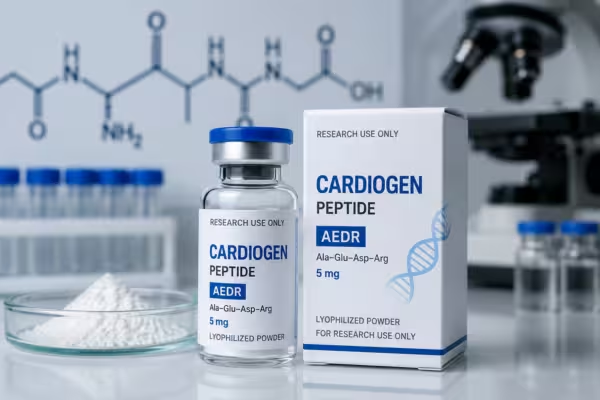
Cardiogen Peptide: Research, Potential Benefits, Mechanism, and Evidence
Cardiogen peptide is an experimental short-chain peptide associated with the Khavinson family of peptide bioregulators and studied in research involving myocardial and cardiac-tissue models. It is commonly identified as the tetrapeptide Ala-Glu-Asp-Arg (AEDR). Current evidence is predominantly preclinical, consisting of laboratory and animal research rather than controlled human clinical trials. aod-9604 peptide
For researchers exploring short peptide bioregulators, Cardiogen Peptide is of interest because studies have examined its relationship to myocardial tissue, cellular proliferation, apoptosis-related markers, and peptide–protein interactions. However, claims that Cardiogen has established cardiovascular or heart-repair benefits in humans go beyond the available evidence. Selank
Research-use disclaimer: Cardiogen Peptide is an experimental peptide and is not an FDA-approved medication. This page is provided for educational and research-information purposes only and does not provide dosing instructions, treatment recommendations, or medical advice.
What Is Cardiogen Peptide?
Cardiogen is generally described as a synthetic tetrapeptide bioregulator associated with cardiac-tissue research.
The commonly reported sequence is:
Ala-Glu-Asp-Arg (AEDR)
It belongs to a broader group of very short peptides associated with the Khavinson peptide-bioregulator research tradition. Other members of this family include peptides such as Epitalon, Cortagen, and Bronchogen, which are associated with different tissue-specific research concepts.
The proposed idea behind these short peptides is that small sequences may influence cellular regulation and gene-expression processes. For Cardiogen specifically, however, the evidence supporting a unique cardiac mechanism remains limited.
Cardiogen Peptide at a Glance
| Property | Information |
|---|---|
| Name | Cardiogen |
| Type | Synthetic short peptide / tetrapeptide |
| Reported sequence | Ala-Glu-Asp-Arg (AEDR) |
| Length | 4 amino acids |
| Molecular formula | C₁₈H₃₁N₇O₉ |
| Approx. molecular weight | 489.5 g/mol |
| Research area | Myocardial and cardiac-tissue research |
| Evidence level | Primarily preclinical |
| Human clinical trials | None identified |
| FDA approval | None |
The AEDR identity and molecular characteristics are reported by several contemporary research references, although some sources caution that the primary indexed literature does not consistently print the sequence itself. Tesamorelin + Ipamorelin
Cardiogen Peptide Research
Research surrounding Cardiogen is considerably more limited than the marketing language surrounding the compound might suggest.
Available literature has investigated Cardiogen in:
- Myocardial tissue-culture models
- Aging-related tissue research
- Cellular proliferation
- Apoptosis-related markers
- Gene-expression research
- Peptide–protein and peptide–nucleic-acid interactions
One reported study examined myocardial tissue from young and aged rats in an organotypic culture model. Another study investigated Cardiogen in a rat tumor model rather than directly measuring cardiovascular function.
This distinction is important: preclinical tissue research does not establish a cardiovascular treatment effect in humans. Glow Blend (TB 10mg + BPC 10mg + GHK 50mg)
What Does Cardiogen Peptide Do?
The proposed role of Cardiogen centers on cellular regulation within cardiac-tissue research models.
Researchers have investigated whether the peptide may influence cellular processes including proliferation and apoptosis-related pathways.
Some reports describe changes in markers such as p53 in myocardial tissue cultures, which researchers have interpreted within the broader peptide-bioregulator framework.
However, the available evidence does not establish that Cardiogen improves cardiac function, reverses cardiovascular disease, or repairs damaged hearts in humans. GHK-CU 100mg
Proposed Mechanism
The broader Khavinson peptide-bioregulator theory proposes that ultra-short peptides can interact with nuclear proteins or DNA-associated structures and influence gene expression.
A biochemical study has investigated AEDR among short peptides for interactions with histones and DNA complexes. This provides evidence that the peptide can participate in a biochemical interaction under laboratory conditions, but it does not establish a complete mechanism of action in living cardiac tissue.
Therefore, it is more accurate to describe Cardiogen’s mechanism as proposed and under investigation rather than established.
Cardiogen Peptide Benefits: What Does the Research Suggest?
Searches for Cardiogen peptide benefits often produce claims about cardiac regeneration, cardiovascular protection, anti-aging effects, and improved heart function.
The available evidence does not justify presenting these as established human benefits.
Instead, the following should be understood as research areas.
1. Myocardial Tissue Research
Cardiogen has been investigated using myocardial tissue cultures from young and aged rats. Researchers have examined cellular proliferation and apoptosis-related markers in these experimental systems.
2. Cardiac-Aging Research
Because some experiments use tissues from aged animals, Cardiogen has attracted interest in research examining cellular changes associated with aging.
This makes the peptide relevant to studies investigating:
- Cellular aging
- Myocardial tissue maintenance
- Age-related changes in cardiac cells
- Gene-expression regulation
These are experimental research applications, not established treatments for cardiac aging.
3. Cellular Proliferation Research
Experimental work has examined whether Cardiogen influences proliferation in myocardial tissue cultures.
A finding in an ex-vivo tissue model, however, does not establish that the peptide causes meaningful regeneration in an intact human heart.
4. Apoptosis-Related Research
Some Cardiogen research has examined markers associated with programmed cell death, including p53-related pathways.
These findings may help researchers investigate cellular mechanisms, but additional independent studies would be required to determine whether they have meaningful physiological or therapeutic implications.
5. Peptide–DNA and Histone Research
AEDR has also appeared in biochemical research investigating interactions between short peptides and histones or DNA complexes.
This is potentially interesting from a molecular-biology perspective, but it should not be interpreted as proof of a specific cardiovascular effect.
Cardiogen and Cardiac Tissue Research
The term “Cardiogen” reflects its association with cardiac tissue.
Research within the Khavinson framework proposes that different short peptides may exhibit tissue-associated regulatory activity. Cardiogen has consequently been studied in relation to myocardial tissue.
However, independent reviews emphasize that the cardiac evidence base is thin, with much of the available research originating from the same research lineage.
This creates an important limitation when evaluating the peptide.
What Has Actually Been Studied?
The available evidence includes:
- Ex-vivo myocardial tissue
- Rat models
- Cellular experiments
- Biochemical peptide-interaction studies
What Has Not Been Established?
There is currently no strong evidence establishing Cardiogen as a treatment for:
- Heart disease
- Heart failure
- Cardiomyopathy
- Myocardial infarction
- Arrhythmia
- Atherosclerosis
- Cardiovascular aging in humans
There are also no controlled human clinical trials establishing cardiovascular efficacy. 5-Amino-1MQ
Is Cardiogen Peptide FDA Approved?
No. Cardiogen is not FDA approved.
No FDA-approved Cardiogen drug product or verified human clinical development program has been identified in the available regulatory and research information.
Accordingly, Cardiogen should not be marketed as an approved cardiovascular therapy or as a treatment for heart disease.
Research-grade products marketed as Cardiogen are generally labeled for research use only, rather than therapeutic use.
Is Cardiogen a Research Peptide?
Yes.
Cardiogen is best categorized as an experimental research peptide.
Its primary value at this stage is as a subject for laboratory investigation into short-peptide bioregulation and cardiac-tissue biology.
Researchers may be interested in studying:
- Myocardial cell biology
- Cellular proliferation
- Apoptosis pathways
- Gene-expression regulation
- Peptide–protein interactions
- Peptide–DNA interactions
- Aging-related tissue changes
The absence of human clinical evidence means that laboratory findings should not be translated directly into medical claims.
Cardiogen Peptide Safety
A major limitation of the current Cardiogen literature is the absence of a comprehensive human safety database.
There are no established human clinical safety studies sufficient to characterize:
- Long-term safety
- Human pharmacokinetics
- Human pharmacodynamics
- Drug interactions
- Immunogenicity
- Appropriate therapeutic exposure
- Cardiovascular safety
Some preclinical studies may report limited toxicity findings, but the absence of observed toxicity in small laboratory or animal studies does not establish safety in humans.
Cardiogen Peptide Dosage
There is no established FDA-approved human dosage for Cardiogen.
Because controlled human clinical trials have not established a therapeutic dose, online dosing schedules should not be presented as medically validated recommendations.
Experimental concentrations or amounts used in laboratory or animal studies are specific to their research protocols and cannot simply be converted into a human dosage.
For an informational product page, the most accurate statement is:
No standardized human dosage has been established for Cardiogen.
Cardiogen vs. Other Short Peptide Bioregulators
Cardiogen is part of a broader family of short peptides often discussed in connection with tissue-specific bioregulation.
| Peptide | Commonly associated research area | Reported sequence |
|---|---|---|
| Cardiogen | Cardiac / myocardial tissue | Ala-Glu-Asp-Arg |
| Bronchogen | Bronchial / respiratory tissue | Ala-Glu-Asp-Leu |
| Cortagen | Nervous-system research | Ala-Glu-Asp-Pro |
| Epitalon | Pineal / aging research | Ala-Glu-Asp-Gly |
The concept of tissue specificity is a central feature of the Khavinson peptide-bioregulator framework. However, the strength of evidence varies substantially between individual peptides, and the tissue-specific effects proposed for Cardiogen have not been validated through robust human trials. ACE-031
Cardiogen Peptide vs. Traditional Cardiovascular Medications
Cardiogen Peptide should not be confused with conventional cardiovascular medications.
Approved cardiovascular drugs are supported by extensive clinical research and regulatory evaluation for specific conditions.
Examples include medications designed to influence:
- Blood pressure
- Cholesterol
- Blood clotting
- Heart rhythm
- Cardiac contractility
- Vascular tone
Cardiogen belongs to a completely different research category. It is an experimental short peptide whose proposed biological effects are still being investigated. Bronchogen
Reviews
There are no reviews yet.