
Difference Between Peptides and Proteins: Key Similarities and Differences Explained
Peptides and proteins are essential molecules that play important roles in nearly every biological process in the human body. They contribute to cell communication, tissue structure, immune function, metabolism, and many other functions that support life. Although peptides and proteins are closely related, they differ in important ways, including their size, structure, biological activity, and difference between peptides and proteins functions. tirzepatide
Understanding the difference between peptides and proteins can help you learn more about biochemistry, human physiology, skincare ingredients, nutrition, and peptide science. aod 9604 dosage
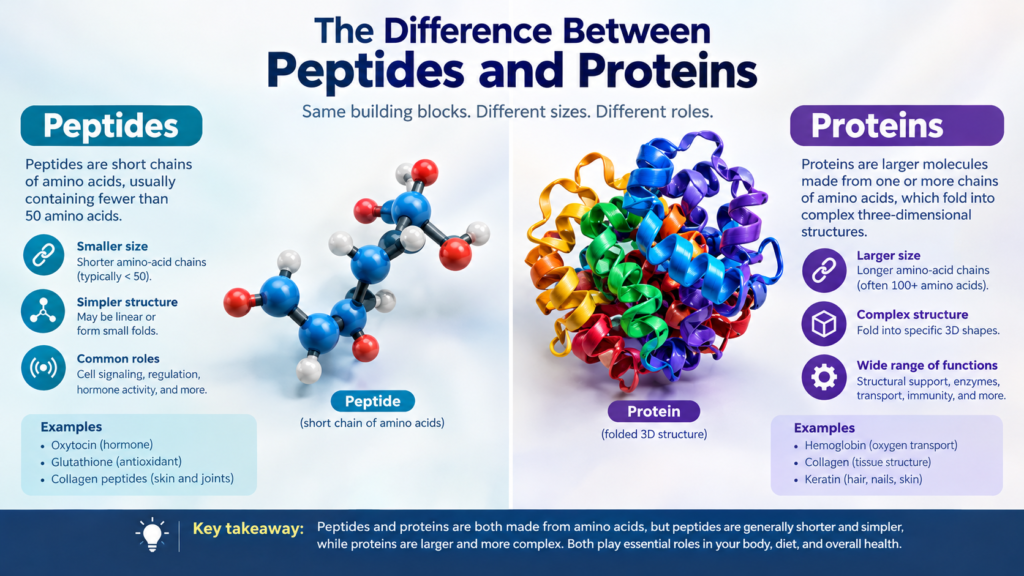
The main difference between peptides and proteins is their size and structural complexity. Peptides are generally shorter chains of amino acids, while proteins are typically longer chains that fold into complex three-dimensional structures. However, there is no universally accepted amino acid cutoff that separates every peptide from every protein. what are peptides and how do they work
In this guide, we explain what peptides and proteins are, how they work, their key difference between peptides and proteins, and why both are important to human health. Semax
What Are Peptides?
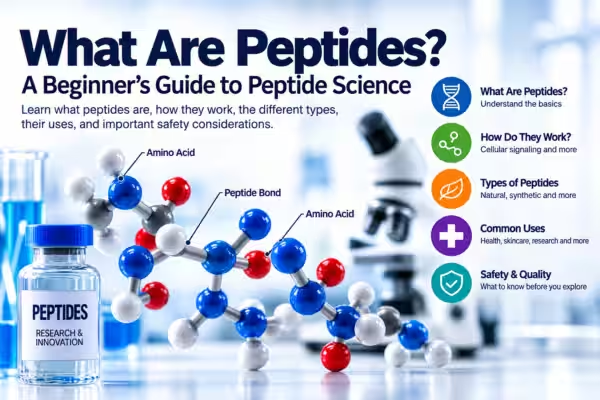
Peptides are molecules made up of two or more amino acids connected by chemical bonds called peptide bonds. Amino acids are the building blocks of peptides and proteins, and their sequence helps determine how a molecule behaves in biological systems.
The body naturally produces many peptides that help regulate physiological processes. Some peptides act as signaling molecules, allowing cells and tissues to communicate with one another. Others participate in immune responses, digestion, and the regulation of hormones.
Peptides are also studied in pharmaceutical research, biotechnology, and skincare science because the difference between peptides and proteins can sometimes be designed to interact with specific biological targets. difference between peptides and proteins GHK-CU 100mg
How Do Peptides Work?
Peptides perform different functions depending on their amino acid sequences and structures. Some bind to receptors on the surface of cells, triggering signals that influence cellular activity. Others interact with enzymes, participate in immune processes, or help regulate biological pathways.
Examples of naturally occurring peptides include:
- Oxytocin: A peptide hormone involved in childbirth, milk ejection, and aspects of social bonding.
- Glucagon: A peptide hormone that helps regulate blood glucose levels.
- Glutathione: A small peptide composed of three amino acids that plays an important role in cellular antioxidant defense.
- Bradykinin: A peptide involved in blood vessel regulation, inflammation, and pain signaling.
These examples demonstrate that the difference between peptides and proteins can have very different functions despite sharing the same basic chemical building blocks. bpc 157 peptide
What Are Proteins?
Proteins are large, biologically important molecules composed of one or more chains of amino acids. These chains fold into specific three-dimensional shapes that help determine their functions.
Proteins are involved in a wide range of biological activities, from building and maintaining tissues to transporting molecules, accelerating chemical reactions, and supporting immune defenses. difference between peptides and proteins Tesamorelin + Ipamorelin
Unlike some short peptides, many proteins have complex structures containing multiple regions that work together to perform specific tasks. difference between peptides and proteins
How Do Proteins Work?
Protein function depends on several factors, including amino acid sequence, folding, chemical interactions, and the environment surrounding the molecule.
Some proteins act as enzymes that accelerate chemical reactions. Others provide structural support, transport substances through the bloodstream, or recognize potentially harmful pathogens.
Examples of proteins include:
- Collagen: A structural protein that provides strength and support to skin, bones, tendons, and connective tissues.
- Hemoglobin: A protein in red blood cells that transports oxygen throughout the body.
- Insulin: A protein hormone that helps regulate blood glucose levels.
- Antibodies: Immune system proteins that recognize specific antigens.
- Keratin: A structural protein found in hair, nails, and the outer layers of the skin.
difference between peptides and proteins, These examples illustrate how proteins support both the structure and function of living organisms. difference between peptides and proteins where to buy dihexa
Difference Between Peptides and Proteins
Although peptides and proteins are made from amino acids, several characteristics help distinguish them.
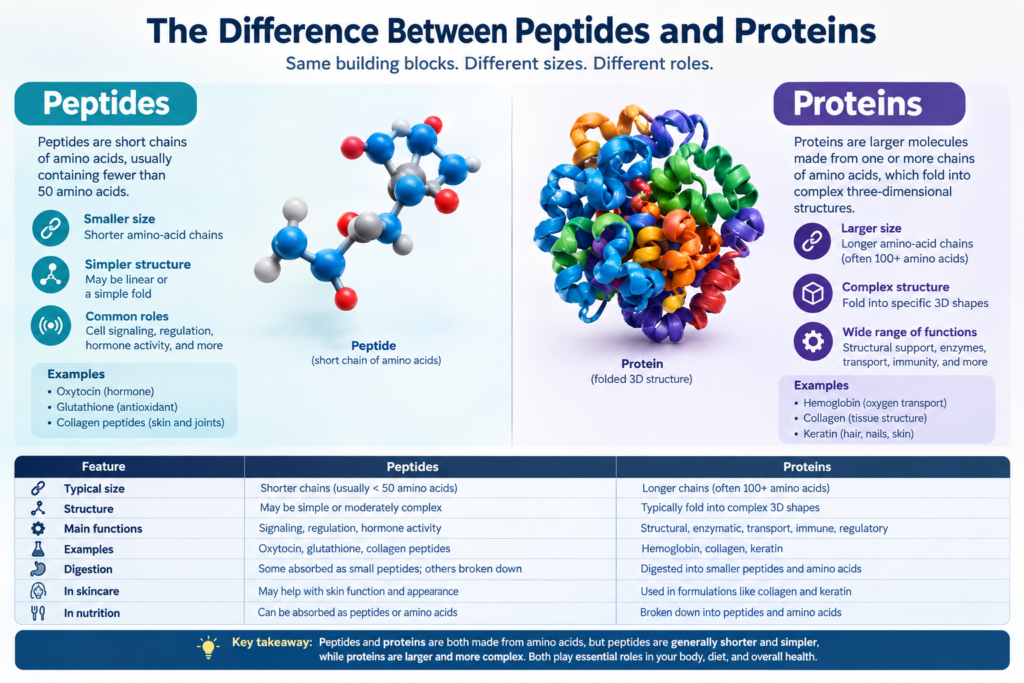
| Feature | Peptides | Proteins |
|---|---|---|
| Basic composition | Chains of amino acids | One or more chains of amino acids |
| Typical size | Generally shorter | Generally longer |
| Molecular weight | Usually lower | Usually higher |
| Structure | May have relatively simple structures | Often have complex, folded structures |
| Biological functions | Frequently involved in signaling and regulation | Often perform structural, catalytic, transport, and immune functions |
| Examples | Oxytocin, glucagon, bradykinin | Collagen, hemoglobin, antibodies |
| Biological activity | Can interact with receptors and other molecules | Can bind molecules, catalyze reactions, and provide structural support |
Important: These distinctions are general rather than absolute. Peptides and proteins exist on a structural continuum, and scientists do not use one universal length threshold to classify every molecule. difference between peptides and proteins kpv peptide dosage
1. Peptides and Proteins Differ in Size
One of the most commonly discussed differences between peptides and proteins is the length of their amino acid chains.
Peptides are generally shorter and contain fewer amino acid residues. Proteins typically contain longer chains and often have more elaborate structures.
For example, oxytocin contains nine amino acids, making it a relatively small peptide. Hemoglobin, by contrast, is a much larger protein complex composed of multiple protein chains and associated heme groups.
However, size alone does not always determine how a molecule should be classified. Some longer peptides overlap in size with small proteins, so scientists also consider structure, folding, and biological context. difference between peptides and proteins kpv peptide
2. Peptides and Proteins Have Different Structural Complexity
Both peptides and proteins are connected by peptide bonds, but their structures can differ considerably.
Short peptides may remain relatively flexible or form small loops and other compact structures. Some also undergo chemical modifications that influence their stability and activity.
Proteins frequently fold into highly organized three-dimensional structures. These structures can contain alpha helices, beta sheets, and other arrangements that help the protein perform its biological role.
Some proteins also consist of several subunits that assemble into a functional complex.
The three-dimensional shape of a molecule is important because even a small change in its structure can affect how it interacts with other molecules. difference between peptides and proteins
3. Peptides and Proteins Have Different Biological Functions
Peptides and proteins can participate in many of the same biological pathways, but their specific roles vary.
Peptides commonly function as signaling molecules or regulators. For example, certain peptide hormones bind to receptors and initiate a series of reactions inside a cell.
Proteins often perform broader structural, catalytic, transport, and defensive functions. Enzymes, for instance, help accelerate biochemical reactions that would otherwise occur too slowly to sustain life.
Nevertheless, these categories overlap. Some proteins function as hormones, while some peptides participate in structural or defensive processes. Their functions depend on their specific molecular characteristics rather than simply their classification. difference between peptides and proteins
4. Peptides and Proteins Differ in Their Synthesis and Processing
Cells produce both peptides and proteins through biological processes involving genetic information.
For many proteins, cells use DNA instructions to produce messenger RNA, which ribosomes translate into amino acid chains. These chains may then fold, undergo chemical modifications, or be combined with other components to become functional proteins.
Many naturally occurring peptides are produced from larger precursor molecules. Enzymes can cut these precursors into smaller active peptides through a process known as proteolytic processing.
Some peptides can also be synthesized directly by specialized cellular machinery, while researchers can manufacture peptides using laboratory techniques.
These difference between peptides and proteins production pathways allow cells to create molecules with specialized biological activities.
5. Peptides and Proteins Can Differ in Stability
Molecular stability is another important consideration when comparing peptides and proteins.
Many peptides are relatively small and may be susceptible to degradation by enzymes called peptidases or proteases. Depending on their sequence and chemical structure, some peptides can be broken down quickly in biological environments.
Proteins can also be degraded, but their stability varies considerably. Their folded structures may protect certain regions from enzymatic breakdown, although other proteins are highly susceptible to degradation or denaturation.
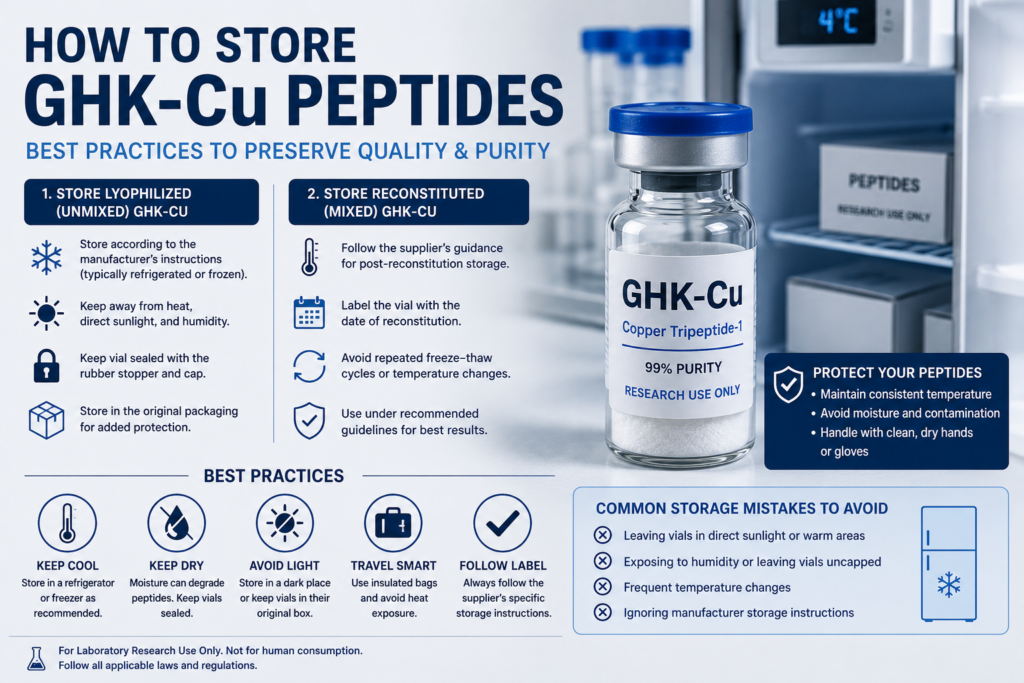
Temperature, pH, moisture, enzymes, and other environmental conditions can affect both types of molecules.
For researchers, understanding difference between peptides and proteins stability is important when studying storage conditions, laboratory handling, pharmaceutical formulation, and biological activity.
Are Peptides Smaller Than Proteins?
Generally, yes. Peptides are usually shorter amino acid chains, whereas proteins typically contain more amino acids and have more complex structures.
However, there is no universally accepted dividing line between peptides and proteins. A commonly used convention describes peptides as chains of roughly 2–50 amino acids, while proteins often contain more than 50 amino acids. This is a useful guideline, not a strict scientific rule.
Some molecules that researchers call peptides are longer than this range, and some small proteins contain relatively few amino acids.
Therefore, the best way to understand the distinction is to consider chain length alongside structural organization and biological function. difference between peptides and proteins
Are Peptides Made From Proteins?
Some peptides are produced from larger protein precursors, but not all peptides come from mature proteins.
In many cases, cells first produce a longer chain of amino acids. Enzymes then cut the chain into smaller fragments, some of which become biologically active peptides.
For example, insulin is initially produced as a precursor molecule called proinsulin. Cellular processing removes a connecting segment and produces mature insulin, which consists of two peptide chains linked by disulfide bonds.
This example also highlights why the distinction between peptides and proteins can be complicated: a molecule’s biological name and classification do not always correspond to a simple amino acid count. difference between peptides and proteins Mod GRF 1-29
Can Peptides Turn Into Proteins?
Peptides do not automatically become proteins simply by existing in the body.
To produce a protein, cells generally synthesize an amino acid chain using biological machinery and genetic instructions. The resulting chain then folds and may undergo additional processing.
In laboratory settings, researchers can chemically or biologically join amino acids to create longer chains. Depending on the resulting molecule’s structure and characteristics, the product may be classified as a peptide or protein.
The relationship between peptides and proteins is therefore best understood as a continuum of molecular structures rather than a process in which every peptide naturally develops into a protein. difference between peptides and proteins
Peptides vs. Proteins in Skincare
Peptides and proteins are widely discussed in skincare because certain molecules can interact with the skin or influence its surface properties.
Peptides in Skincare
Some skincare products contain peptides selected for their potential cosmetic effects. Depending on the formulation and the specific peptide, these ingredients may be marketed to support the appearance of smoother skin or improve the look of visible signs of aging.
Their effectiveness depends on factors such as molecular structure, concentration, formulation, skin penetration, and the quality of the supporting evidence.
Not every peptide ingredient has been demonstrated to provide meaningful benefits in human studies.
Proteins in Skincare
Proteins such as collagen and keratin are also used in cosmetic formulations, often as hydrolyzed proteins or protein fragments.
These ingredients can help condition the skin or hair and may contribute to temporary improvements in softness, moisture retention, or surface feel.
However, applying a protein to the skin does not mean that it will automatically penetrate deeply or replace the body’s own collagen or other structural proteins.
The actual effect depends on the ingredient, formulation, and intended use.
Peptides vs. Proteins in Supplements and Nutrition
Both peptides and proteins are relevant to nutrition.
Dietary proteins from foods such as eggs, fish, dairy products, legumes, and meat are broken down during digestion into smaller peptides and amino acids. These products can then be absorbed and used by the body to support protein synthesis and other metabolic processes.
Some nutritional products contain hydrolyzed proteins, which have been partially broken down into smaller peptides.
Protein hydrolysates may differ from intact proteins in digestion and absorption characteristics, but the practical benefits depend on the specific product, dietary context, and health outcome being considered.
It is also important to distinguish dietary protein from injectable or research-use peptides. They differ in composition, delivery, intended use, and potential risks. A peptide’s presence in the body does not automatically make an externally administered peptide safe or effective.
Are Peptides Better Than Proteins?
Neither peptides nor proteins are inherently better than the other. Their usefulness depends on the biological role or application being considered.
Peptides may be suitable for certain signaling functions because their amino acid sequences can interact with specific receptors or molecular targets.
Proteins may be better suited to tasks requiring large, organized structures, such as transporting oxygen, supporting tissues, or catalyzing complex chemical reactions.
In nutrition, intact dietary proteins provide amino acids needed for growth and tissue maintenance. In biotechnology and medicine, both peptides and proteins can be developed for specific purposes.
The important question is not which category is superior, but which molecule has the appropriate structure and demonstrated activity for the intended application.
Why Is Understanding the Difference Between Peptides and Proteins Important?
Understanding the difference between peptides and proteins helps explain how biological molecules operate and why their structures matter.
This knowledge is relevant to several fields:
- Biology and biochemistry: Understanding cellular signaling, enzymes, metabolism, and molecular interactions.
- Medicine and pharmaceutical research: Studying peptide-based and protein-based therapeutics.
- Skincare science: Evaluating cosmetic ingredients and the evidence behind their claims.
- Nutrition: Understanding how dietary proteins are digested and used by the body.
- Biotechnology: Designing molecules for research, diagnostics, and other applications.
Because peptides and proteins can have very different activities, researchers must evaluate individual molecules rather than assuming that all peptides or all proteins produce the same effects.
Frequently Asked Questions About difference between peptides and proteins
1. What is the main difference between peptides and proteins?
The main difference is that peptides are generally shorter chains of amino acids, while proteins are typically longer chains that fold into complex three-dimensional structures. Both are made from amino acids and perform essential biological functions.
2. How many amino acids make a peptide versus a protein?
There is no universally accepted cutoff. Peptides are often described as containing approximately 2–50 amino acids, while proteins commonly contain more than 50. These ranges are conventions rather than strict definitions.
3. Are peptides a type of protein?
Peptides and proteins belong to the same broad family of amino-acid-based molecules. In some contexts, peptides are described as small protein fragments, but the terms are not always interchangeable. Usage depends on molecular size, structure, function, and scientific convention.
4. Are proteins made of peptides?
Proteins are made of amino acid chains linked by peptide bonds. These chains are not necessarily separate peptides joined together; they are commonly synthesized as continuous polypeptide chains that fold into functional structures.
5. Do peptides and proteins have the same building blocks?
Yes. Both are made from amino acids connected by peptide bonds. The number and sequence of amino acids, together with the molecule’s folding and chemical modifications, help determine its properties.
6. Are peptides easier for the body to absorb than proteins?
Not necessarily. Smaller peptides may be absorbed through particular intestinal transport pathways, while dietary proteins are generally digested into amino acids and small peptides before absorption. The outcome depends on the molecule, food or formulation, and physiological context.
7. Are peptides safer than proteins?
Neither category is inherently safer. Safety depends on the specific molecule, dose, route of administration, purity, intended use, and available evidence. Naturally occurring peptides and proteins can have important biological effects, and externally administered products may carry risks.
8. What are examples of peptides and proteins?
Examples of peptides include oxytocin, glucagon, and bradykinin. Examples of proteins include collagen, hemoglobin, keratin, and antibodies. Insulin is a peptide hormone composed of two chains and is often classified as a small protein, illustrating the overlap between the categories.
9. Do peptides help build muscle?
Peptides have diverse biological functions, and their effects depend on the specific molecule. Dietary protein provides amino acids needed for muscle repair and growth, but this does not mean that every peptide supplement or research peptide improves muscle development. Claims about particular products should be evaluated using reliable human evidence and appropriate safety information