
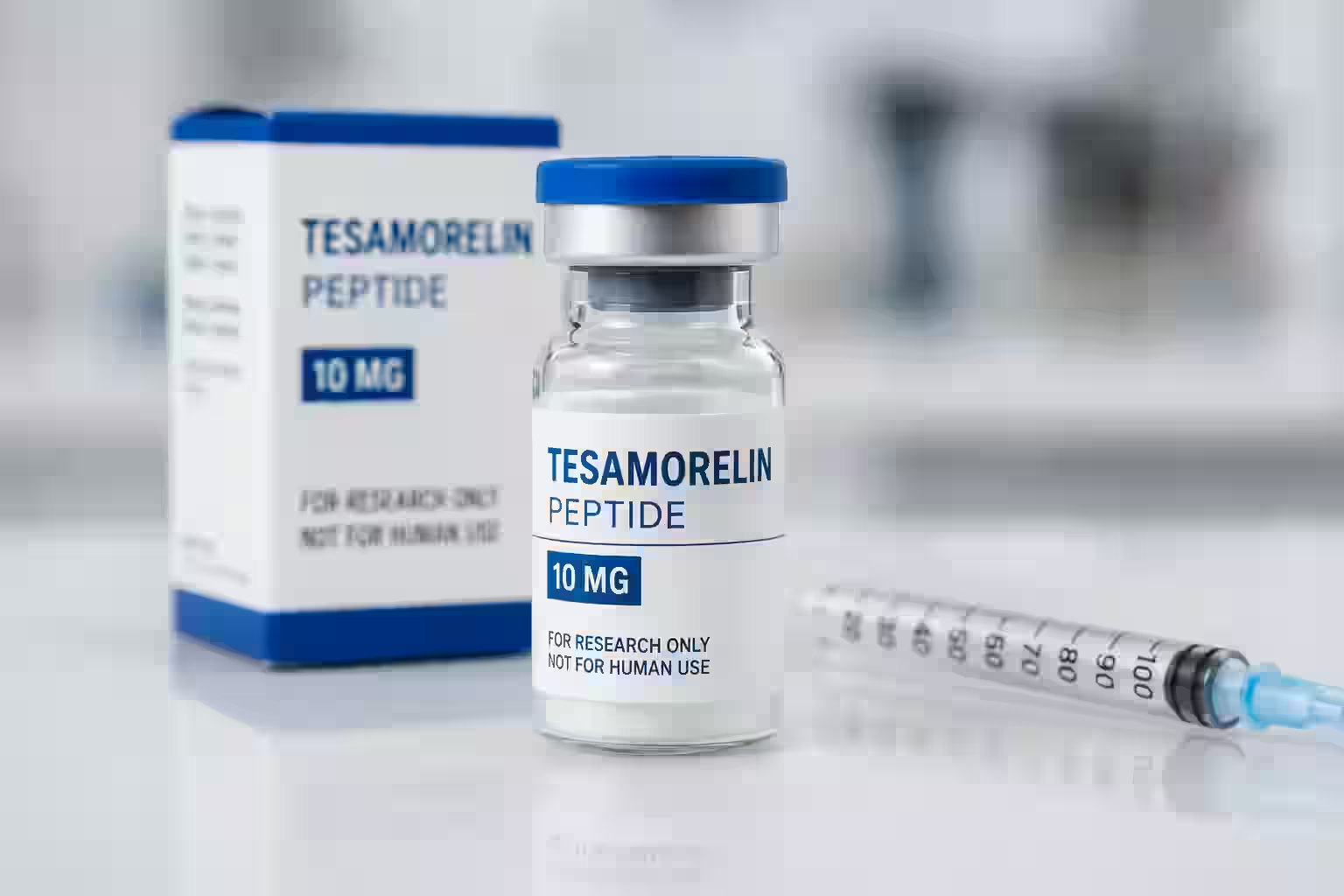
Tesamorelin Peptide: What It Is, Benefits, Uses, Dosage & Safety
Tesamorelin peptide is a synthetic analogue of growth hormone-releasing hormone (GHRH), also known as growth hormone-releasing factor. It works by stimulating the body’s pituitary gland to release growth hormone, which subsequently influences the insulin-like growth factor-1 (IGF-1) pathway. ipamorelin peptide
tesamorelin peptide is best known for its use in managing excess abdominal fat associated with HIV-related lipodystrophy. In the United States, the FDA-approved tesamorelin product EGRIFTA SV is indicated specifically to reduce excess abdominal fat in HIV-infected adults with lipodystrophy. It is not indicated as a general weight-loss treatment. Glow Blend (TB 10mg + BPC 10mg + GHK 50mg)
Because tesamorelin affects the growth hormone axis, it should not be viewed simply as a conventional fat-loss supplement or general-purpose peptide. Sermorelin
How Does tesamorelin peptide Work?
tesamorelin peptide is designed to mimic GHRH.
The simplified pathway is:
Tesamorelin → GHRH receptor stimulation → increased growth hormone release → changes in IGF-1 and body composition
Unlike directly administering recombinant growth hormone, tesamorelin stimulates endogenous growth hormone release through the body’s normal regulatory pathway.
Clinical research has primarily investigated this mechanism in people with HIV-associated lipodystrophy, particularly those experiencing excess visceral adipose tissue around the abdomen. ipamorelin peptide
What Is tesamorelin peptide Used For?
The FDA-approved indication for EGRIFTA SV is the reduction of excess abdominal fat in HIV-infected adults with lipodystrophy. The prescribing information specifically states that it is not indicated for weight-loss management.
This distinction is important because tesamorelin is frequently discussed online in connection with:
- Abdominal fat reduction
- Body composition
- Visceral adipose tissue
- Muscle preservation
- Anti-aging
- Recovery
- Metabolic health
- General fat loss
Evidence for these different uses is not equivalent. Tesamorelin + Ipamorelin
Research has demonstrated effects on visceral adipose tissue and other body-composition measures in people with HIV-associated lipodystrophy, while evidence supporting broader cosmetic, athletic, or anti-aging applications remains considerably less established.
tesamorelin peptide and Visceral Fat
One of the most studied effects of tesamorelin peptide is its ability to reduce visceral adipose tissue (VAT).
Visceral fat is the fat stored around internal abdominal organs. It differs from subcutaneous fat, which sits directly underneath the skin.
Clinical trials have found that tesamorelin can reduce visceral adipose tissue in people with HIV-associated lipodystrophy. Earlier trials also reported reductions in waist circumference and improvements in certain body-image measures.
More recent meta-analyses have reached similar conclusions. A 2026 systematic review and meta-analysis of four randomized controlled trials involving 909 people found that tesamorelin was associated with reductions in visceral adipose tissue, waist circumference, and trunk fat, along with an increase in lean body mass. tesamorelin vs ipamorelin
However, these findings should not be interpreted as evidence that tesamorelin is a universal weight-loss medication.
Does tesamorelin peptide Help With Weight Loss?
tesamorelin peptide is not FDA-approved for general weight loss.
The FDA prescribing information for EGRIFTA SV specifically lists weight-loss management as a limitation of use.
This makes the distinction between fat distribution and overall weight loss particularly important.
Research suggests tesamorelin can reduce visceral and trunk fat in the population for which it has been studied, but that does not necessarily translate into substantial reductions in total body weight or BMI.
A 2026 meta-analysis found significant reductions in visceral adipose tissue, trunk fat, hepatic fat, and waist circumference, but did not find a significant reduction in BMI. GHK-CU 100mg
Tesamorelin Dosage
The appropriate dose depends on the specific tesamorelin formulation.
For EGRIFTA SV, the FDA prescribing information specifies 1.4 mg administered subcutaneously once daily for the approved indication. The label also emphasizes that the EGRIFTA SV recommendations apply specifically to its 2-mg-per-vial formulation.
This is important because different tesamorelin formulations can have different concentrations, reconstitution instructions, and dosing requirements.
For that reason, online protocols for generic or compounded tesamorelin should not automatically be substituted for the instructions accompanying an FDA-approved product or a clinician’s prescription. MGF
Do not determine a personalized tesamorelin dose from an online calculator or another person’s peptide protocol.
How Is Tesamorelin Administered?
EGRIFTA SV is administered by subcutaneous injection.
The FDA prescribing information instructs patients to inject it into the abdomen while rotating injection sites. The supplied diluent is used for reconstitution, and the prepared solution is intended for immediate administration according to the product instructions.
Anyone using a prescription tesamorelin product should follow the specific preparation, storage, injection, and disposal instructions supplied with that product.
Tesamorelin Benefits: What Does Research Show?
The strongest evidence concerns body-composition changes in people with HIV-associated lipodystrophy.
Reported effects include:
Reduced visceral adipose tissue
Tesamorelin has consistently demonstrated reductions in visceral abdominal fat in clinical research involving HIV-associated lipodystrophy.
Reduced waist circumference
Clinical studies have also reported modest reductions in waist circumference. what does ghk cu do
Changes in body composition
Recent evidence suggests tesamorelin can reduce trunk fat while increasing lean body mass in appropriately studied patients.
Possible effects on hepatic fat
A 2026 meta-analysis found a significant reduction in hepatic fat percentage among patients studied for HIV-associated lipodystrophy.
Importantly, these findings describe outcomes observed in clinical research populations. They should not be interpreted as a guarantee of similar results for an individual or as proof of effectiveness for unapproved uses.
What Happens When Tesamorelin Is Stopped?
One notable finding from long-term research is that reductions in visceral fat may not persist after treatment stops.
In a 52-week study, patients who continued tesamorelin maintained reductions in visceral adipose tissue. Patients who discontinued treatment experienced reaccumulation of visceral fat.
This suggests that the benefits observed with treatment may require continued therapy rather than representing a permanent change in body-fat distribution. BPC-157 Capsules vs Injectable BPC-157
Tesamorelin Side Effects and Safety
Tesamorelin affects the growth hormone/IGF-1 system, so monitoring and appropriate patient selection are important.
Reported adverse effects include:
- Injection-site reactions
- Joint pain or arthralgia
- Muscle pain
- Headache
- Peripheral edema
- Numbness or tingling
- Changes in glucose metabolism
- Increased IGF-1 levels
Recent meta-analysis data also identified arthralgia, myalgia, paresthesia, and injection-site reactions among reported adverse events.
The FDA prescribing information contains additional warnings and precautions, including concerns involving elevated IGF-1, glucose intolerance or diabetes, fluid retention, hypersensitivity reactions, and malignancy-related considerations. how much ipamorelin should i take
Who Should Not Use Tesamorelin?
Tesamorelin is not appropriate for everyone.
The FDA prescribing information lists important contraindications and warnings, including active malignancy, hypersensitivity to tesamorelin or formulation components, and certain pituitary-related conditions. Patients with diabetes or glucose-related risk factors may also require particular monitoring.
Pregnancy is another important consideration because changes in visceral fat are not an appropriate treatment objective during pregnancy and the product labeling contains pregnancy-related warnings.
A healthcare professional should review your medical history, medications, relevant laboratory results, and treatment goals before tesamorelin is considered.
Tesamorelin Peptide vs. Other Peptides
Tesamorelin is sometimes grouped together with peptides such as ipamorelin, CJC-1295, and other growth-hormone-related compounds. However, these substances are not interchangeable.
Tesamorelin is a GHRH analogue with a specific FDA-approved indication in the United States. Other peptides may have different mechanisms, regulatory statuses, evidence bases, formulations, and safety considerations.
Therefore, choosing a peptide solely because it is described online as a “growth hormone peptide” can be misleading.
tesamorelin peptide vs. General Fat-Loss Treatments
tesamorelin peptide primary clinical evidence concerns visceral fat associated with HIV lipodystrophy, rather than general obesity.
This is different from medications specifically approved for chronic weight management.
If your primary goal is weight loss, a healthcare professional can evaluate established treatment options based on your BMI, medical history, metabolic health, medications, and other individual factors. N15 Beta-Amyloid (1-40)
Reviews
There are no reviews yet.