
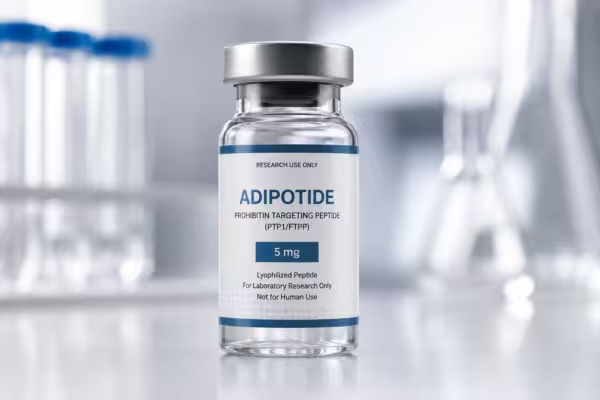
Adipotide Peptide: Research Overview, Mechanism, Benefits & Safety
Adipotide is an experimental peptide that has attracted scientific interest for its potential role in targeting adipose tissue and influencing body-weight regulation. Unlike conventional weight-management compounds that primarily act through appetite or hormonal pathways, adipotide was designed to target the blood vessels associated with white adipose tissue. TB-500
Research into adipotide has focused primarily on its mechanism of action, targeted fat-tissue effects, metabolic activity, and potential applications in obesity research. However, it is important to emphasize that adipotide remains an investigational compound and is not an FDA-approved treatment for weight loss or obesity. Semax
What Is Adipotide?
Adipotide is a synthetic proapoptotic peptidomimetic developed as a potential experimental approach to targeting white adipose tissue.
The compound is commonly identified by the sequence:
CKGGRAKDC-GG-(KLAKLAK)₂
Its design combines a targeting component with a cell-disrupting component. The targeting portion is intended to recognize prohibitin-1 (PHB1) associated with the vasculature of white adipose tissue. Once targeted, the compound can trigger processes that lead to apoptosis in susceptible cells.
Research published in Science Translational Medicine reported that adipotide produced targeted effects on white adipose tissue in obese nonhuman primates, including reductions in body weight and improvements in insulin resistance. Thymosin Beta-4
How Does Adipotide Work?
This peptide is different from many commonly discussed metabolic peptides because its proposed mechanism involves targeted vascular disruption and apoptosis rather than simply reducing appetite.
The general research model involves several stages:
- Target recognition – The peptide is designed to interact with prohibitin-1 associated with blood vessels supplying white adipose tissue.
- Cellular targeting – The targeting sequence helps direct the compound toward susceptible adipose-tissue vasculature.
- Proapoptotic activity – The KLA-containing portion can promote disruption of cellular membranes and initiate cell death pathways.
- Adipose-tissue effects – In experimental models, these processes have been associated with reductions in white adipose tissue.
- Metabolic changes – Animal research has reported improvements in certain metabolic measurements alongside reductions in adipose tissue. bpc 157 peptide
This mechanism makes this peptide particularly interesting from a research perspective, although animal findings cannot establish that the same effects or safety profile will occur in humans. Glow Blend (TB 10mg + BPC 10mg + GHK 50mg)
Adipotide and Weight-Loss Research
One of the primary reasons why this peptide has received attention is its investigation as a potential anti-obesity compound.
In a study involving obese nonhuman primates, researchers reported that adipotide treatment produced weight loss, reductions in white adipose tissue, and improvements in insulin resistance. The researchers also observed changes involving renal proximal tubule function, highlighting an important safety concern associated with the compound.
These findings helped establish adipotide as a prototype for investigating targeted approaches to adipose tissue.
However, promising animal research should not be interpreted as evidence that adipotide is an established human weight-loss treatment.
Benefits: What Does the Research Suggest?
When discussing this peptide benefits, it is important to distinguish between experimental findings and clinically established benefits.
Research has investigated adipotide for potential:
- Targeted effects on white adipose tissue
- Reduction of adipose tissue in experimental models
- Body-weight reduction in animal models
- Improvements in insulin resistance
- Development of novel targeted approaches to obesity
- Investigation of adipose-tissue vascular biology
The strongest published evidence comes from preclinical research rather than established clinical treatment studies.
Potential Adipose-Tissue Targeting
One of the peptide defining characteristics is its proposed ability to target the vasculature associated with white adipose tissue.
This makes it scientifically different from compounds designed primarily to alter appetite, gastrointestinal signaling, or systemic metabolism.
Metabolic Research
Animal studies have also investigated adipotide in relation to insulin sensitivity and metabolic health. The reported improvements occurred alongside reductions in adipose tissue, making the compound relevant to researchers studying the relationship between fat tissue and metabolic dysfunction.
Safety and Side Effects
Safety is one of the most important considerations when evaluating this peptide.
Animal research identified renal effects, including reversible changes in renal proximal tubule function. These findings are particularly important because they demonstrate that targeting adipose tissue does not necessarily eliminate the possibility of significant effects on other organs.
Because human clinical data are limited, the complete safety profile of this peptide has not been established.
Potential concerns surrounding an investigational compound such as adipotide include:
- Kidney and renal function
- Unanticipated off-target effects
- Cellular toxicity
- Changes in metabolic function
- Long-term safety
- Product purity and identity
Anyone considering an investigational peptide should discuss the risks with a qualified healthcare professional rather than relying on research-peptide marketing claims.
Is Adipotide FDA Approved?
No. This peptide is not an FDA-approved weight-loss medication.
It should not be presented as an established treatment for obesity, diabetes, metabolic syndrome, or any other medical condition.
Adipotide has been investigated as an experimental anti-obesity strategy, but its research status is fundamentally different from approved obesity medications.
This distinction is especially important when evaluating products marketed online as “adipotide peptide.”
Adipotide Clinical Research
This peptide has progressed beyond purely theoretical research, with experimental investigation conducted in animal models and early human research.
A review of adipose-tissue targeting research identifies adipotide as a proapoptotic peptide targeting prohibitin-1 and reports a Phase 1 clinical program associated with NCT01262664. The program was subsequently discontinued.
Consequently, available evidence should be interpreted cautiously. This peptide should not be equated with currently approved anti-obesity therapies that have undergone large, controlled clinical trials demonstrating efficacy and safety.
Adipotide vs. GLP-1 Peptides
This peptide is sometimes discussed alongside modern weight-management peptides, but the mechanisms are substantially different.
| Feature | Adipotid | GLP-1-Based Therapies |
|---|---|---|
| Research status | Investigational | Some are FDA-approved |
| Primary research focus | Targeted adipose-tissue biology | Appetite, glucose regulation and metabolic signaling |
| Mechanism | Proapoptotic/adipose vascular targeting | GLP-1 receptor activation |
| Human evidence | Limited | Extensive for approved products |
| Established weight-loss treatment | No | Yes, for certain approved medications |
| Long-term safety data | Limited | Substantially greater for approved therapies |
This distinction is important for consumers and researchers because experimental peptides should not automatically be considered alternatives to approved medications. ACE-031
Research Peptide
This peptide is commonly encountered in the research peptide market. In this context, the material is generally marketed for laboratory research rather than as a pharmaceutical treatment.
Researchers evaluating this product should consider factors such as:
- Peptide identity
- Purity
- Analytical testing
- Certificate of analysis
- Batch consistency
- Storage requirements
- Manufacturer documentation
A product labeled “research use only” should not be represented as an approved medicine or as a product intended for human therapeutic use. 5-Amino-1MQ

Reviews
There are no reviews yet.