
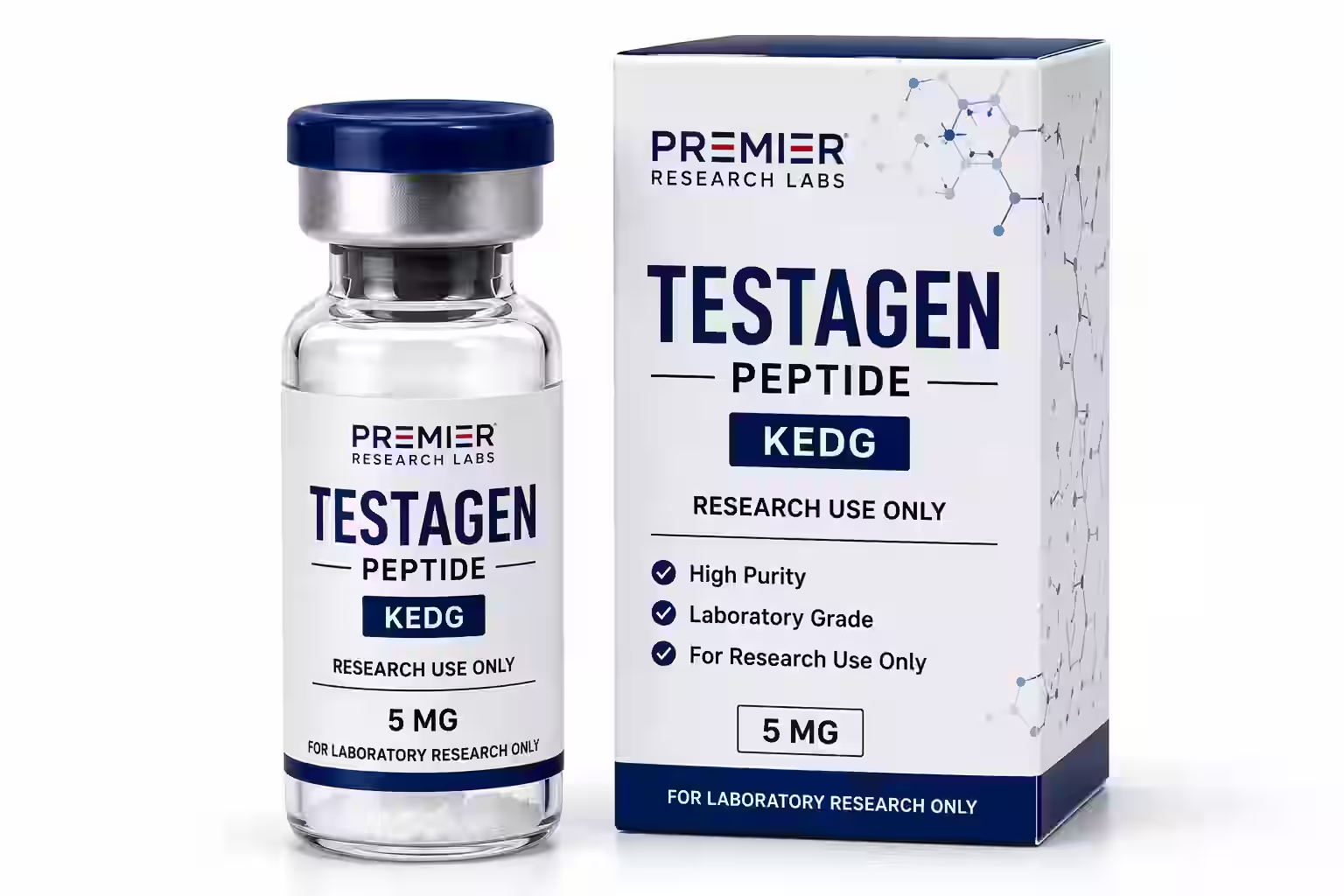
Testagen Peptide: What Is It, How Does It Work, and What Does the Research Show?
Testagen peptide is a short synthetic peptide commonly identified as Lys-Glu-Asp-Gly (KEDG). It belongs to the broader family of short peptide bioregulators associated with the research work of Vladimir Khavinson and colleagues. igf-1 lr3
Testagen has attracted interest because laboratory and animal studies have investigated KEDG in connection with cellular signaling, nucleic-acid interactions, and endocrine-related research. However, the available evidence is limited, and findings from laboratory or animal studies should not be interpreted as proof of benefits in humans. kpv peptide
This guide explains what Testagen peptide is, what researchers have studied, its proposed mechanisms, and what is currently known about its evidence and safety. L-carnitine
What Is Testagen Peptide?
Testagen is generally described as a tetrapeptide, meaning it consists of four amino acids:
Lysine – Glutamic Acid – Aspartic Acid – Glycine
This sequence is commonly written as KEDG or H-Lys-Glu-Asp-Gly-OH.
The compound is associated with the short-peptide bioregulator research tradition developed by the Khavinson research group. Unlike testosterone, Testagen is a peptide rather than a steroid hormone. Cardiogen Peptide
That distinction is important because online discussions sometimes incorrectly treat Testagen as another form of testosterone.
Testagen Peptide vs. Testosterone
Testagen and testosterone are chemically different substances.
Testosterone is a steroid hormone that plays important roles in reproductive development, muscle and bone physiology, and other biological processes.
Testagen, by contrast, is a four-amino-acid peptide. Research involving KEDG has explored peptide interactions with cells and biological molecules rather than functioning as a direct testosterone replacement.
The similarity between the commercial name “Testagen” and testosterone-related marketing can therefore create confusion.
Importantly, research into Testagen does not establish that the peptide can replace testosterone therapy or reliably increase testosterone levels in humans. Reta + Mots-c
How Does Testagen Work?
The proposed mechanism of short peptide bioregulators is still an area of investigation.
Laboratory research has examined whether KEDG and related short peptides can enter cells and interact with biological structures involved in gene regulation.
One published study investigated fluorescently labeled short peptides and reported cellular and nuclear penetration along with interactions involving DNA sequences. These findings provide a possible molecular research pathway, but they do not demonstrate a therapeutic effect in humans.
Researchers have also investigated Lys-Glu-Asp-Gly in animal models involving endocrine tissues. For example, a 2011 study examined KEDG in hypophysectomized chickens and older hens and reported effects on thyroid morphology and thyroid-related hormone measurements.
These findings remain preclinical. Dihexa Peptide
What Is Testagen Peptide Used For in Research?
Research interest in Testagen/KEDG has included several areas.
Cellular and Molecular Research
Because KEDG is an ultrashort peptide, researchers can use it to investigate how small peptide sequences interact with cells and biological molecules.
Studies of related short peptides have examined:
- Cellular penetration
- Nuclear localization
- DNA interactions
- Histone interactions
- Gene-expression mechanisms
- Cellular signaling
These experiments are useful for understanding potential biological mechanisms, but laboratory activity does not automatically translate into a clinical benefit. Semax + Selank Blend
Endocrine Research
KEDG has also appeared in experimental research involving endocrine tissues.
A 2011 animal study investigated Lys-Glu-Asp-Gly in hypophysectomized birds and reported changes involving thyroid morphology and thyroid-related hormones. ghkcu+reta blend
This is animal research and should not be interpreted as evidence that Testagen treats human endocrine disorders.
Peptide Bioregulator Research
Testagen is commonly discussed within the broader field of short synthetic peptide bioregulators.
This research framework proposes that small peptides may influence cellular processes through interactions with regulatory molecules. However, many of the proposed applications remain investigational, and independent clinical evidence for Testagen specifically is very limited.
Testagen Peptide and Testosterone
One of the most common searches surrounding Testagen is whether it increases testosterone.
At present, there is not sufficient controlled human evidence to establish Testagen as a testosterone-boosting treatment.
Some commercial descriptions connect KEDG with testicular or reproductive research, but these claims should be distinguished from demonstrated clinical outcomes. Bronchogen
Testagen should therefore not be considered equivalent to testosterone replacement therapy.
There is also an important naming issue in the clinical-trial literature: ClinicalTrials.gov currently lists a study called “Product Transference Study of Testagen™ TDS®-Testosterone.” The study concerns a topical testosterone product and potential transfer of testosterone between partners; it is not evidence that the KEDG peptide itself raises testosterone.
Does Testagen Peptide Increase Testosterone?
There is currently insufficient evidence to conclude that Test-agen peptide reliably increases testosterone in humans.
This is an important distinction for anyone researching Test-agen online. A proposed mechanism, an animal experiment, or a product description is not equivalent to clinical evidence. hexarelin peptide
For questions about low testosterone, hormone replacement, fertility, or endocrine symptoms, laboratory testing and evaluation by a qualified healthcare professional are substantially more informative than relying on an experimental peptide. humanin peptide
Testagen Peptide Research: What Does the Evidence Show?
The evidence surrounding Test-agen is still early.
Published research has examined KEDG in laboratory and animal settings, including work involving endocrine tissues and cellular mechanisms.
However, evidence limitations are important:
- Human clinical evidence is very limited or absent for the KEDG peptide itself.
- Published studies do not establish Test-agen as a proven testosterone therapy.
- Human pharmacokinetic data are not well established.
- A comprehensive human safety database is not available.
- Animal and cell studies cannot establish effectiveness in people.
A registered ClinicalTrials.gov record using the Tes-tagen name involves Test-agen TDS-Testosterone, a topical testosterone formulation, rather than the KEDG research peptide. The record is currently listed as not yet recruiting and should not be used as evidence for KEDG efficacy. ipamorelin peptide
Potential Test-agen Peptide Benefits: What Is Known?
Online sources may list a wide range of potential Tes-tagen benefits, including testosterone support, reproductive health, aging, and endocrine regulation.
These claims should be approached cautiously.
The strongest defensible statement is that KEDG has been investigated experimentally for biological effects in cellular and animal models. Research has not established that these experimental observations produce corresponding benefits in humans.
This distinction is especially important when evaluating research peptides marketed with broad claims. mots-c peptide
Is Test-agen FDA Approved?
Tes-tagen peptide is not an FDA-approved human therapeutic.
Research-use peptide products should not be confused with FDA-approved medications. Regulatory approval requires evidence concerning factors such as identity, quality, safety, efficacy, manufacturing, and appropriate clinical use.
A product being sold online does not mean that it has been evaluated or approved as a human treatment.
Tes-tagen Peptide Safety
The safety profile of Tes-tagen in humans has not been adequately established.
Because comprehensive human clinical safety data are lacking, it is not possible to confidently characterize potential short-term or long-term risks associated with self-administration.
Research compounds can also vary in:
- Identity
- Purity
- Potency
- Sterility
- Contamination
- Manufacturing quality
- Storage conditions
For legitimate laboratory research, appropriate analytical documentation such as a Certificate of Analysis (COA) can help researchers verify characteristics of a particular batch. Bpc-157 + TB-500
Tes-tagen Peptide Storage and Research Handling
Research laboratories working with synthetic peptides generally consider factors such as temperature, moisture, light exposure, container integrity, and repeated freeze-thaw cycles when establishing storage procedures.
Exact handling requirements depend on the specific manufacturer’s documentation and formulation.
Researchers should follow the product’s technical documentation, laboratory SOPs, and applicable institutional requirements rather than assuming that all Testagen products have identical stability characteristics. TB-500



Reviews
There are no reviews yet.