Are Peptides the Same as Steroids?
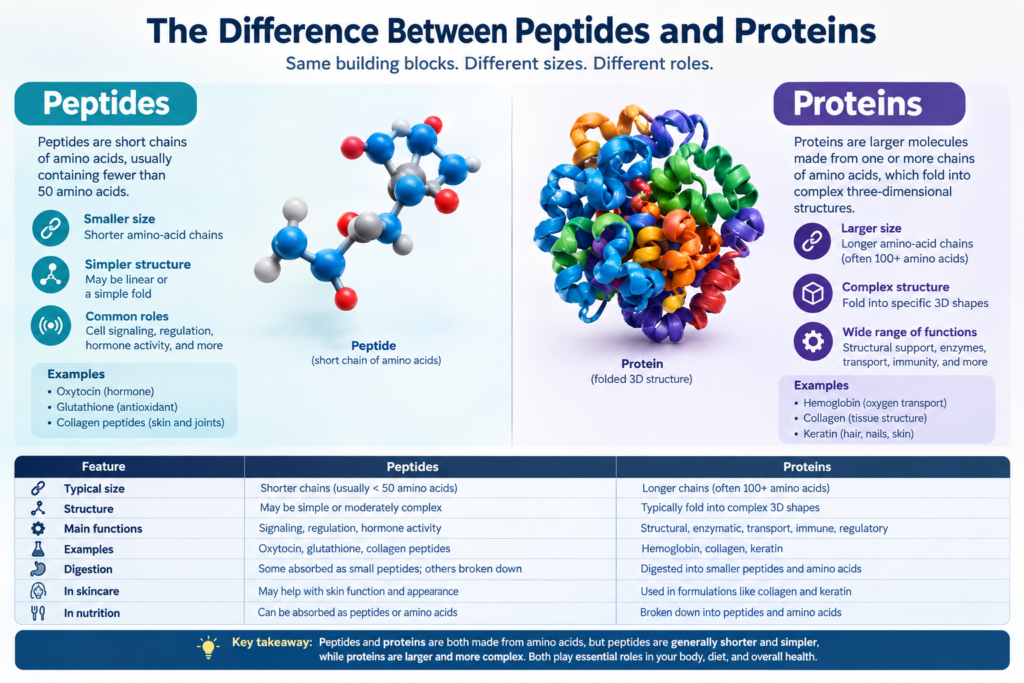
Are peptides the same as steroids? Although peptides and steroids are often discussed together in fitness, bodybuilding, anti-aging, and wellness communities, they are two distinct types of substances. They differ in their chemical structure, how they interact with the body, and the biological processes they influence.
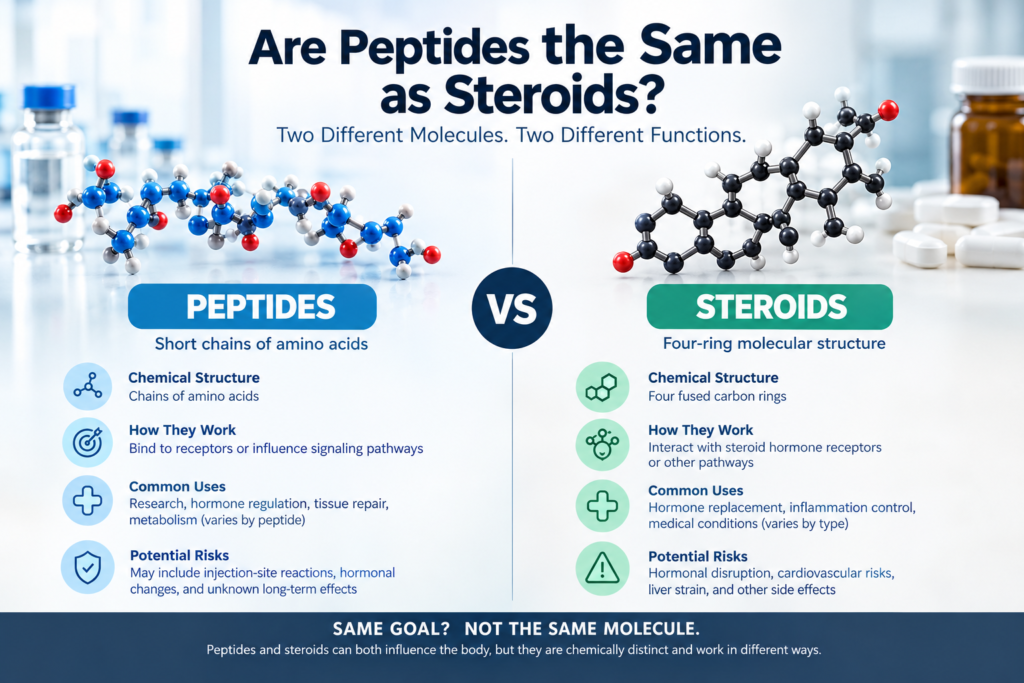
Peptides are short chains of amino acids, the building blocks of proteins. Steroids are compounds with a characteristic four-ring molecular structure. Some steroids, such as testosterone, are hormones that influence muscle development, reproductive function, and other physiological processes. Are Peptides the Same as Steroids? Thymosin Beta-4
Certain peptides affect growth hormone signaling, tissue repair pathways, or other biological functions, which is why they sometimes appear in conversations about muscle growth and recovery. However, peptides do not all work the same way, and they should not be treated as interchangeable with anabolic steroids. Are Peptides the Same as Steroids? thymosin alpha-1
In this guide, we explain Are Peptides the Same as Steroids?, their potential uses, their risks, and what to understand before considering either substance. Are Peptides the Same as Steroids? L-carnitine
What Are Peptides?
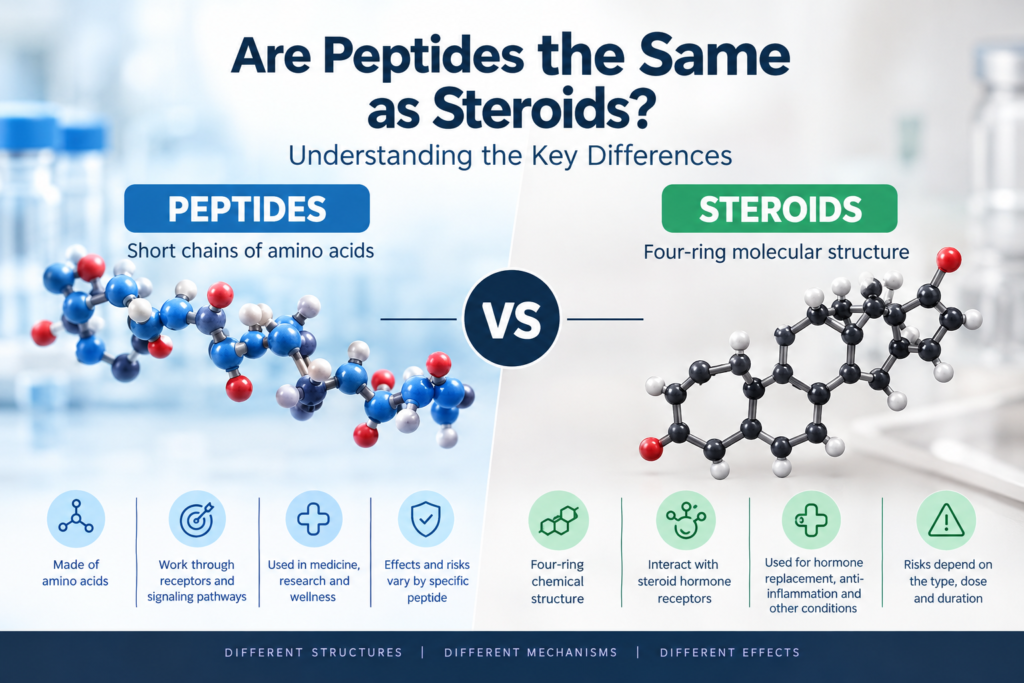
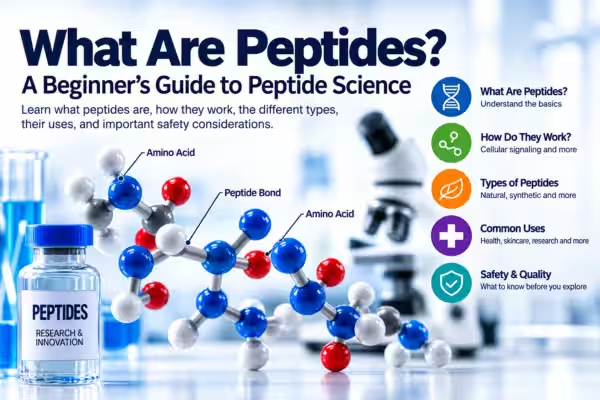
Peptides are molecules made up of two or more amino acids connected by chemical bonds called peptide bonds. Amino acids also form proteins, but proteins generally contain longer chains that fold into more complex structures.
The human body naturally produces many peptides that act as signaling molecules. These molecules help regulate processes such as metabolism, immune activity, appetite, and hormone release. Are Peptides the Same as Steroids? ara-290
Peptides can also be manufactured for scientific research and medical applications. Depending on their specific structure, they may interact with receptors or other biological targets and influence particular functions in the body. Are Peptides the Same as Steroids?
How Do Peptides Work?
Many peptides work by binding to receptors on the surface of cells or within cells. This interaction can trigger a biological response, such as activating a signaling pathway or influencing the release of a hormone.
The exact mechanism depends on the individual peptide.
For example:
- Insulin: A naturally occurring peptide hormone that helps regulate blood glucose.
- Oxytocin: A peptide hormone involved in childbirth, lactation, and aspects of social behavior.
- GLP-1 receptor agonists: Certain medicines that mimic the activity of the glucagon-like peptide-1 hormone and are used in treating conditions such as type 2 diabetes and, for specific products, obesity.
- Growth hormone-releasing peptides: A group of compounds studied for their ability to influence growth hormone release.
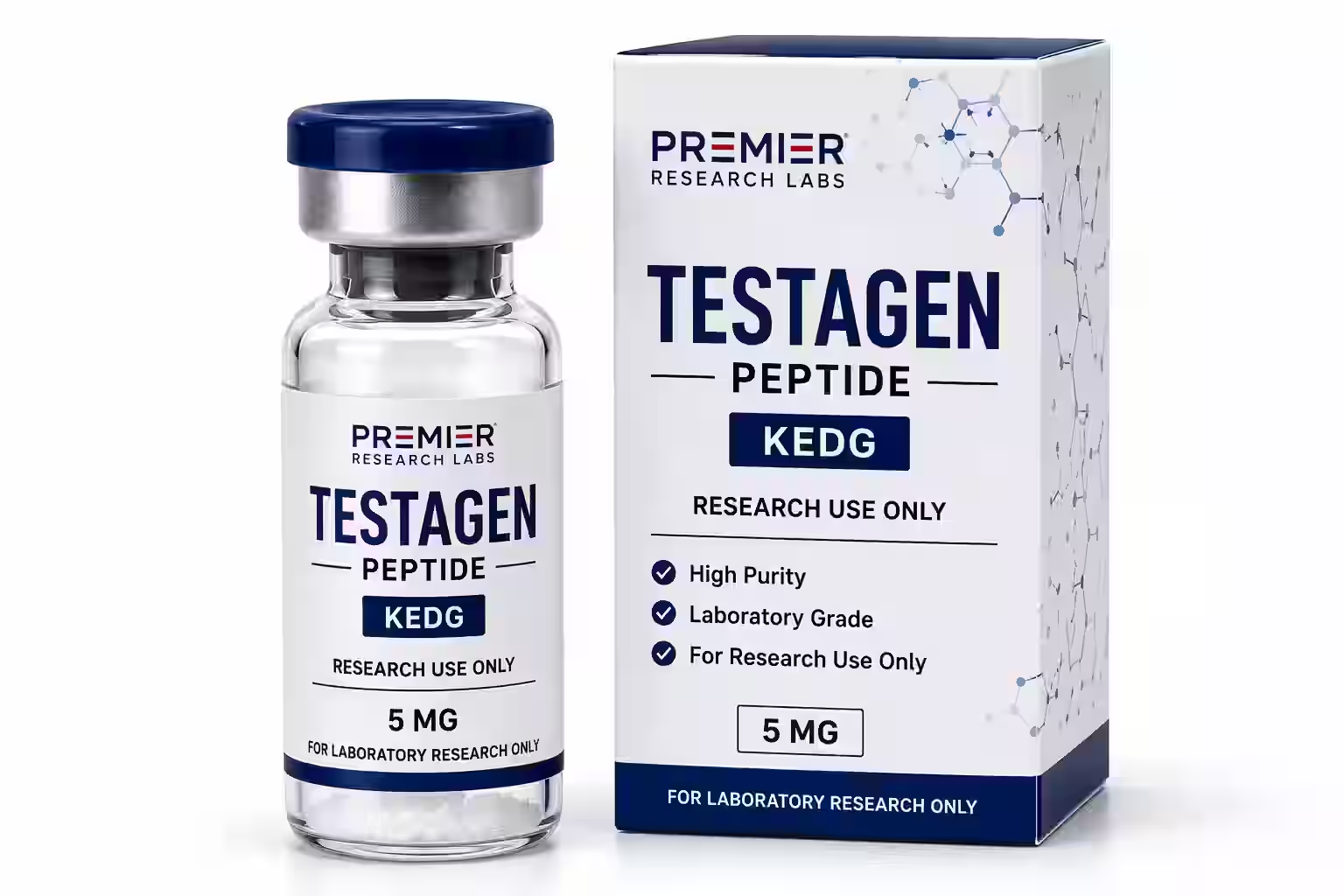
Are Peptides the Same as Steroids? These examples illustrate why peptides should not be considered a single category of treatment. Their effects, approved uses, and safety profiles vary considerably. testagen
What Are Steroids?
Steroids are organic compounds characterized by a molecular structure containing four fused carbon rings. Several different types of steroids occur naturally in the human body.
The word steroids can refer to multiple groups of compounds, including corticosteroids and anabolic-androgenic steroids. These groups have different functions and medical applications. Are Peptides the Same as Steroids? How to Read a Peptide Certificate of Analysis (COA)
What Are Anabolic Steroids?
Anabolic-androgenic steroids are synthetic substances related to testosterone, the primary androgen hormone commonly associated with male reproductive development and other physiological functions.
Anabolic steroids influence androgen receptors and can promote protein synthesis and changes in muscle tissue. Some have legitimate medical uses, including treating certain hormone deficiencies and specific medical conditions.
However, using anabolic steroids without appropriate medical supervision, particularly at high doses for bodybuilding, can increase the risk of serious adverse effects.
Potential effects include:
- Suppression of the body’s natural testosterone production.
- Reduced sperm production and fertility problems.
- Acne and hair loss in susceptible individuals.
- Changes in cholesterol levels and increased cardiovascular risk.
- Liver complications associated with certain oral anabolic steroids.
- Mood changes and other psychological effects.
- Virilization in women, including voice deepening and increased facial hair.
Are Peptides the Same as Steroids? The risks depend on the substance, dosage, duration of use, route of administration, and individual health factors. what are peptides and how do they work
Are All Steroids Anabolic Steroids?
No. This distinction is important when comparing peptides and steroids.
Corticosteroids, such as prednisone, are used to reduce inflammation and manage certain immune-related conditions. They are not the same as anabolic steroids used to increase muscle mass.
Long-term or high-dose corticosteroid use can also cause significant side effects, including elevated blood glucose, bone loss, increased infection risk, and suppression of the body’s natural cortisol production.
Are Peptides the Same as Steroids? Therefore, the effects of a steroid depend on which type of steroid is being discussed. foxo4-dri peptide
Peptides vs. Steroids: The Main Differences
Although both peptides and steroids can influence biological signaling, they differ in several important ways.
| Feature | Peptides | Steroids |
|---|---|---|
| Chemical structure | Chains of amino acids | Compounds with a characteristic four-ring structure |
| Examples | Insulin, oxytocin, sermorelin | Testosterone, prednisone, hydrocortisone |
| Biological activity | Varies by peptide; may affect receptors, signaling, or hormone release | Varies by steroid; may affect steroid receptors or other biological pathways |
| Muscle-related effects | Some influence growth hormone signaling or are investigated for other effects on muscle | Anabolic steroids can directly influence androgen receptor signaling and muscle development |
| Medical applications | Include diabetes treatment, hormone-related care, and other approved indications | Include hormone replacement, inflammation management, and other approved indications |
| Administration | Depends on the compound; oral, injectable, and other formulations exist | Depends on the compound; oral, injectable, topical, and other formulations exist |
| Safety | Highly dependent on the specific substance and product quality | Highly dependent on the specific substance, dose, and duration |
| Legal and regulatory status | Varies by substance, intended use, and jurisdiction | Varies by substance, intended use, and jurisdiction |
Are Peptides the Same as Steroids? The most important difference is that peptides and steroids are chemically distinct categories of molecules, even though both can influence hormones and other biological processes. difference between peptides and proteins
Do Peptides Work Like Steroids for Muscle Growth?
Peptides and anabolic steroids are sometimes grouped together because both are discussed in bodybuilding and performance-enhancement communities. However, they do not necessarily produce the same biological effects.
Anabolic steroids such as testosterone derivatives act through androgen receptors. Their effects can include increased muscle protein synthesis, changes in muscle mass, and suppression of natural reproductive hormone production.
Some peptides marketed for physique enhancement are designed to influence growth hormone release or related signaling pathways. Others are investigated for different biological effects. Their mechanisms and evidence vary by compound. Are Peptides the Same as Steroids? pt-141 bremelanotide
For example, growth hormone-releasing peptides may stimulate the release of growth hormone under certain circumstances. This does not mean they reproduce all the effects of anabolic steroids or reliably produce comparable muscle gains.
Are Peptides the Same as Steroids? It is also important to distinguish between changes in a biological marker and meaningful improvements in strength, muscle size, recovery, or long-term health. Evidence that a substance affects a hormone does not automatically establish that it improves athletic performance safely.
Can Peptides Increase Muscle Mass?
The answer depends on the specific peptide and the available evidence.
Some peptide-based medicines have well-established medical uses, but that does not mean they are effective or appropriate for bodybuilding. Many compounds promoted online for muscle growth have limited human evidence, uncertain long-term effects, or no approved indication for that purpose.
Training consistency, adequate nutrition, sufficient sleep, and appropriate recovery remain important foundations for building muscle. Are Peptides the Same as Steroids?
Are Peptides Safer Than Steroids?
There is no universal answer to whether peptides are safer than steroids. Safety depends on the particular substance, how it is used, the quality of the product, and the individual’s health.
The claim that peptides are automatically safer because they are made from amino acids is misleading. A molecule’s chemical composition does not determine its overall safety.
Potential Risks of Peptides
Depending on the compound, potential risks may include:
- Injection-site pain, swelling, or irritation.
- Allergic reactions.
- Changes in hormone levels or metabolic function.
- Unintended effects on blood glucose or fluid balance.
- Interactions with other medications.
- Contamination, incorrect ingredient concentrations, or sterility problems in unregulated products.
- Unknown long-term consequences when adequate human safety data are unavailable.
Some peptides have extensive clinical evidence and approved medical uses. Others are experimental or marketed for uses that have not been adequately studied.
Potential Risks of Steroids
Anabolic steroid misuse can cause hormonal disruption, fertility problems, adverse cholesterol changes, cardiovascular complications, and other effects.
Corticosteroids have a different risk profile and can cause complications such as osteoporosis, elevated blood glucose, and increased susceptibility to infection when used in certain ways.
Neither category can be evaluated responsibly without identifying the exact compound and intended use. Are Peptides the Same as Steroids? cartalax peptide
Why Product Quality Matters
Products sold online as research peptides may not have the same manufacturing controls, purity standards, or quality assurance as approved medicines.
A product label or certificate of analysis may provide useful information, but it does not by itself prove that a product is sterile, accurately dosed, safe for human use, or clinically effective.
For injectable products, contamination and sterility are particularly important concerns.
Consumers should not assume that a product is safe simply because it is advertised as laboratory-grade, research-grade, natural, or pharmaceutical-quality.
Are Peptides Natural and Steroids Synthetic?
This is another common misconception.
The human body naturally produces many peptides and steroid hormones. Insulin is a natural peptide hormone, while testosterone and cortisol are naturally occurring steroid hormones.
Both categories also include manufactured compounds.
Some medicines contain synthetic or modified peptides designed to produce a particular biological effect. Similarly, anabolic steroids can be manufactured to resemble or modify the activity of testosterone.
Therefore, the distinction is not that peptides are natural while steroids are synthetic. Both groups include naturally occurring substances and manufactured compounds.
The origin of a substance also does not establish whether it is safe. Natural hormones can have harmful effects when present at inappropriate levels, and manufactured medicines can be beneficial when properly prescribed and monitored.
Peptides vs. Steroids for Anti-Aging and Recovery
Peptides and steroids are also discussed in relation to aging, injury recovery, and general wellness.
Some peptide-based medicines have established indications for specific conditions. Other peptides are being investigated for their effects on tissue repair, inflammation, or hormone signaling.
However, claims that experimental peptides reverse aging, accelerate injury recovery, or regenerate tissues often go beyond the available clinical evidence.
Steroid-related treatments also vary. Hormone replacement may be appropriate for certain diagnosed deficiencies, while corticosteroids can be prescribed for specific inflammatory conditions. Neither treatment should be considered a general anti-aging solution.
Before using a substance for recovery or age-related concerns, it is important to establish whether there is credible human evidence supporting that particular use and whether the product is approved for the intended indication.
Are Peptides Legal Compared With Steroids?
The legal status of peptides and steroids varies by country, substance, formulation, and intended use.
Some peptide-based products are approved prescription medicines. Other compounds are experimental, restricted, or not approved for human use.
Anabolic steroids are also regulated differently across jurisdictions. Some are available through legitimate prescriptions, while nonmedical possession, distribution, or use may be subject to legal restrictions.
Athletes should also consider sports regulations. Many anabolic agents and certain peptide hormones or related substances are prohibited under anti-doping rules.