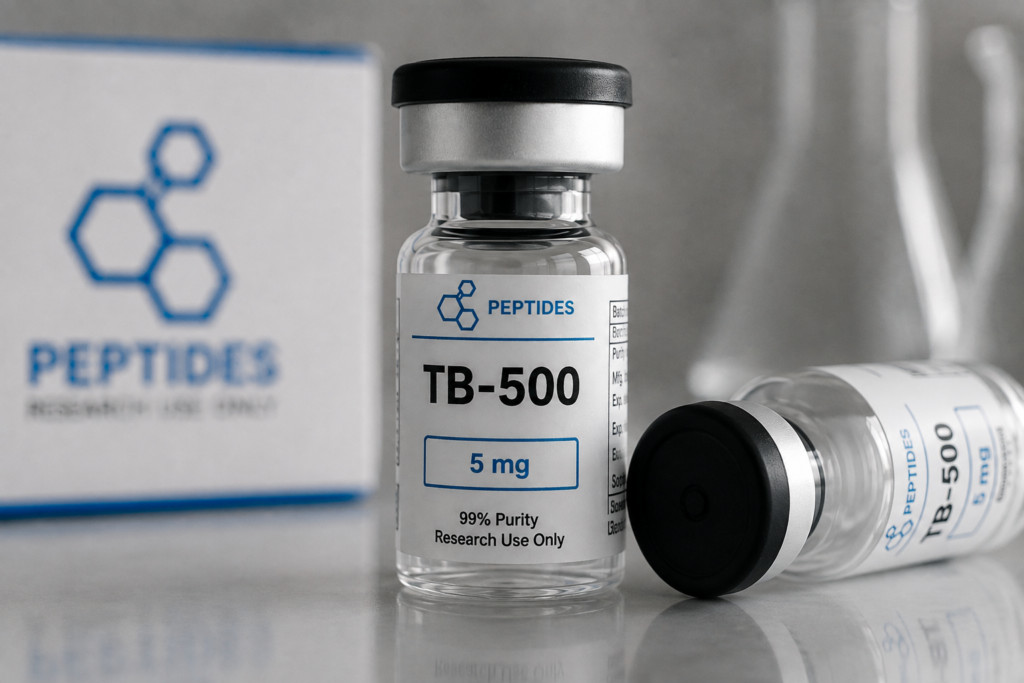
bpc 157 and tb 500: What Are They, How Do They Compare, and What Does the Research Say?
BPC-157 and TB-500 are two peptides that have attracted significant attention in discussions about tissue repair, recovery, inflammation, and sports medicine. They are frequently mentioned together because both have been investigated for biological effects related to tissue healing and regeneration. TB-500
However, much of the interest surrounding bpc 157 and tb 500 comes from preclinical research, anecdotal reports, and online peptide communities rather than large, well-controlled human clinical trials. bpc 157 peptide
That distinction is important. Current evidence about bpc 157 and tb 500 does not establish these peptides as proven treatments for injuries or medical conditions. Recent reviews describe BPC-157 as promising but still investigational, while human safety and efficacy data for TB-500 remain particularly limited. Glow Peptide
This guide explains what BPC-157 and TB-500 are, how they compare, what researchers have studied, and what consumers should know about their current safety and regulatory status. Glow Blend (TB 10mg + BPC 10mg + GHK 50mg)
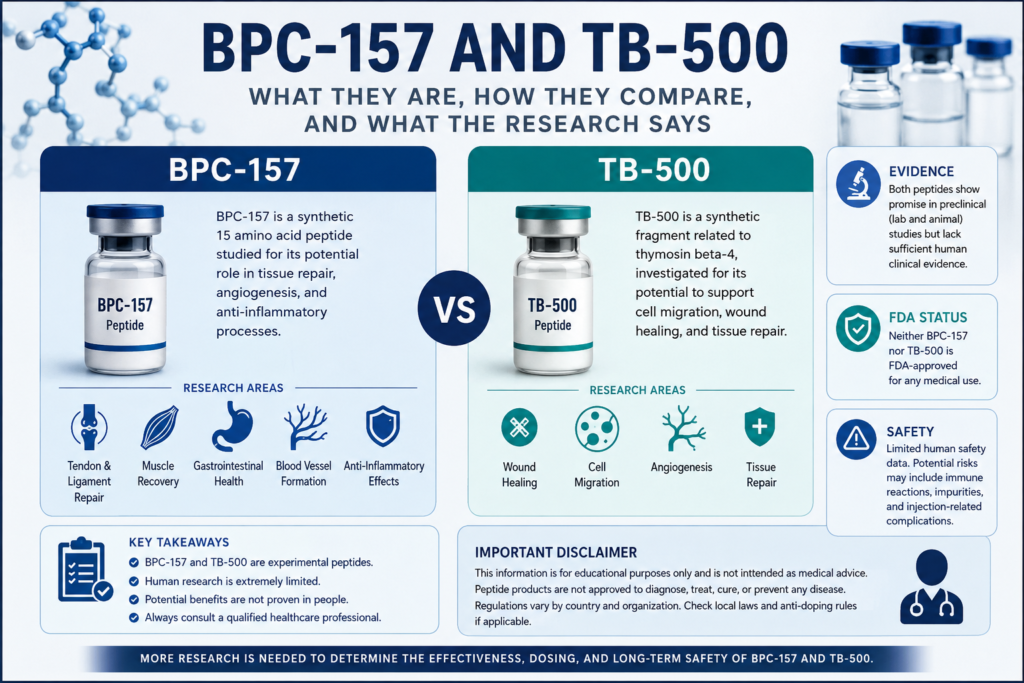
What Is BPC-157?
BPC-157, short for Body Protection Compound-157, is a synthetic peptide consisting of 15 amino acids. It has been investigated primarily in laboratory and animal studies involving tissue repair, inflammation, blood vessels, and gastrointestinal biology. bpc 157 benefits
Preclinical research has reported potential effects involving processes such as angiogenesis, fibroblast activity, collagen production, and nitric-oxide-related pathways. These findings have contributed to interest in BPC-157 as a possible regenerative or tissue-repair compound. BPC-157 research
However, promising laboratory results do not necessarily translate into proven benefits in humans.
A recent review found that human research on BPC-157 remains extremely limited, with only a small number of pilot studies and no completed Phase II clinical trial establishing an approved therapeutic use. BPC-157 Capsules vs Injectable BPC-157
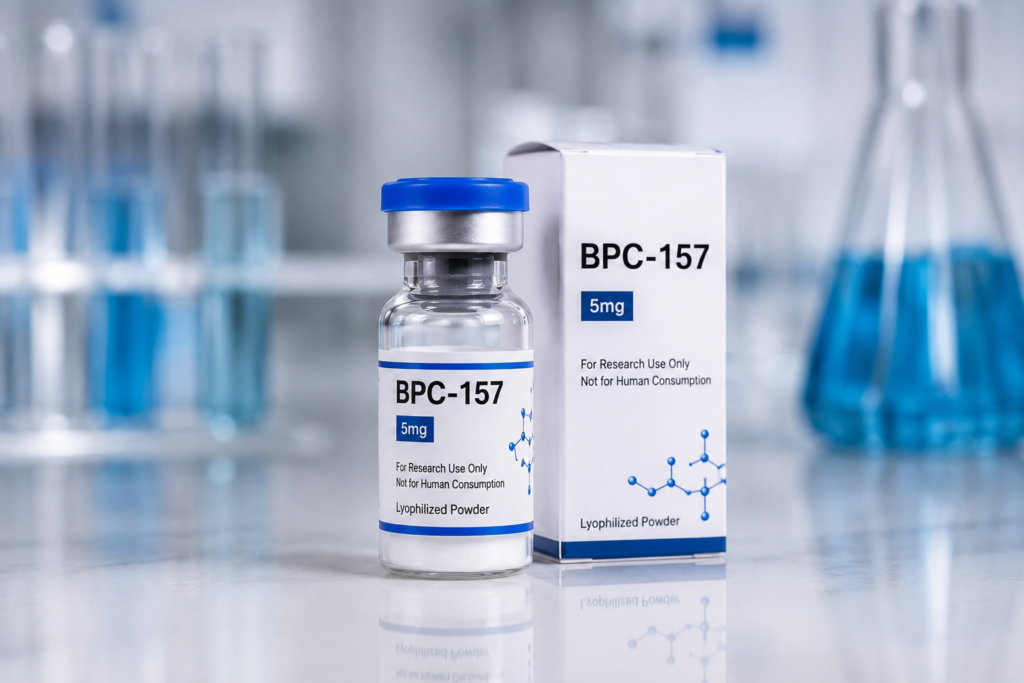
What Is TB-500?
TB-500 is commonly described as a synthetic fragment related to thymosin beta-4. It has become popular in discussions surrounding tissue repair and recovery because thymosin beta-4 has been investigated for biological processes involving cell migration, angiogenesis, and wound healing. Tesamorelin + Ipamorelin
It is important, however, to distinguish TB-500 from thymosin beta-4 itself. They are not simply interchangeable names for the same pharmaceutical product.
The FDA’s recent review identified significant gaps in human safety information for TB-500. In particular, the agency reported that it had not identified clinical studies or human exposure data involving TB-500 through any route of administration. Tesofensine Peptide
bpc 157 and tb 500 comparisons
Although BPC-157 and TB-500 are often discussed together, they are different peptides.
| Feature | BPC-157 | TB-500 |
|---|---|---|
| Type | Synthetic peptide | Thymosin beta-4-related peptide fragment |
| Main research area | Tissue repair and biological signaling | Tissue repair, cell migration and wound-healing pathways |
| Evidence base | Primarily preclinical with limited human research | Primarily preclinical with very limited human data |
| FDA-approved medical use | No | No |
| Human evidence | Limited | Extremely limited |
| Established dosing | No validated clinical regimen | No validated clinical regimen |
The most important similarity is that neither peptide currently has sufficient clinical evidence to establish routine medical use for injury recovery or tissue regeneration. Selank
Why Are bpc 157 and tb 500 Often Used Together?
Online discussions frequently describe bpc 157 and tb 500 as complementary peptides. The reasoning generally comes from their different proposed biological mechanisms and the observation that both have been studied in connection with tissue repair.
However, the idea that combining them produces superior results has not been established through high-quality clinical trials.
The FDA has even identified an adverse-event report involving a product containing both BPC-157 and TB-500. Because both peptides were present, the agency noted that it could not determine which ingredient, if either, was responsible for the reported reaction.
Therefore, claims that bpc 157 and tb 500 work better together should be considered unproven rather than established medical fact. Semax
What Does the Research Say About BPC-157?
BPC-157 has generated substantial preclinical interest.
Animal and laboratory studies have explored its possible effects on:
- Tendons and ligaments
- Muscle tissue
- Gastrointestinal tissue
- Blood-vessel formation
- Inflammation
- Wound healing
- Cellular repair mechanisms
A recent review concluded that BPC-157 has demonstrated promising regenerative effects in preclinical research, but emphasized that human evidence remains minimal and that larger controlled trials are needed.
Another 2026 review highlighted major gaps in BPC-157’s pharmaceutical development, including limited human pharmacokinetic information, lack of a validated formulation, and the absence of an established dosing regimen. what does tesamorelin peptide do
What Does the Research Say About TB-500?
The evidence surrounding TB-500 is even more limited from a human clinical perspective.
Researchers have investigated thymosin beta-4 and related biological pathways in laboratory and animal models. These studies have contributed to interest in wound healing, angiogenesis, and cellular migration.
However, evidence involving the specific compound marketed as TB-500 should not automatically be treated as evidence for thymosin beta-4 or vice versa.
The FDA’s 2026 assessment reported no identified clinical studies or human exposure data for TB-500 and stated that potential safety risks in humans remain unknown.
Are bpc 157 and tb 500 FDA Approved?
No.
Neither bpc 157 and tb 500 is an FDA-approved drug for treating injuries, accelerating recovery, repairing tendons, building muscle, or treating other medical conditions. 5-Amino-1MQ
The FDA has specifically identified bpc 157 and tb 500-related substances when evaluating compounded bulk drug substances and has raised concerns about limited safety information and potential risks such as immunogenicity and peptide-related impurities.
The FDA also explains that unapproved drugs have not undergone the agency’s normal review for safety, effectiveness, manufacturing quality, and labeling. ACE-031
Are bpc 157 and tb 500 Safe?
There is not enough high-quality human evidence to establish the long-term safety of either peptide.
For BPC-157, the FDA has received several adverse-event reports, including reports involving injection-site reactions and shortness of breath. One report involved a product containing both bpc 157 and tb 500 and described hyperpigmentation and gingival darkening. Because adverse-event reporting has limitations and some products contained multiple substances, these reports cannot establish that either peptide caused the reactions.
For TB-500, the absence of substantial human clinical data means important questions about safety remain unanswered.
Potential concerns with unapproved injectable peptide products can also include contamination, incorrect concentration, impurities, immune reactions, and problems associated with injection itself. Mod GRF 1-29
Can bpc 157 and tb 500 Help With Injuries?
This is one of the most common questions surrounding these peptides.
Laboratory and animal research has produced findings that justify further investigation, particularly around tissue-repair mechanisms. But there is currently insufficient human evidence to conclude that BPC-157 or TB-500 reliably heals sports injuries, torn tendons, ligament injuries, muscle injuries, or other orthopedic conditions.
A recent review of injectable peptide therapies found that BPC-157 showed potential in preclinical research, but emphasized that human evidence remains insufficient and that existing clinical evidence has important limitations.
Consequently, these peptides should not be presented as established replacements for evidence-based injury evaluation and treatment. PEG-MGF
BPC-157 and TB-500 for Athletes
Interest in these peptides has increased among athletes and people involved in strength training because of claims surrounding recovery and tissue repair.
However, athletes should consider another important issue: sports governing bodies can restrict particular peptide substances.
Anyone subject to anti-doping rules should check the current prohibited-substance rules applicable to their sport before considering any peptide product. A substance being marketed online does not mean it is permitted for competitive use. MGF
What About bpc 157 and tb 500 Dosage?
There is no universally accepted, FDA-approved clinical dosage for BPC-157 or TB-500 for injury recovery.
Online sources frequently publish dosing schedules, injection protocols, and cycle recommendations. These should not be confused with validated medical dosing guidelines.
Because human clinical evidence is limited, providing a commonly repeated online dose does not establish that the dose is safe, effective, or appropriate for a particular person.
Anyone considering an investigational peptide should discuss the issue with a qualified healthcare professional rather than relying solely on online protocols. bpc 157 and tb 500 what does 5 amino 1mq do