
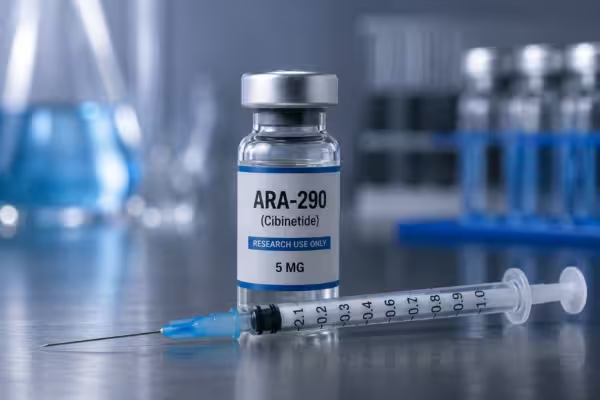
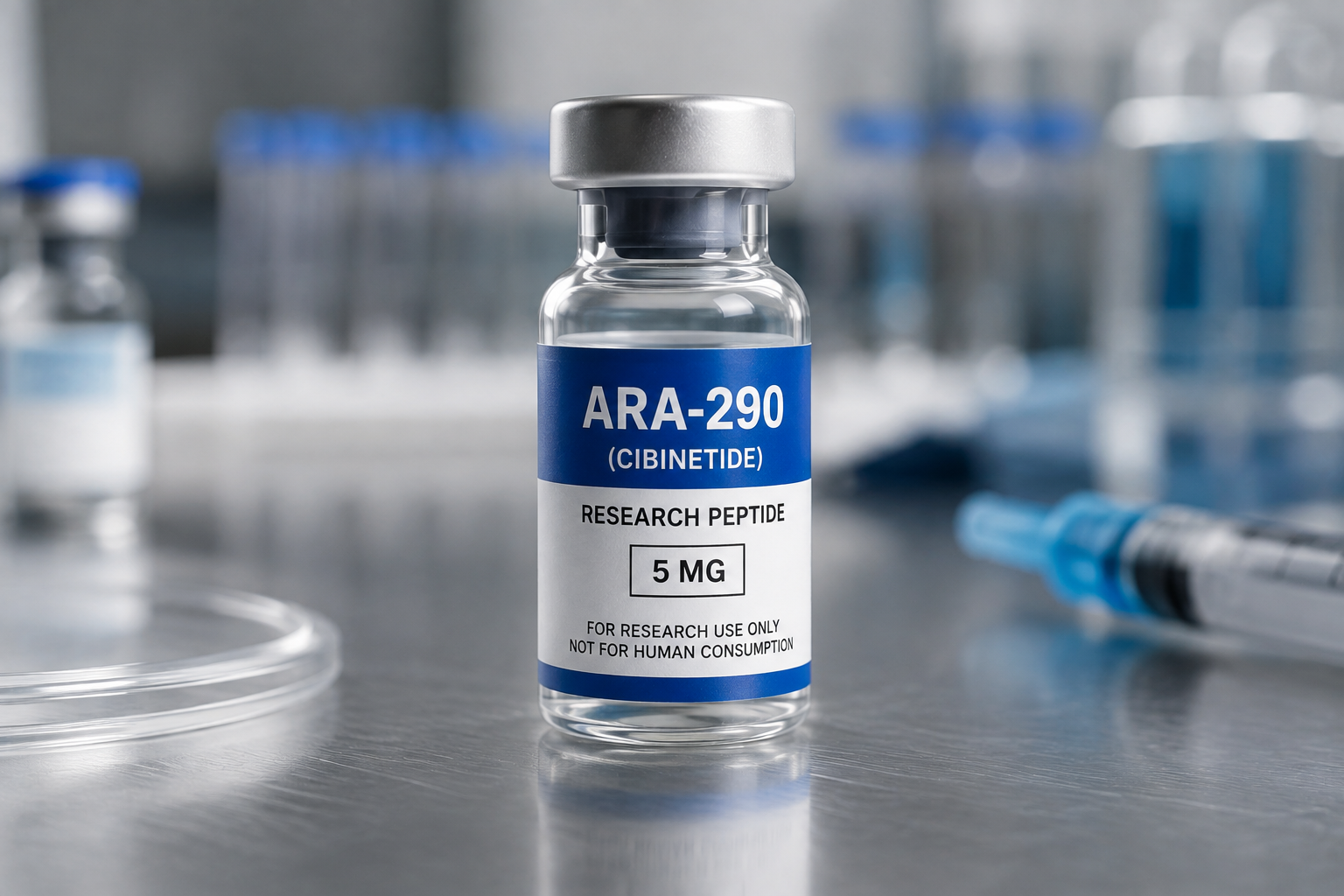
ARA-290 Peptide: Research Overview, Benefits, Mechanism & Safety
ARA-290, also known as cibinetide or pHBSP, is an experimental peptide derived from a specific region of erythropoietin (EPO). Unlike conventional erythropoietin, ARA-290 was designed to investigate tissue-protective and anti-inflammatory signaling without stimulating red blood cell production. Adipotide
ARA-290 has received particular scientific interest because it has progressed into human Phase 2 research, including studies involving small-fiber neuropathy associated with sarcoidosis and painful neuropathy associated with type 2 diabetes. Bpc-157 + TB-500
This page provides an informational overview of ARA-290, including what it is, how it works, potential research applications, clinical research findings, and important safety and regulatory considerations. Glow Blend (TB 10mg + BPC 10mg + GHK 50mg)
Research-use disclaimer: ARA-290/cibinetide is an investigational compound and should not be presented as an FDA-approved treatment. This page is intended for educational and research purposes and is not medical advice.
What Is ARA-290?
ARA-290 is a synthetic 11-amino-acid peptide derived from erythropoietin. It was engineered to reproduce some of the tissue-protective signaling associated with EPO while avoiding the erythropoietic activity responsible for increasing red blood cell production.
The peptide has also been called:
- ARA-290
- Cibinetide
- pHBSP
- Pyroglutamate helix B surface peptide
Its research has focused particularly on the innate repair receptor, a signaling system associated with tissue protection and cellular responses to injury.
How Does ARA-290 Work?
ARA-290 was designed from the structure of erythropoietin but differs from EPO in its intended biological activity.
Research suggests that ARA-290 interacts with an innate repair receptor involved in tissue-protective signaling. The objective is to activate pathways associated with cytoprotection, inflammation regulation, and tissue repair without producing the hematopoietic effects associated with conventional EPO.
This makes ARA-290 scientifically interesting for research involving:
- Nerve biology
- Tissue protection
- Inflammatory signaling
- Cellular repair
- Small-fiber neuropathy
- Metabolic complications
- Neuroprotective mechanisms
ARA-290 and Nerve Research
One of the most extensively studied applications of ARA290 has been small-fiber neuropathy.
Small-fiber neuropathy involves damage or dysfunction affecting small peripheral nerve fibers and can be associated with symptoms such as pain, altered temperature sensation, and autonomic dysfunction.
In a randomized, double-blind pilot study involving patients with sarcoidosis-associated small-fiber neuropathy, researchers reported improvements in small-fiber neuropathy screening scores following ARA290 treatment. The study also examined quality-of-life measures and other neurological outcomes.
Another clinical study reported improvements in neuropathic symptoms and increases in corneal small nerve fiber density following treatment in patients with sarcoidosis-associated small nerve fiber loss.
These findings provide a more substantial human research foundation for ARA 290 than exists for many experimental peptides.
ARA 290 and Diabetic Neuropathy Research
ARA290 has also been investigated in people with type 2 diabetes and painful neuropathy.
A Phase 2 study evaluated ARA290 in subjects with type 2 diabetes and neuropathic symptoms. Researchers reported improvements in neuropathic symptoms, along with changes in certain metabolic measurements and corneal nerve fiber density.
These results are scientifically interesting, but they should not be interpreted as establishing ARA290 as a clinically approved treatment for diabetic neuropathy.
Clinical trials are designed to answer specific research questions, and results from relatively small studies require confirmation through larger and more rigorous trials.
Potential ARA-290 Research Benefits
When discussing the potential benefits of ARA-290, it is important to distinguish research findings from established medical benefits.
Areas investigated include:
Small-Fiber Neuropathy
ARA-290 has been studied in patients experiencing small-fiber nerve damage and neuropathic symptoms, particularly in association with sarcoidosis.
Nerve Repair Research
Changes in corneal nerve fiber density have been investigated as an objective measure of small-fiber biology in clinical studies of ARA 290.
Tissue-Protective Signaling
Preclinical and clinical research has investigated ARA 290 as a potential activator of tissue-protective signaling pathways.
Inflammation Research
ARA290’s interaction with the innate repair receptor has generated interest in mechanisms involving inflammatory regulation and cellular protection.
Metabolic Research
Research in people with type 2 diabetes has also examined ARA 290 in relation to metabolic control, neuropathic symptoms, and lipid-related measurements.
ARA 290 vs. Erythropoietin
Although ARA290 is derived from erythropoietin, it should not be confused with conventional EPO.
| Feature | ARA 290 | Erythropoietin |
|---|---|---|
| Origin | Derived from EPO structure | Naturally occurring hormone/growth factor |
| Peptide | 11 amino acids | Much larger glycoprotein |
| Primary research interest | Tissue protection and repair signaling | Red blood cell production |
| Erythropoietic activity | Designed to avoid it | Yes |
| Research status | Investigational | Approved for specific medical indications |
| Same compound? | No | No |
The distinction is important because ARA-290 was specifically designed to investigate non-hematopoietic tissue-protective signaling.
ARA 290 Clinical Research
ARA290 is unusual among research peptides because it has been evaluated in several human studies.
A randomized, double-blind pilot study involving 22 patients with sarcoidosis-associated small-fiber neuropathy found improvements in small-fiber neuropathy scores compared with placebo after four weeks of treatment.
Another study involving patients with sarcoidosis-associated small nerve fiber loss reported improvements in neuropathic symptoms and corneal nerve fiber density following ARA290 treatment.
A separate Phase 2 study involving people with type 2 diabetes and neuropathic symptoms reported improvements in neuropathic symptoms and certain metabolic measurements.
However, Phase 2 research does not equal regulatory approval. More extensive clinical evidence is required to establish whether a compound provides consistent clinical benefits and has an acceptable long-term safety profile.
Is ARA 290 FDA Approved?
No. ARA 290/cibinetide is not an FDA-approved medication.
Its presence in clinical research should not be confused with pharmaceutical approval.
This distinction is especially important for websites selling ARA 290 as a research peptide. A product being described as a research compound does not mean that it has been evaluated and approved by the FDA for human therapeutic use.
ARA-290 Safety Considerations
Clinical studies have reported encouraging short-term safety findings, but available research does not establish the complete long-term safety profile of ARA-290.
For example, the Phase 2 type 2 diabetes study reported that no potential safety issues were identified during the study period.
Similarly, the randomized sarcoidosis study reported no safety concerns based on its clinical and laboratory assessments.
These findings are useful but should be interpreted in context. Small clinical trials cannot necessarily detect uncommon adverse events or establish long-term safety. cartalax peptide
ARA 290 Research Peptide Quality
For legitimate laboratory research, the quality and identity of an ARA 290 research material are important.
Researchers evaluating an ARA 290 product should consider documentation such as:
- Peptide identity
- Purity analysis
- Batch or lot number
- Certificate of analysis
- Analytical testing methodology
- Manufacturer information
- Storage documentation
- Research-use labeling
A product’s marketing claims should not substitute for analytical documentation. L-carnitine
ARA 290 and Peptide Research
ARA 290 is particularly interesting from a research perspective because it demonstrates how scientists can design peptides based on specific structural regions of naturally occurring proteins.
Rather than reproducing the complete erythropoietin molecule, researchers developed a much smaller peptide intended to investigate selected tissue-protective signaling pathways. Mod GRF 1-29
This approach has potential relevance to broader research into:
- Peptide therapeutics
- Neuroprotection
- Regenerative biology
- Inflammation
- Cellular repair
- Tissue-protective signaling GHK-Cu Peptide Guide
Frequently Asked Questions About ARA-290
Is ARA-290 a peptide?
Yes. ARA-290 is a synthetic peptide derived from a region of erythropoietin and has been investigated for tissue-protective biological activity. how much bpc 157 peptide per day
Is ARA-290 the same as erythropoietin?
No. Although ARA-290 is derived from an EPO-related sequence, it is a distinct peptide and is not interchangeable with erythropoietin. do you inject ace-031 peptide every day
Is ARA-290 a medication?
ARA-290 is best understood as an investigational compound rather than an established prescription medication.
Reviews
There are no reviews yet.